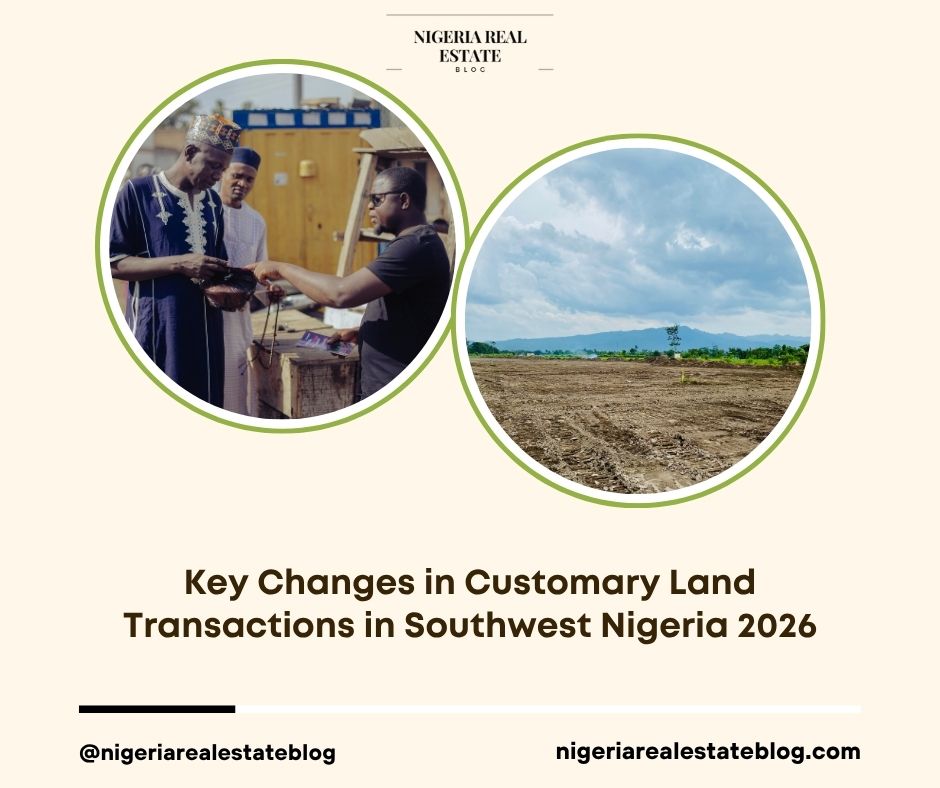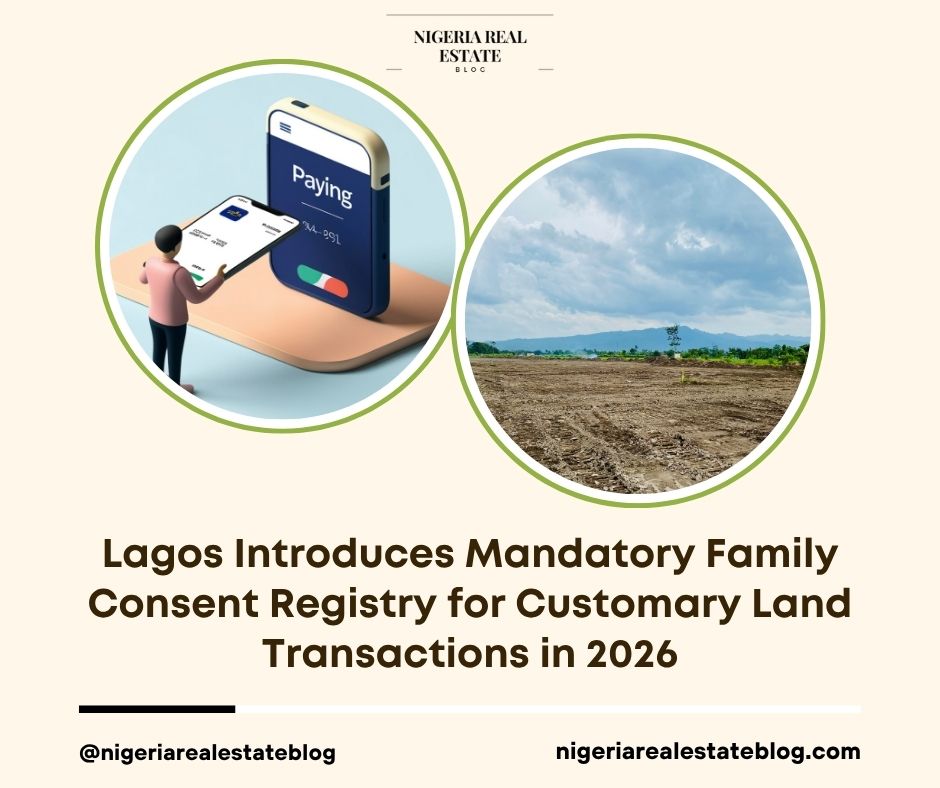

Lagos State has introduced a new mandatory Family Consent Registry for all transactions involving customary or family-owned land, effective April 1, 2026.
The policy is a direct response to the high number of multiple sales and family disputes that have historically accounted for a large share of title fraud cases in the state. By creating a centralized digital record of family consent, the government aims to bring greater transparency and finality to customary land deals.
How the Family Consent Registry Will Work
- Registration Requirement For any sale, assignment, mortgage, lease, or transfer of customary/family land, all principal family members (or their legal representatives) must provide written consent. This consent must be registered in the new Family Consent Registry before any transaction can proceed to the Land Registry for final registration.
- Process
- Family head + majority of principal members sign a consent form
- Form is submitted electronically or in person to the Lagos Land Registry
- Once verified and registered, a digital Family Consent Certificate is issued (valid for 12 months)
- This certificate becomes a mandatory attachment for any subsequent deed or application at the Land Registry
- Digital Integration The registry is linked to the existing Lagos Land Registry platform and will require BVN verification for all signatories to reduce forgery.
Required Documentation
- Signed Family Consent Form (stamped by a Notary Public or Magistrate)
- Evidence of family membership (birth certificates, affidavits, or traditional ruler attestation)
- Survey plan of the land
- Proof of identity of all consenting family members (National ID, Driver’s Licence, or Passport)
- Family head’s letter of authority (where applicable)
Penalties for Non-Compliance (Effective April 2026)
- Transactions without a registered Family Consent Certificate will be rejected by the Land Registry
- Any deed executed without consent can be declared null and void
- Legal practitioners facilitating non-compliant transactions face disciplinary action from the Lagos State Law Society
- Buyers who proceed without the certificate lose legal protection in future disputes
Practical Impact on Buyers and Developers
For Buyers
- Extra layer of protection against “family land” multiple sales
- Adds 7–21 days and ₦50,000–₦150,000 in costs per transaction
- Strongly recommended to insist on seeing the registered Family Consent Certificate before paying any deposit
For Developers
- Must obtain and register family consent early in the acquisition process
- Increases due diligence time but reduces future litigation risk
- Many developers are now building this step into their land acquisition timelines
Final Thoughts
The introduction of the mandatory Family Consent Registry is one of the most significant land law reforms in Lagos in recent years. While it adds a procedural step, it directly targets one of the root causes of title fraud — ambiguous family ownership.
For buyers and developers operating in areas with customary land (common in parts of Ikorodu, Epe, Badagry, and some Lekki hinterlands), this change is a clear signal: proper family consent is no longer optional — it is now a legal requirement.
Have you dealt with customary/family land transactions before? How do you see this new registry affecting the market? Share your experience or concerns below!
Disclaimer: This information is for general purposes only and not legal advice. Consult a qualified real estate lawyer for guidance.
Join Over 11,000 Real Estate Enthusiasts! Stay ahead with our quick 5-minute roundup of Nigerian and global real estate updates, delivered to your inbox every weekday. Don’t miss out on insider tips, market trends, and exclusive listings!