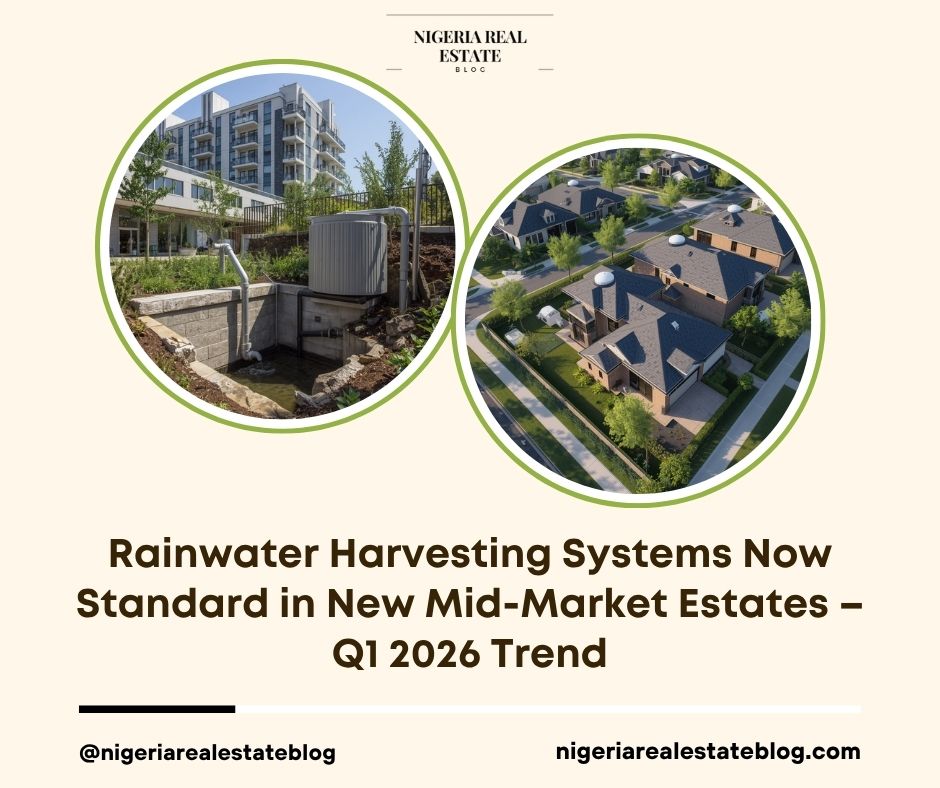
Rainwater harvesting systems have quickly become a standard feature in new mid-market estates in Lagos and Ogun in Q1 2026.
Driven by sharp increases in water tariffs and incentives from the Nigerian Green Building Council (NGBC), developers are integrating these systems from the design stage. The result: residents enjoy 18–25% lower water bills, while projects often receive faster development approvals.
How Rainwater Harvesting Systems Work in These Estates
Modern systems typically include:
- Roof catchment gutters and downpipes
- First-flush diverters to remove initial dirty runoff
- Underground or overhead storage tanks (5,000 – 20,000 litres per unit)
- Filtration and treatment units (sediment filters + UV or chlorination)
- Pumping and distribution to toilets, gardens, and laundry
Many estates now combine rainwater harvesting with solar-powered pumps for fully off-grid water solutions.
System Costs vs Savings (Q1 2026)
- Typical cost per 3–4 bedroom unit: ₦1.8M – ₦3.5M (including installation and basic treatment)
- Monthly water bill savings: ₦25,000 – ₦65,000 per household
- Payback period: 2.5 – 4.5 years
- Additional benefits: Reduced reliance on borehole or municipal supply, lower maintenance of water infrastructure, and eligibility for NGBC points toward certification
Regulatory Incentives Supporting Adoption
- NGBC certification gives bonus points for effective rainwater harvesting, helping projects achieve Level 1 or 2 status
- Some local governments in Lagos and Ogun offer faster approval timelines for estates with proven water conservation features
- Potential future LUC (Land Use Charge) relief for green-certified developments
Top Performing Estates (Early 2026)
- Several new mid-market estates in Lekki-Epe, Sangotedo, and Mowe–Ofada–Shimawa have made rainwater harvesting mandatory for all units.
- Developers report higher buyer interest and faster sell-outs (up to 20% quicker) when the system is prominently marketed as “zero water shortage.”
Final Thoughts
The rapid adoption of rainwater harvesting in mid-market estates shows that practical sustainability is no longer a luxury — it’s becoming a baseline expectation in 2026.
For developers, it reduces long-term operational complaints and speeds up approvals. For buyers and residents, it delivers real monthly savings and greater water security.
As water tariffs continue to rise, estates without proper rainwater systems may soon find themselves at a competitive disadvantage.
Are you living in or developing an estate with rainwater harvesting? What difference has it made to your water bills or sales velocity? Share your experience below!
Disclaimer: This information is for general purposes only and not legal advice. Consult a qualified real estate lawyer for guidance.
Join Over 11,000 Real Estate Enthusiasts! Stay ahead with our quick 5-minute roundup of Nigerian and global real estate updates, delivered to your inbox every weekday. Don’t miss out on insider tips, market trends, and exclusive listings!