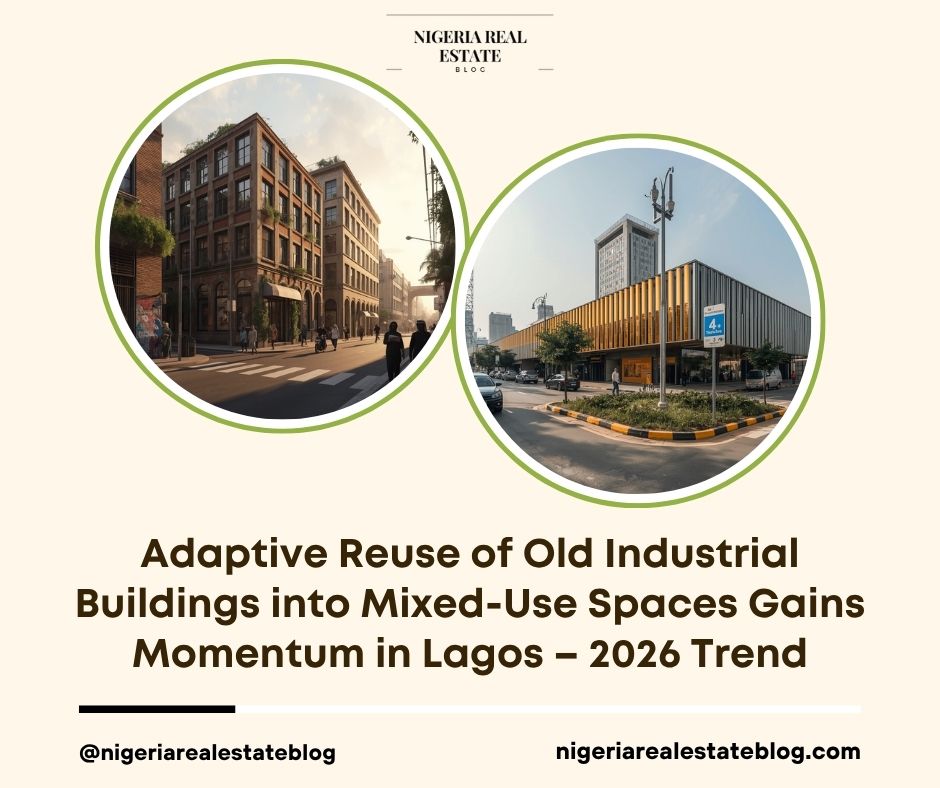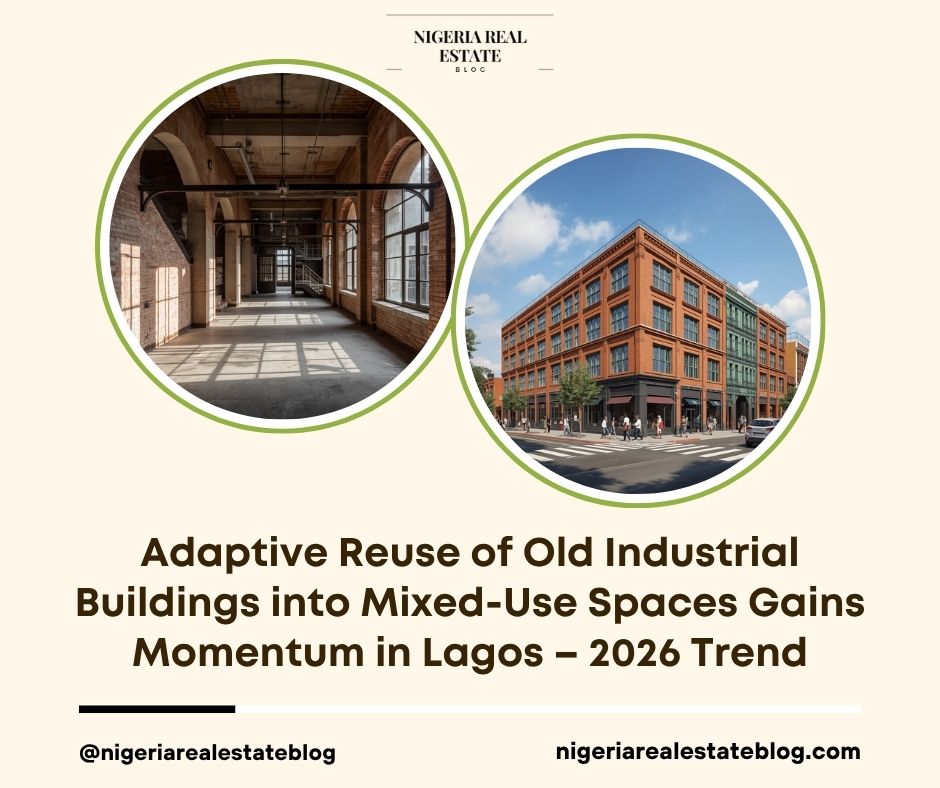
Adaptive reuse of old industrial warehouses and factories into modern mixed-use developments (residential, co-working, retail, and creative spaces) is gaining significant momentum in Lagos in 2026.
Developers in areas like Yaba, Ikeja, and Apapa are converting these structures with minimal demolition, achieving 30–45% lower construction costs compared to new builds while creating buildings with unique architectural character and historical charm that appeal strongly to young professionals, creatives, and tech companies.
How Adaptive Reuse Works in Practice
- Structural assessment: Engineers evaluate the existing steel or concrete frame for load-bearing capacity.
- Minimal demolition: Only non-structural walls and outdated interiors are removed.
- Modern insertions: New floors, MEP systems, insulation, and smart features are added inside the preserved shell.
- Design philosophy: Retain visible industrial elements (exposed beams, brick walls, high ceilings) while introducing contemporary finishes for comfort and functionality.
Popular Conversion Techniques in 2026
- Loft-style residential units with high ceilings and large windows
- Co-working and creative hubs on ground floors with flexible open-plan spaces
- Retail and F&B on street level to activate the ground plane
- Rooftop terraces and green spaces added on existing flat roofs
Cost Savings & ROI
- Construction cost reduction: 30–45% lower than building from scratch (mainly due to retained structure and foundation)
- Faster delivery: Projects completed in 12–18 months vs 24–36 months for new builds
- Premium pricing: Converted spaces often command 10–20% higher rents or sale prices due to their unique character
- Sustainability bonus: Lower embodied carbon and eligibility for green building incentives
Leading Projects in Early 2026
- Several former warehouse complexes in Yaba are being converted into mixed-use creative villages with co-living, co-working, and retail.
- An old factory site in Ikeja is being transformed into a mixed-use development with residential lofts on upper floors and ground-floor commercial spaces.
- Developers in Apapa are repurposing waterfront industrial buildings into premium live-work-play communities.
Design Challenges
- Structural limitations: Older buildings may need significant reinforcement for modern loads.
- Zoning & approvals: Converting industrial land to mixed-use often requires rezoning.
- Services upgrade: Old electrical and plumbing systems usually need complete replacement.
- Noise & vibration: Proximity to remaining industrial activity can be an issue.
Final Thoughts
Adaptive reuse is proving to be one of the smartest architectural and investment strategies in Lagos in 2026.
It combines cost efficiency, speed of delivery, and unique character that new builds struggle to match. As available land in prime areas becomes scarcer and construction costs remain high, expect this trend to expand rapidly into more mid-market and creative developments.
Have you seen or visited any adaptive reuse projects in Lagos yet? Would you live or work in a converted industrial building? Share your thoughts below!
Disclaimer: This information is for general purposes only and not legal advice. Consult a qualified real estate lawyer for guidance.
Join Over 11,000 Real Estate Enthusiasts! Stay ahead with our quick 5-minute roundup of Nigerian and global real estate updates, delivered to your inbox every weekday. Don’t miss out on insider tips, market trends, and exclusive listings!