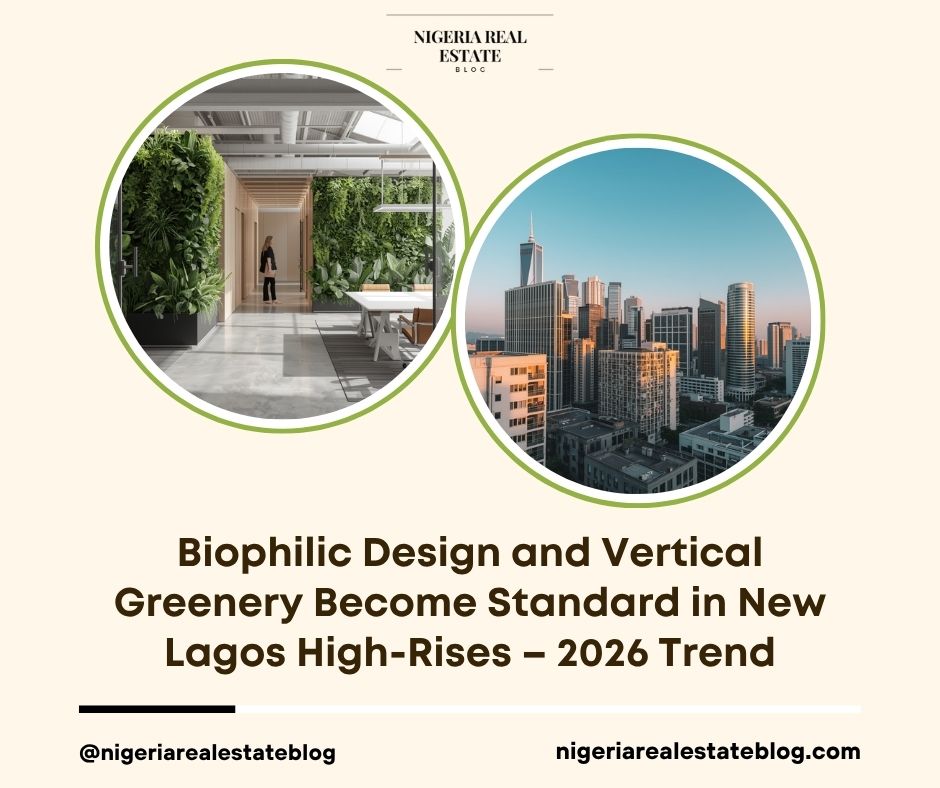
New high-rise developments in Lagos are rapidly adopting biophilic design and vertical greenery systems as standard features in 2026. What started as a niche sustainability trend has become a mainstream requirement driven by tenant demand, regulatory incentives, and the desire for premium positioning in a competitive market.
Developers and facility managers are reporting measurable benefits: improved tenant retention, higher rental premiums (typically 8–15% above non-green comparables), better mental wellbeing scores from occupants, and noticeably faster regulatory approvals due to alignment with Lagos State’s growing sustainability guidelines.
What Biophilic Design and Vertical Greenery Mean in Practice
- Biophilic Design: Incorporation of natural elements such as indoor plants, natural light optimisation, water features, natural materials (wood, stone), and views of greenery.
- Vertical Greenery: Living walls, green facades, rooftop gardens, and sky terraces with integrated irrigation and maintenance systems.
- These features help regulate indoor temperature, improve air quality, reduce noise, and create a calmer living/working environment.
Current Notable Projects in Lagos (2026)
- Victoria Island and Ikoyi towers with full-height living walls
- Lekki Phase 1 and Phase 2 mixed-use developments with extensive rooftop gardens
- Eko Atlantic and Banana Island projects integrating biophilic elements from the design stage
- Several mid-to-high-rise estates in Lekki-Epe corridor now advertising “biophilic living” as a selling point
- Additional cost for vertical greenery and biophilic features: 8–18% of total construction budget (depending on scale).
- Typical payback period: 3–5 years through higher rents, faster leasing, and lower vacancy rates.
- Long-term benefits include reduced energy costs for cooling (plants help with natural shading and evapotranspiration) and higher property resale values.
Benefits for Buyers and Investors
- Tenants: Report higher satisfaction, better productivity (in office components), and willingness to pay premium rents.
- Investors: Properties with strong biophilic features achieve lower vacancy rates and command higher yields in the premium segment.
- Developers: Faster approval processes and stronger marketing differentiation in a consolidating market.
- Health & Wellness Angle: Growing demand from expatriates, high-net-worth individuals, and corporate tenants who prioritise wellbeing.
Practical Advice for 2026
- When evaluating a high-rise purchase or investment, ask for the biophilic/green features schedule and maintenance plan.
- Request data on actual rental premiums achieved in similar buildings.
- For developers: Integrate biophilic design from the concept stage — retrofitting is significantly more expensive.
- Budget for ongoing maintenance (irrigation, plant replacement, structural checks) — usually 1–2% of the green feature cost annually.
Final Thoughts
In 2026, biophilic design and vertical greenery have moved from “luxury add-on” to expected standard in Lagos high-rises. The combination of tenant demand, regulatory tailwinds, and proven financial returns is making these features a smart investment rather than just an aesthetic choice.
Buyers and investors who prioritise buildings with genuine biophilic integration are likely to enjoy better long-term performance — both financially and in quality of life.
Are you living or investing in a building with strong biophilic or vertical greenery features? What difference have you noticed? Share your experience in the comments.
Join Over 11,000 Real Estate Enthusiasts! Stay ahead with our quick 5-minute roundup of Nigerian and global real estate updates, delivered to your inbox every weekday. Don’t miss out on insider tips, market trends, and exclusive insights!