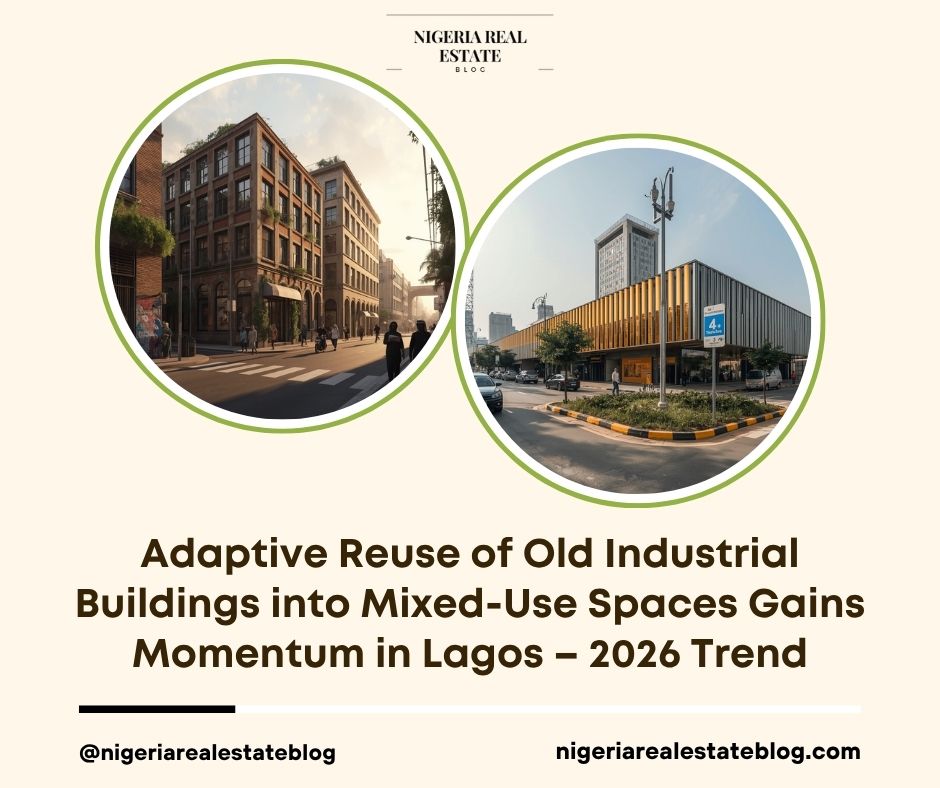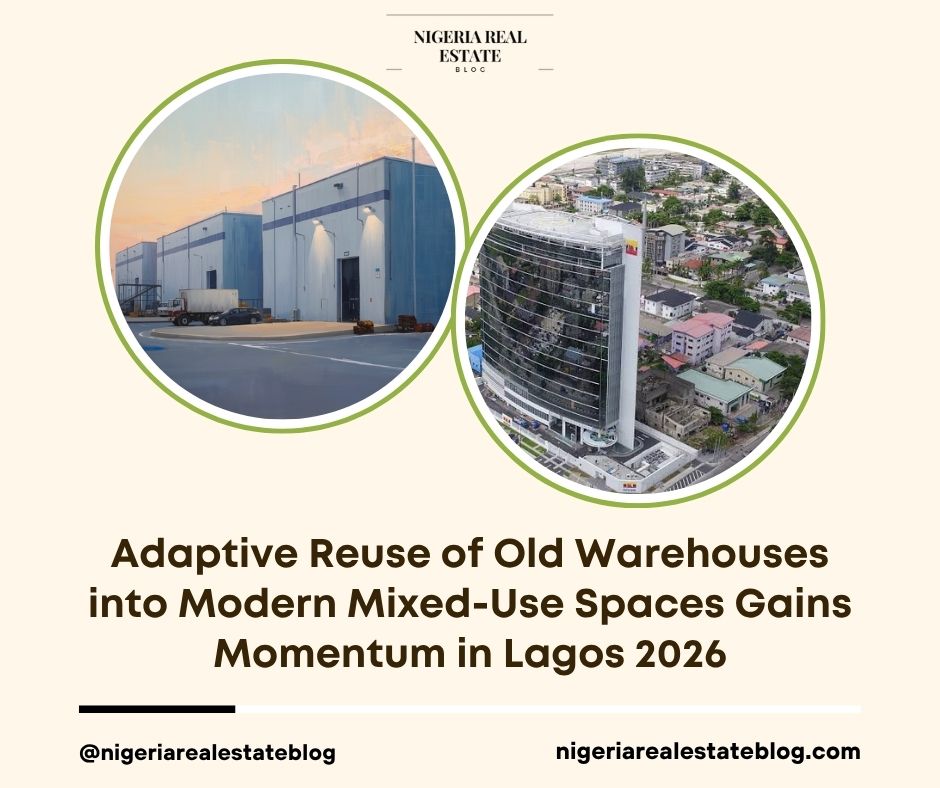
Developers in Lagos are increasingly turning to adaptive reuse — converting old industrial warehouses into modern mixed-use developments — as a smart and cost-effective strategy in 2026.
Areas such as Yaba, Ikeja, and Apapa, once dominated by factories and storage facilities, are now seeing warehouses transformed into vibrant spaces combining residential apartments, co-working hubs, retail outlets, cafes, and creative studios.
This approach is gaining momentum because it offers 30–45% lower construction costs compared to building from scratch, while providing unique architectural character that new builds often lack.
Why Adaptive Reuse Is Booming in 2026
- Cost Efficiency: Retaining the existing structure dramatically reduces material and foundation costs.
- Unique Aesthetic: Exposed brick walls, high ceilings, and industrial elements create desirable “loft-style” living and working spaces.
- Sustainability: Reusing buildings reduces construction waste and carbon footprint.
- Location Advantage: Many old warehouses are in established urban areas with good road access and proximity to markets.
Notable Projects Gaining Attention
- Yaba Creative District: Several old printing and textile warehouses are being converted into mixed-use buildings with ground-floor retail, upper-floor co-working spaces, and top-floor residential lofts.
- Ikeja Industrial Corridor: Warehouses near Computer Village are being redeveloped into hybrid live-work-play spaces popular with tech startups and young professionals.
- Apapa Port Zone: Select warehouses with good structural integrity are being adapted into logistics-residential hybrids, capitalising on proximity to the port.
Cost Savings Breakdown
- Traditional new-build construction cost: ₦85,000 – ₦120,000 per sqm
- Adaptive reuse cost: ₦50,000 – ₦75,000 per sqm (30–45% savings)
- Major savings come from foundation, structural frame, and roofing retention.
Design Challenges
- Structural reinforcement to meet current building codes.
- Soundproofing and climate control (old warehouses can be noisy and hot).
- Integrating modern MEP (mechanical, electrical, plumbing) systems into old shells.
- Parking and traffic management in densely built industrial zones.
Investment Potential
- Rental Appeal: Unique spaces attract higher rents from creative professionals, startups, and affluent tenants seeking character.
- Resale Value: Converted warehouses often command premium prices due to their rarity and aesthetic.
- Faster Leasing: Mixed-use nature allows multiple revenue streams (residential + commercial).
Final Thoughts
Adaptive reuse of old warehouses is proving to be one of the smartest architectural and investment strategies in Lagos in 2026. It combines significant cost savings with distinctive design that resonates with modern tenants and buyers who value character over cookie-cutter developments.
While challenges exist — particularly around structural upgrades and services integration — the financial and aesthetic rewards make this trend likely to continue gaining momentum.
For developers and investors looking for differentiation in a competitive market, converting industrial heritage into vibrant mixed-use spaces offers a compelling path forward.
Have you seen or invested in any adaptive reuse warehouse projects in Lagos? What do you think about this trend? Share your thoughts in the comments.
Join Over 11,000 Real Estate Enthusiasts! Stay ahead with our quick 5-minute roundup of Nigerian and global real estate updates, delivered to your inbox every weekday. Don’t miss out on insider tips, market trends, and exclusive insights!