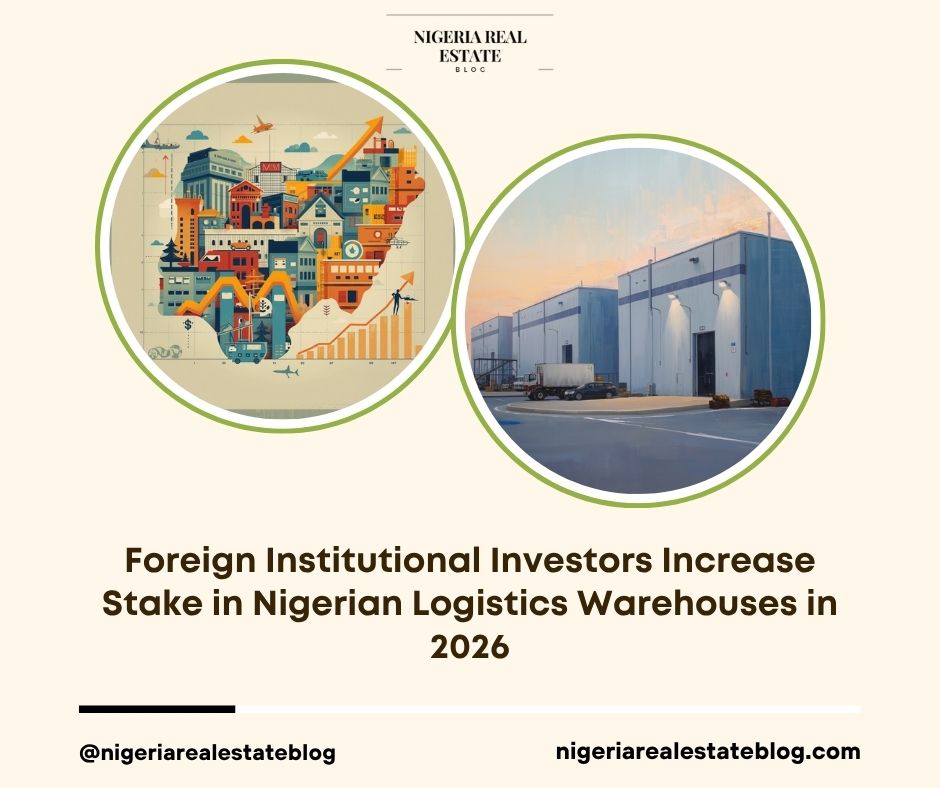
Foreign institutional investors have markedly increased their stake in Nigerian logistics and warehouse assets throughout 2026. This asset class is attracting global capital due to strong structural demand from e-commerce expansion, local manufacturing growth, and ongoing improvements in port and rail connectivity.
Yields in well-located modern warehouses have remained resilient, making Nigeria one of the more attractive logistics markets on the continent for institutional money.
Key Drivers Behind the Increased Foreign Interest
- Rapid growth of e-commerce and organised retail needing modern distribution hubs.
- Expansion of local manufacturing and assembly plants requiring reliable warehousing.
- Improving infrastructure, particularly around Lekki Deep Sea Port, Apapa, and key rail corridors.
- Relatively high yields compared to more mature markets.
- Inflation-hedging qualities of hard assets with long-term leases.
Current Yield Ranges (2026)
- Grade A modern warehouses (with proper racking, temperature control, and security): 20–26% gross yield.
- Standard dry warehouses in prime logistics corridors: 17–22% gross yield.
- Last-mile urban distribution facilities: 18–24% gross yield.
Prime Locations Attracting Institutional Capital
- Lekki Free Trade Zone & Epe Corridor (Lagos) – Strongest growth area due to the new deep sea port.
- Ikorodu–Shagamu Axis (Lagos/Ogun) – Major logistics backbone.
- Apapa–Oshodi–Oke-Ado – Last-mile distribution hubs.
- Sagamu Interchange & Agbara (Ogun State) – Manufacturing and import/export zones.
- Abuja–Kaduna Rail Corridor – Emerging northern logistics belt.
Why Institutional Investors Are Shifting Capital Here
- Long-term triple-net leases with reputable corporate tenants (e-commerce giants, FMCG, manufacturing firms).
- Built-in annual rent escalation clauses that hedge against inflation.
- Lower correlation with traditional office and residential cycles.
- Growing alignment with ESG (Environmental, Social, Governance) mandates — especially modern energy-efficient warehouses.
Investment Considerations for 2026
- Entry Ticket Size: Institutional-grade warehouses typically start from ₦1.5 billion upwards.
- Preferred Strategy: Joint ventures with local developers who understand the regulatory environment.
- Focus Areas: Grade A facilities with reliable power solutions (solar hybrid) and good road/rail access.
- Risks: Regulatory changes, forex volatility for foreign investors, and potential oversupply in some secondary locations.
Final Thoughts
The increased allocation by foreign institutional investors into Nigerian logistics and warehouse assets in 2026 underscores the sector’s growing maturity and attractiveness. Strong underlying demand from e-commerce and manufacturing, combined with improving infrastructure, has created a compelling risk-return profile.
While challenges such as power reliability and regulatory navigation remain, investors who partner with strong local operators and focus on prime, well-connected locations are well-positioned to benefit from this structural growth story.
For local developers and high-net-worth investors, this trend also signals an opportunity to co-invest or develop projects that meet institutional standards.
Are you seeing increased institutional interest in logistics real estate? Or are you considering this asset class for 2026? Share your perspective in the comments.
Join Over 11,000 Real Estate Enthusiasts! Stay ahead with our quick 5-minute roundup of Nigerian and global real estate updates, delivered to your inbox every weekday. Don’t miss out on insider tips, market trends, and exclusive insights!