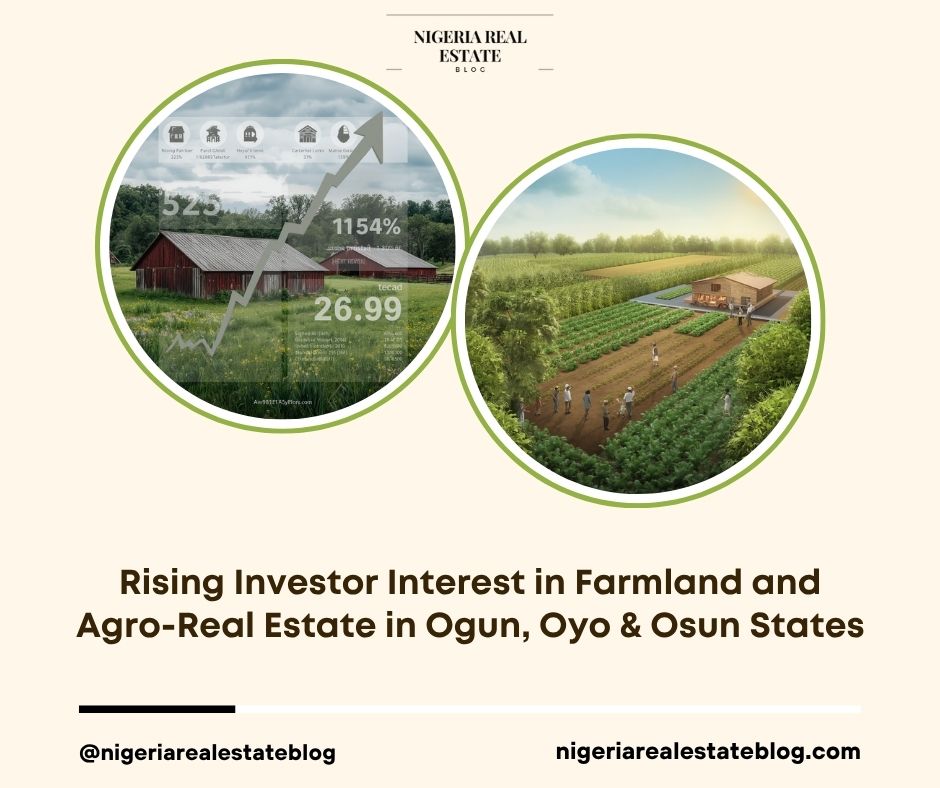

Farmland and agro-real estate investments are attracting increasing interest from both local and diaspora investors in 2026. Many see agriculture-linked land as a strong hedge against inflation, with potential for long-term capital appreciation and steady income from cash crops.
This segment offers diversification away from traditional residential and commercial properties, especially in Ogun, Oyo, and Osun states, which benefit from good soil, rainfall patterns, and proximity to major markets.
Why Investors Are Turning to Agro-Real Estate
- Inflation Hedge: Agricultural land and produce tend to hold value during high inflation periods.
- Long-Term Appreciation: Growing food demand and urbanization push land values higher over time.
- Multiple Income Streams: Cash crops, leasing to farmers, or developing small agro-processing facilities.
- Lower Entry Barrier: Larger land sizes available at more affordable per-acre prices than urban property.
Promising Locations in 2026
- Ogun State (particularly Ijebu, Abeokuta, and areas along Lagos-Ogun corridor) – Strong demand due to proximity to Lagos markets.
- Oyo State (Ibadan outskirts, Ogbomosho, and Oke-Ogun zones) – Good soil and established farming communities.
- Osun State (Osogbo, Ilesa, and Ife axis) – Fertile land with growing interest in cocoa, cassava, and palm oil.
Popular Cash Crops & Potential Returns
- Cassava: High demand for food and industrial use.
- Cocoa & Palm Oil: Long-term export potential.
- Maize & Vegetables: Shorter cycles with quicker returns.
- Poultry & Fish Farming: Integrated agro models showing good profitability.
Typical Yields: Well-managed farmland can generate 12–25% annual returns when combining crop sales and land appreciation, though results vary significantly based on management quality.
Key Considerations Before Investing
- Soil Testing & Water Availability: Always conduct proper soil and water analysis.
- Title Verification: Farmland often involves family or customary land — ensure clear consent and documentation.
- Security: Choose areas with relatively low risk of farm invasion or theft.
- Management Model: Decide between active farming, leasing to experienced farmers, or partnering with agro companies.
- Exit Strategy: Farmland is less liquid than urban property — plan for longer holding periods.
Final Thoughts
Farmland and agro-real estate offer a compelling long-term investment option in 2026, especially for investors seeking inflation protection and diversification. While it requires more active oversight than traditional rental properties, the combination of crop income and land appreciation can deliver attractive overall returns.
Success in this sector depends heavily on proper due diligence, quality land selection, and sound management. Investors who approach it as a serious agribusiness rather than passive land banking tend to achieve better results.
Are you currently invested in farmland or agro-real estate? Which state or crop interests you most? Share your experience in the comments.
Join Over 11,000 Real Estate Enthusiasts! Stay ahead with our quick 5-minute roundup of Nigerian and global real estate updates, delivered to your inbox every weekday. Don’t miss out on insider tips, market trends, and exclusive insights!