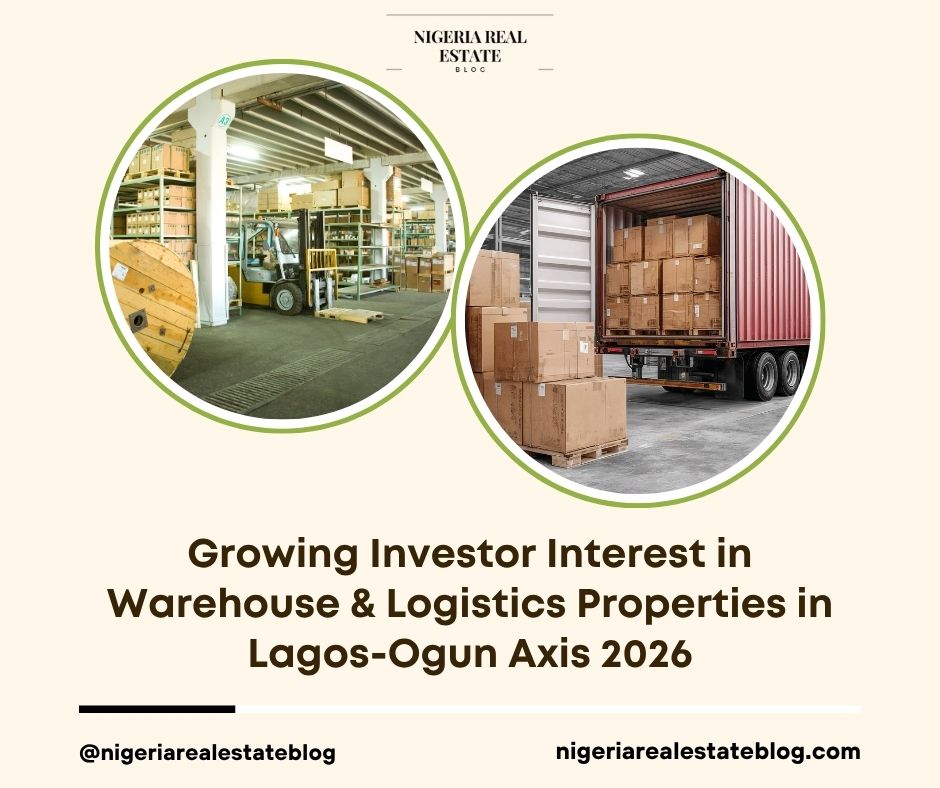

Warehouse and logistics properties are steadily gaining traction among both local and institutional investors in the Lagos-Ogun axis in 2026. Driven by the continued expansion of e-commerce, manufacturing, and distribution businesses, this asset class is offering a compelling mix of rental income and long-term capital appreciation.
Why Warehouse & Logistics Properties Are Attracting Interest
- Strong demand from e-commerce platforms, distributors, and manufacturers
- Improved road and rail connectivity in key corridors
- Relatively higher yields compared to some residential segments
- Long-term leases with corporate tenants
- Benefit from ongoing infrastructure projects
Key Corridors Seeing Strong Activity
- Lagos-Ibadan Expressway (Mowe–Ofada–Shimawa) – Rail linkage and industrial clusters
- Ikorodu–Sagamu Axis – Proximity to ports and growing population
- Lekki–Epe Corridor – New port and free trade zone influence
- Ota–Sango Ota – Manufacturing and cross-border trade
- Abuja–Kaduna Route (satellite areas) – Emerging northern logistics hubs
Typical Investment Considerations (2026)
- Entry Ticket: Small to medium warehouses often range from ₦150M to over ₦1B depending on size and location.
- Tenant Profile: E-commerce companies, cold chain logistics, manufacturing support, and distributors.
- Lease Structure: Corporate tenants usually sign 3–5 year leases with annual reviews.
- Yields: Generally competitive, though exact figures vary by location, quality, and tenant strength.
- Value Drivers: Proximity to major roads/rail, reliable power, and good drainage.
Success Factors for Investors
- Focus on locations with multiple demand drivers (not single-project dependent)
- Prioritise properties with reliable power solutions (solar hybrid or dedicated generators)
- Ensure strong legal documentation and proper titling
- Work with experienced facility managers for maintenance
- Consider phased expansion potential as businesses grow
Risks to Manage
- Over-reliance on one major tenant
- Infrastructure delivery delays
- Regulatory and zoning challenges
- Maintenance costs if the building is not purpose-built
Final Thoughts
Warehouse and logistics real estate is benefiting from structural changes in Nigeria’s economy in 2026. While not without risks, well-located, well-managed properties in growth corridors are attracting serious capital due to their income potential and alignment with broader economic trends.
For investors with a medium to long-term horizon and proper due diligence, this segment offers diversification away from pure residential plays.
Are you considering warehouse or logistics investments, or already active in this space? What trends are you seeing? Share in the comments.
Join Over 11,000 Real Estate Enthusiasts! Stay ahead with our quick 5-minute roundup of Nigerian and global real estate updates, delivered to your inbox every weekday. Don’t miss out on insider tips, market trends, and exclusive insights!