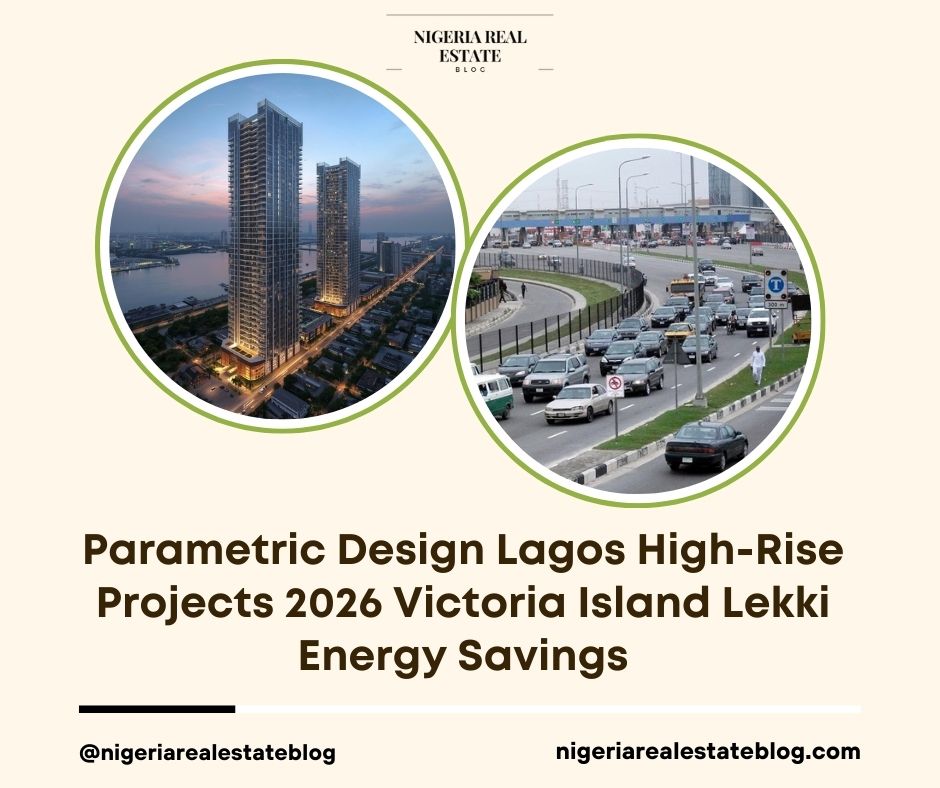
Parametric design — the use of algorithms and computational tools to generate adaptive, curved, and environmentally responsive building forms — is gaining significant traction in Lagos high-rise projects in 2026. Several new towers in Victoria Island and Lekki Phase 1 are adopting parametric workflows to optimize natural ventilation, solar shading, daylighting, and structural efficiency, responding to Lagos’ hot-humid climate and rising energy costs.
Developers and architects report 10–15% energy savings on operational costs (primarily HVAC) and 8–12% faster regulatory approval times due to climate-responsive modeling that demonstrates sustainability compliance early in the design process.
Why Parametric Design Is Appealing in Lagos 2026
- Climate adaptation — Responsive facades & forms reduce solar heat gain by 20–35%
- Energy efficiency — Lowers reliance on mechanical cooling in a city with high electricity tariffs
- Regulatory incentives — NGBC & Lagos green building guidelines favor parametric climate modeling
- Investor & buyer appeal — Lower running costs + modern aesthetic = 10–18% higher rental/sale premiums
- Faster approvals — Parametric simulations provide data for environmental impact assessments
Featured Projects Adopting Parametric Design (2026)
- Victoria Island – Atlantic Towers (proposed 35-storey mixed-use)
- Parametric facade with adaptive louvers & curved form
- Energy savings: ~14% projected
- Developer: Private consortium with international architect
- Lekki Phase 1 – Ocean Crest Residences (28-storey residential)
- Algorithmic sun-shading panels & wind-flow optimization
- Approval time: 9 months (vs typical 12–14)
- Developer: Local firm partnering with UAE consultant
- Lekki Phase 1 Extension – Sapphire Heights (42-storey luxury tower)
- Parametric structural optimization for seismic & wind loads
- Cost savings on materials: 8–10%
- Developer: Diaspora-led consortium
Software Tools Commonly Used (2026)
- Rhino + Grasshopper (most common base platform)
- Ladybug Tools (environmental analysis, solar studies)
- Diva-for-Rhino (daylight & energy simulation)
- Karamba3D (structural analysis)
- Revit + Dynamo (BIM integration for documentation)
Cost Implications
- Design phase uplift: 5–12% higher fees for parametric specialists (₦15M–₦40M for 30–50-storey tower)
- Construction savings: 8–15% on materials & facade systems via optimization
- Operational savings: 10–15% annual energy cost reduction (₦20M–₦60M/year for large towers)
- Overall ROI: Parametric investment recovered in 3–6 years via lower bills & higher rents/sales
Why It’s Appealing to Investors in 2026
- Higher rental premiums — Eco-responsive buildings rent 12–20% higher
- Faster lease-up/sell-out — Sustainability certifications attract premium tenants/buyers
- Risk reduction — Climate modeling lowers long-term operational risks
- ESG alignment — Appeals to institutional & diaspora capital seeking green exposure
Final Thoughts
Parametric design is evolving from experimental to essential in Lagos high-rises in 2026 — delivering measurable energy savings, faster approvals, and stronger market appeal.
For developers: integrate parametric early to cut costs and win approvals. For investors: prioritize parametric projects for better yields and resilience.
Which parametric feature excites you most in Lagos high-rises? Share below!
Disclaimer: This information is for general purposes only and not legal advice. Consult a qualified real estate lawyer for guidance.
Join Over 11,000 Real Estate Enthusiasts! Stay ahead with our quick 5-minute roundup of Nigerian and global real estate updates, delivered to your inbox every weekday. Don’t miss out on insider tips, market trends, and exclusive listings!