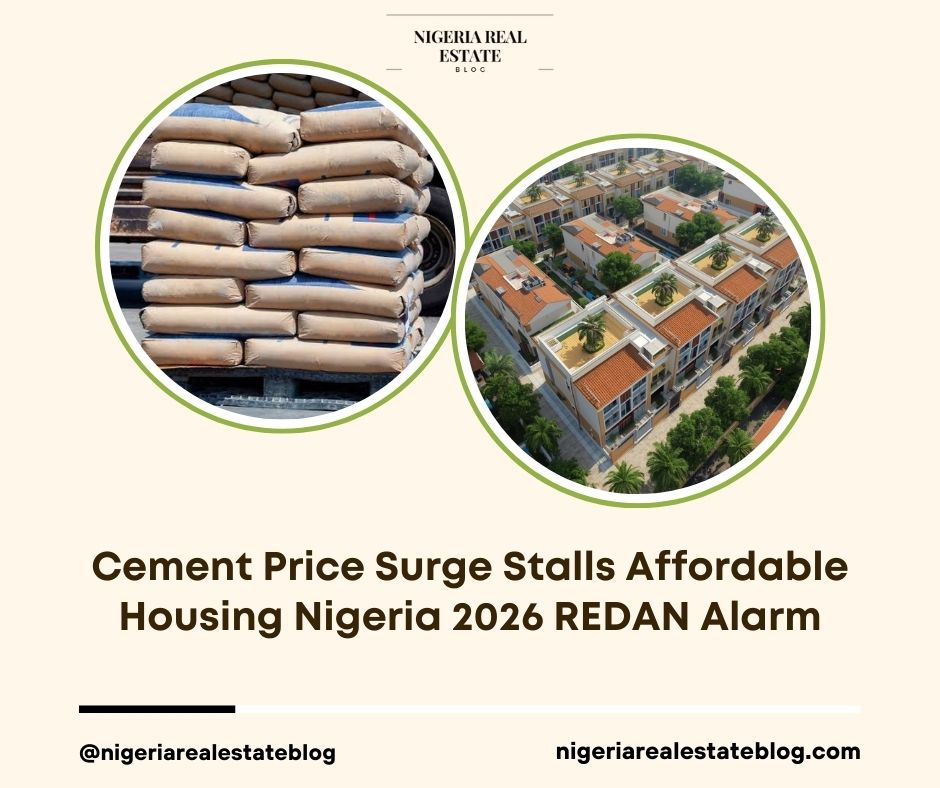
Stakeholders in Nigeria’s housing sector, including the Real Estate Developers’ Association of Nigeria (REDAN) and the Centre for Housing and Sustainable Development at the University of Lagos, have raised the alarm over the escalating cost of cement and other building materials, warning that it is severely holding back affordable housing delivery, infrastructure projects, and overall sector growth in early 2026.
REDAN President, Prince Akintoye Adeoye, and other experts have described the situation as a “national emergency” for housing delivery, noting that cement — the single largest material input — now accounts for 25–35% of total construction costs in many projects.
Current Cement Price Trends (March 2026)
- Dangote Cement (50kg bag): ₦10,000 – ₦12,000 (up from ₦6,500–₦8,000 in mid-2025)
- BUA Cement: ₦9,800 – ₦11,500
- Lafarge (Wapco): ₦10,200 – ₦11,800
- Year-on-year increase: 45–65% since Q1 2025
- Regional variation: Highest in South-East and North-Central (transport cost premium); lowest in North-West (closer to factories)
Impact on Affordable Housing & Infrastructure Projects
- Project delays: Many developers have suspended or slowed mid-market schemes (₦15M–₦60M units) due to cost overruns of 30–50%
- Affordability squeeze: Unit prices in emerging corridors now 20–35% higher than planned, pushing many out of reach for target income groups
- Timeline extension: Average project completion time now 18–36 months longer in affected schemes
- Infrastructure ripple: Road, rail and public housing projects facing budget shortfalls; some state governments revising contracts upward
Proposed Solutions from Stakeholders
- Government intervention — REDAN calls for temporary import duty waiver on cement or accelerated local production incentives
- Bulk procurement framework — Public-private partnership for bulk cement purchase to stabilize prices for affordable projects
- Alternative materials push — Greater use of laterite blocks, interlocking bricks, and recycled aggregates (already reducing costs 15–25% in pilot projects)
- Tax relief & incentives — Extend VAT exemption on building materials or offer accelerated capital allowances for green/low-cost materials
- Collaboration with manufacturers — Fixed-price agreements between developers and cement producers for priority affordable schemes
What This Means for Investors & Developers in 2026
- Short-term: Delay non-essential projects; focus on completed/off-plan units or emerging corridors with existing supply
- Medium-term: Shift to alternative materials and modular construction to lock in lower costs
- Long-term: Green/sustainable projects may benefit from future incentives and premium pricing
Final Thoughts
The cement price surge is not just a construction issue — it is a major barrier to Nigeria’s affordable housing goals and infrastructure rollout in 2026.
Stakeholders are united in calling for urgent government action. Without intervention, the 28 million housing deficit will continue to widen.
Are you a developer affected by cement costs? What alternative materials or strategies are you using? Share below!
Disclaimer: This information is for general purposes only and not legal advice. Consult a qualified real estate lawyer for guidance.
Join Over 11,000 Real Estate Enthusiasts! Stay ahead with our quick 5-minute roundup of Nigerian and global real estate updates, delivered to your inbox every weekday. Don’t miss out on insider tips, market trends, and exclusive listings!