
With fraud losses still exceeding ₦400 billion annually (EFCC & industry estimates), buying land in Nigeria in 2026 requires a stricter, more disciplined process than ever before.
The most common mistakes — ignoring red flags, skipping due diligence, or trusting verbal assurances — continue to cost buyers millions every month.
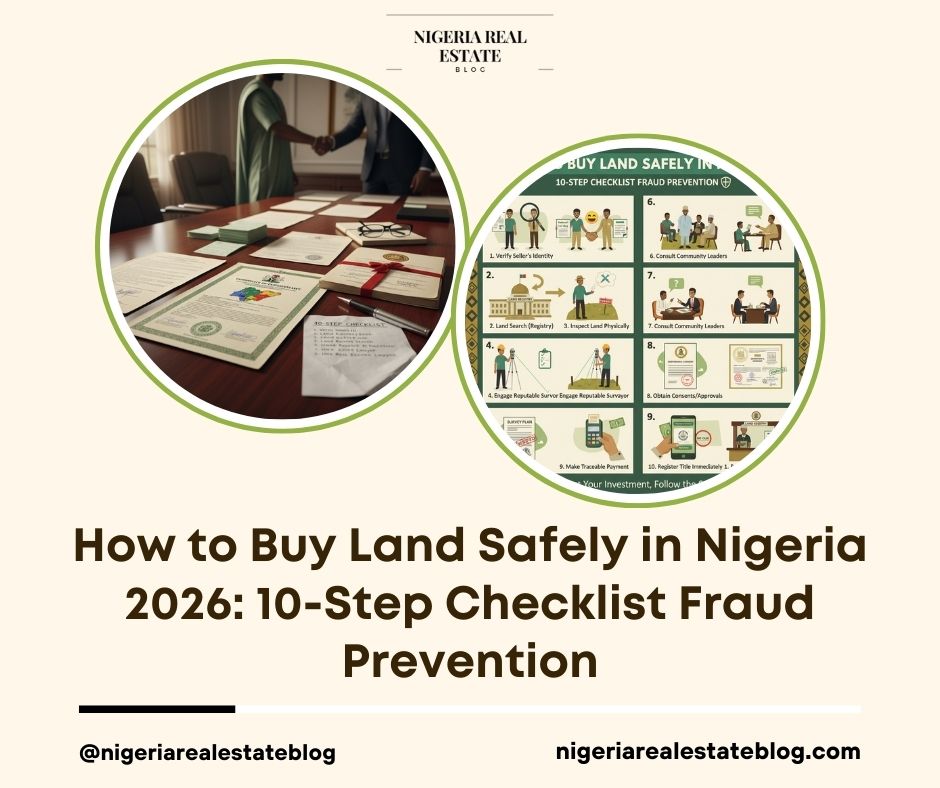
Here is the updated 10-step checklist used by experienced investors, lawyers and high-net-worth diaspora buyers in Lagos, Ogun, Abuja and secondary cities. Follow it religiously to minimize risk.
The 10-Step Land Purchase Checklist (2026 Edition)
- Define Your Purpose & Budget First
- Decide: residential, commercial, agriculture, investment flip, or long-term hold?
- Set realistic budget including 15–25% buffer for legal, survey, infrastructure, and unexpected costs.
- Red flag: If you feel rushed to “lock in” a deal, walk away.
- Source Through Trusted Channels Only
- Preferred: verified estate surveyors (NIESV members), reputable developers, or direct government allocation.
- Avoid: social media “hot deals”, WhatsApp groups, or unregistered agents.
- Tip: Ask for NIESV membership number and verify on niesv.org.ng.
- Physical Site Visit (Mandatory – Never Skip)
- Visit the land yourself (or send trusted proxy) at least twice: different times of day, different weather.
- Check boundaries, access road, neighbors, flooding risk, power lines, and community activity.
- Use drone footage or hire surveyor for boundary confirmation.
- Demand & Verify Core Title Documents
- C of O (Certificate of Occupancy) or Governor’s Consent (for customary land conversion) — absolute minimum.
- Survey Plan (registered with Lagos/Ogun/Abuja Surveyor General)
- Deed of Assignment / Conveyance (if resale)
- Receipts of ground rent & land use charge (last 3–5 years)
- Letter of Allocation (if government land)
- Conduct Official Search at Land Registry
- Pay for official search at state land registry (₦5,000–₦15,000 depending on state).
- Confirm: no encumbrance, no court cases, no prior sale, correct owner.
- Now mandatory in Lagos from March 2026: blockchain verification certificate (₦7,500–₦25,000).
- Engage Independent Lawyer & Surveyor
- Never use seller’s lawyer — conflict of interest.
- Lawyer cost: ₦200k–₦500k (title perfection + drafting).
- Surveyor cost: ₦150k–₦400k (redraw/confirm boundaries).
- Both should sign off before any payment.
- Check for Red Flags (Common Fraud Indicators)
- Seller can’t produce original C of O (only photocopy)
- Multiple “owners” claiming same land
- Family/customary land without Governor’s Consent
- Price too good to be true (30–50% below market)
- Pressure to pay cash quickly or “secure” plot
- No registered survey plan or plan not matching physical land
- Use Escrow or Bank Draft – Never Cash
- Pay via escrow account managed by your lawyer (most reputable firms offer this).
- Or use bank draft payable to seller’s verified account.
- Never hand over cash or transfer to personal account without title perfection.
- Perfect Title Before Final Payment
- Obtain Governor’s Consent (if applicable) — ₦200k–₦1M+ depending on value.
- Register deed at land registry (stamp duties + registration fees).
- Get new C of O in your name (or confirm assignment registered).
- Post-Purchase Monitoring
- Pay ground rent & land use charge on time (avoid revocation risk)
- Fence & secure the land immediately
- Monitor for encroachment or new claims (periodic visits / surveyor check)
Most Common Mistakes in 2026 (Still Costing Buyers Millions)
- Paying full amount before title perfection
- Trusting agent/seller word without independent verification
- Buying family land without full family consent & Governor’s Consent
- Skipping physical site visit
- Using seller’s lawyer or surveyor
Final Thoughts
Buying land in Nigeria in 2026 is still high-risk — but the risk is manageable with discipline.
Follow this 10-step checklist religiously, use independent professionals, and never rush. The difference between a safe, appreciating asset and a total loss is usually just a few skipped steps.
Have you used this checklist before? What red flag almost cost you a deal? Share your story below!
Disclaimer: This information is for general purposes only and not legal advice. Consult a qualified real estate lawyer for guidance.
Join Over 11,000 Real Estate Enthusiasts! Stay ahead with our quick 5-minute roundup of Nigerian and global real estate updates, delivered to your inbox every weekday. Don’t miss out on insider tips, market trends, and exclusive listings!