
Key Takeaways
- Mandatory from: March 1, 2026
- Adoption: 45% of titles on blockchain
- Impact: Major fraud reduction
- For buyers: Verify on blockchain before buying
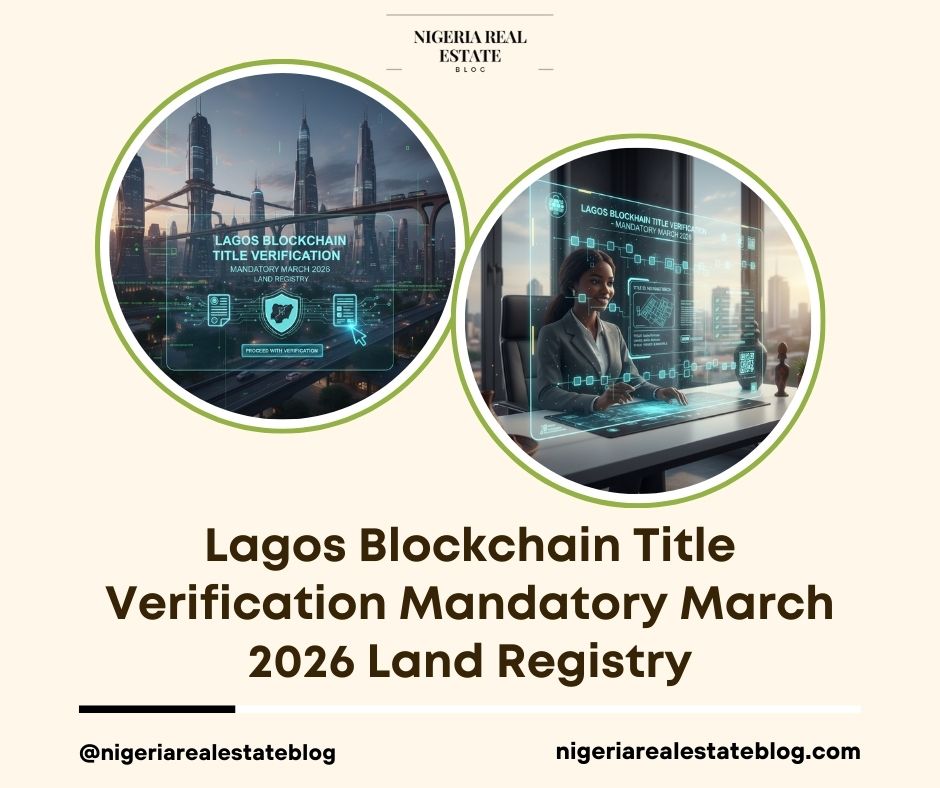
Lagos State has officially announced that from March 1, 2026, every land transaction — including sale, mortgage, lease, transfer, or any dealing requiring registration — must undergo mandatory blockchain-based title verification through the Lagos Land Registry platform.
The policy follows a successful 2025 pilot in select Local Government Areas that reduced documented title fraud complaints by approximately 35% (Lagos State Ministry of Lands internal report).
Key Details of the New Mandatory Rule
- Effective date: March 1, 2026
- Scope: All land transactions requiring registration or deed execution at the Lagos Land Registry
- Platform: Lagos Land Registry blockchain-integrated title verification system (expanded from pilot)
- Verification output: Digital certificate confirming title authenticity, encumbrance status, and registry match (required before any payment or legal document signing)
- Who must comply: Buyers, sellers, developers, agents, lawyers, banks (for mortgage), and any party executing a registrable instrument
Cost Structure (2026 Rates)
- Basic verification (name/company search + status check): ₦7,500
- Deep verification (full encumbrance history, court search linkage, prior transactions): ₦15,000–₦25,000
- Bulk verification (developers / law firms >10 titles): discounted rate ₦10,000–₦18,000 per title
- Certificate issuance fee: ₦5,000 per successful verification (digital PDF + QR code)
Penalties for Non-Compliance
- Transactions without blockchain verification certificate will be rejected for registration
- Lawyers/agents who facilitate non-verified deals face professional sanctions (Lagos State Law Society referral)
- Buyers who proceed without verification lose legal protection in fraud disputes
- Banks/mortgage lenders refusing to disburse funds for non-verified titles
How the Rule Affects Different Parties
Buyers (especially diaspora & first-timers)
- Extra step before payment — reduces risk of paying for fake titles
- Adds ₦10k–₦30k cost per deal but protects against ₦10M–₦100M+ loss
- Digital certificate valid for 90 days (renewable)
Developers & Off-Plan Projects
- Must verify master title & sub-division titles before marketing
- Increases credibility with buyers — many now demand verification certificate in sales brochures
- Adds timeline (2–7 days per verification) — plan early
Agents & Lawyers
- Mandatory to obtain & attach verification certificate to every registrable document
- Increased liability if they proceed without verification
- Many agencies now charge ₦15k–₦35k “compliance verification fee” to clients
Final Thoughts
The mandatory blockchain title verification rule starting March 2026 is the strongest anti-fraud measure Lagos has implemented to date.
While it adds a small cost and step to transactions, it significantly reduces the ₦ hundreds of billions lost annually to title fraud in Nigeria’s largest real estate market.
For buyers: insist on the certificate before any payment. For developers & agents: integrate verification into your process now to avoid delays and sanctions.
This is no longer optional — it’s the new legal standard in Lagos.
Have you used the Lagos Land Registry blockchain tool yet? Share your experience or concerns below!
Disclaimer: This information is for general purposes only and not legal advice. Consult a qualified real estate lawyer for guidance.
Join Over 11,000 Real Estate Enthusiasts! Stay ahead with our quick 5-minute roundup of Nigerian and global real estate updates, delivered to your inbox every weekday. Don’t miss out on insider tips, market trends, and exclusive listings!
Frequently Asked Questions
Is blockchain title verification mandatory in Lagos?
Yes. From March 1, 2026, all title verifications must use the blockchain system.
What percentage of Lagos titles are on blockchain?
45% as of March 2026, with LIRS reporting significant fraud reduction.