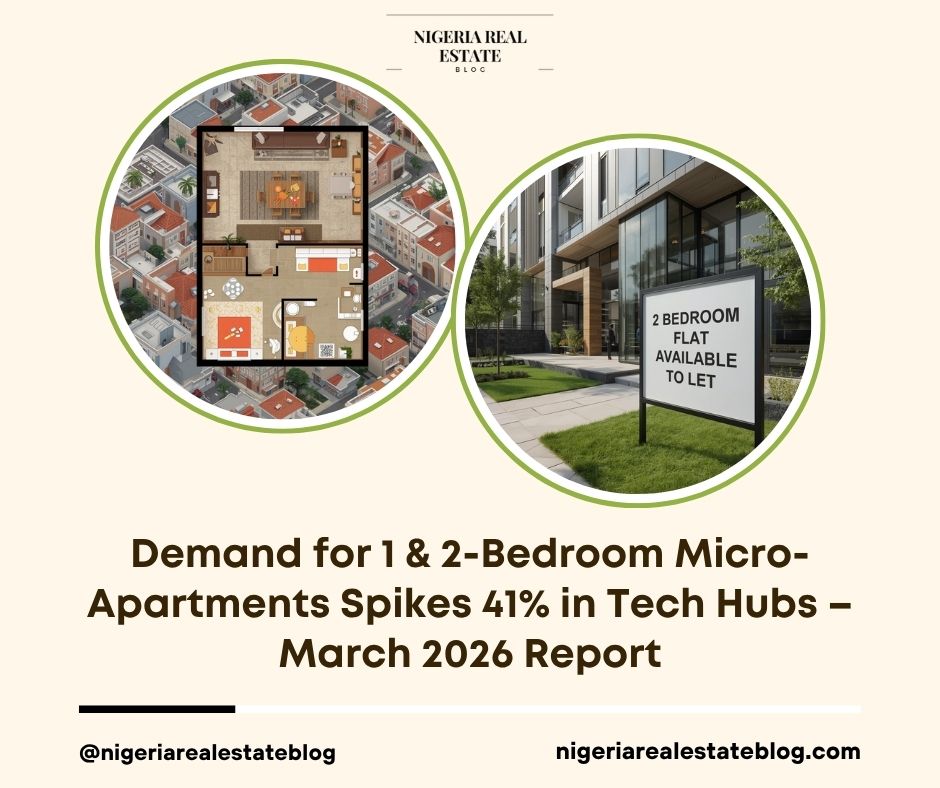
Demand for 1 & 2-Bedroom Micro-Apartments Spikes 41% Tech Hubs Lagos Abuja March 2026

Demand for compact 1 and 2-bedroom micro-apartments (25–50 sqm) has spiked 41% in tech and creative hubs such as Yaba, Ikeja, and Gwarinpa during the first quarter of 2026.
Young professionals, remote workers, freelancers, and early-career tech employees are the primary drivers, attracted by affordability, proximity to workplaces, and the flexibility these small, well-designed units offer in a high-cost city environment.
Top Locations Showing Strongest Demand (Q1 2026)
- Yaba / Ojuelegba Axis (Lagos)
- Average monthly rent: ₦450,000 – ₦850,000
- Occupancy rate: 92–97%
- Growth driver: Proximity to tech hubs (CcHUB, Andela, Paystack, Flutterwave) and universities
- Ikeja / Ogba Corridor (Lagos)
- Average monthly rent: ₦400,000 – ₦750,000
- Occupancy rate: 89–95%
- Growth driver: Business district access and improving road networks
- Gwarinpa / Life Camp (Abuja)
- Average monthly rent: ₦350,000 – ₦650,000
- Occupancy rate: 88–94%
- Growth driver: Young professionals in government, NGOs, and emerging tech scenes
Average Rents & Occupancy Trends
- 1-Bedroom (25–35 sqm): ₦350,000 – ₦650,000/month
- 2-Bedroom (40–50 sqm): ₦550,000 – ₦950,000/month
- Average occupancy: 90–96% (significantly higher than traditional 3-bed units in the same areas)
- Month-on-month rent growth: 8–14% in these hubs since January 2026
Investment Implications for 2026
- High cash-flow potential: Net yields often range from 14–20% due to high occupancy and low maintenance per sqm.
- Lower entry barrier: Acquisition costs are more accessible (₦25M–₦60M range) compared to standard apartments.
- Faster ROI: Many investors report full capital recovery within 5–7 years when combining rental income with modest appreciation.
- Risk mitigation: Demand from young professionals tends to be more resilient during economic slowdowns.
Developer & Investor Strategies Seeing Success
- Converting existing buildings into micro-apartment clusters with shared amenities (co-working lounges, gym, fast Wi-Fi).
- Offering flexible lease terms (6–12 months) with furnished options.
- Integrating basic smart home features (smart locks, energy-efficient lighting) to justify premium rents.
Final Thoughts
The 41% spike in demand for micro-apartments in tech hubs reflects a clear shift in housing preferences among young professionals in 2026 — prioritizing location, affordability, and low-maintenance living over space.
For investors, this segment offers an attractive combination of high occupancy, solid yields, and relatively lower entry costs, making it one of the more resilient plays in the current market.
Are you investing in or renting micro-apartments in tech hubs? What has your experience been with yields and occupancy? Share below!
Disclaimer: This information is for general purposes only and not legal advice. Consult a qualified real estate lawyer for guidance.
Join Over 11,000 Real Estate Enthusiasts! Stay ahead with our quick 5-minute roundup of Nigerian and global real estate updates, delivered to your inbox every weekday. Don’t miss out on insider tips, market trends, and exclusive listings!