The Federal Government wants 2,000 mortgages issued this year and 5,000 by 2028, and has proposed lifting the mortgage ceiling to ₦85 million. It has also directed the Federal Mortgage Bank to push at least 70% of the previous year’s National Housing Fund contributions out through mortgages every year.
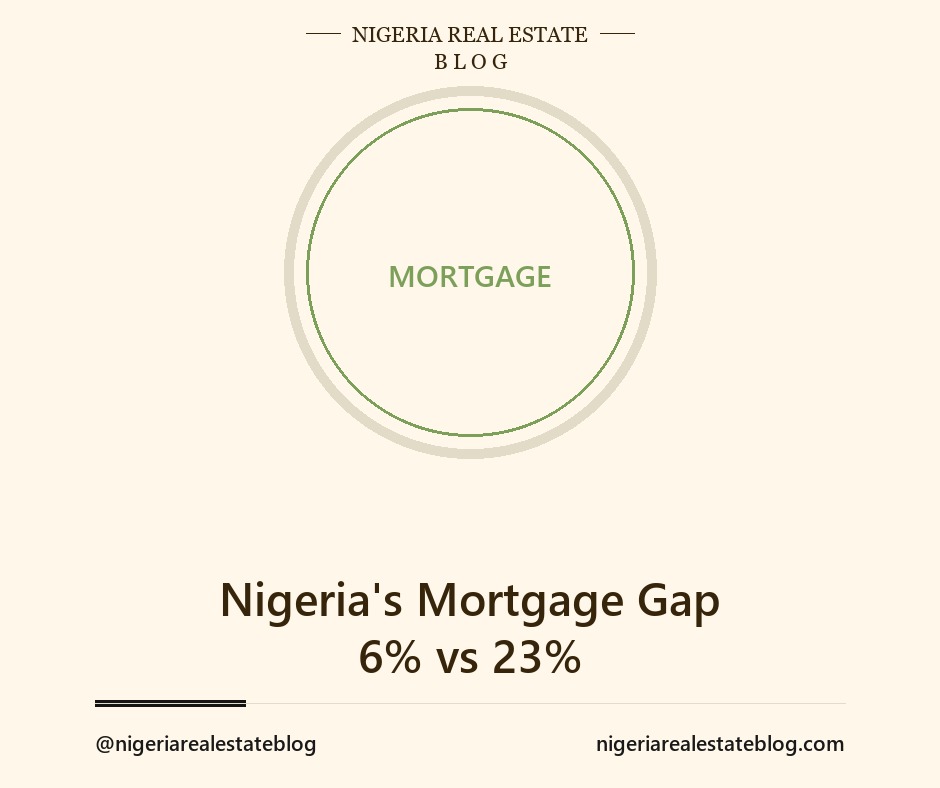
That is the policy. Here is the arithmetic that decides whether it changes anything for a buyer – because Nigeria does not have one mortgage market. It has two, and the gap between them is about ₦670,000 a month.
The two markets
| National Housing Fund route | Commercial mortgage | |
|---|---|---|
| Interest rate | 6% | 23% and above |
| Maximum loan | ₦50 million | Lender’s discretion |
| Repayment period | up to 30 years | typically shorter |
| Who qualifies | NHF contributors | income and collateral |
The 6% facility is the Federal Government-backed NHF housing loan, administered through the Federal Mortgage Bank of Nigeria: up to ₦50 million, at 6%, over as much as 30 years. There is also an FMBN diaspora facility offering up to ₦100 million at 9% to Nigerians abroad.
Commercial mortgages are priced off a monetary policy rate that currently sits at 23%, which is why commercial lending rates are quoted above it.
What a ₦50 million loan costs on each
Same principal, both amortising, monthly repayments:
| Loan | Rate | Term | Monthly payment |
|---|---|---|---|
| ₦50,000,000 | 6% | 30 years | ₦299,800 |
| ₦50,000,000 | 23% | 20 years | ₦968,500 |
Both figures are calculated, not quoted: standard amortisation, principal and interest, no fees or insurance included.
The difference is ₦668,700 a month, or about ₦8 million a year on the same house. That is the size of the subsidy, and it is why the NHF route matters far more than the headline ceiling.
What the ₦85 million ceiling would change
The current NHF cap is ₦50 million. In Lagos and Abuja, that buys a mid-market flat or a plot – not a finished family house in most of the areas people actually want to live.
At ₦85 million, the same 6% rate would reach a larger share of the market. At 6% over 30 years, ₦85 million costs roughly ₦509,600 a month – still less than half what ₦50 million costs commercially.
Two caveats, and they matter. The ceiling is proposed, not enacted. And a higher ceiling does not create more money: it spreads the same fund across fewer, larger loans unless contributions rise.
The problem the targets point at
Nigeria’s housing fund has collected for more than three decades and delivered relatively few mortgages. The 70% disbursement directive is an attempt to fix that – forcing the fund to lend what it collects rather than accumulate it.
Whether it works depends on two things a policy cannot decree: how many workers contribute, and how many can document the income a lender will accept.
What you need to qualify
For the NHF route, in outline – confirm current requirements with FMBN before applying:
- Be a registered contributor to the National Housing Fund, with contributions through your employer or as a self-employed contributor.
- Evidence of a minimum period of contributions – historically six months.
- Proof of income and employment.
- A property to be mortgaged, with title the lender will accept.
- Compliance with the bank’s valuation and legal requirements – which is where title problems surface.
That last point is the binding constraint. A mortgage is only as good as the title behind it. Land on excision without a gazette, or a deed without Governor’s Consent, will not be accepted as security however good the borrower’s income.
Frequently asked questions
What is the interest rate on a Nigerian mortgage?
Commercial mortgages are quoted above the 23% monetary policy rate. The government-backed NHF loan is 6%, and FMBN’s diaspora facility is 9%.
How much can I borrow through the National Housing Fund?
Up to ₦50 million under the current cap, at 6% over up to 30 years. A ceiling of ₦85 million has been proposed but is not yet in force.
What does ₦50 million at 6% cost per month?
About ₦299,800 over 30 years, principal and interest, before fees and insurance.
Can Nigerians abroad get a mortgage?
Yes. FMBN has a diaspora facility offering up to ₦100 million at 9%. The eligibility documentation and the requirement for a verifiable title are stricter than for domestic borrowers.
Why are commercial mortgage rates so high?
They are priced off the monetary policy rate, currently 23%, plus a lender margin. Until that rate falls materially, commercial mortgages will not compete with the NHF route.
Last updated: 21 October 2026. Policy targets and the proposed ₦85 million ceiling are from the Federal Government’s mortgage announcement reported by Independent. NHF terms (₦50 million at 6%, up to 30 years) are from the scheme as reported in August 2026. FMBN diaspora terms (₦100 million at 9%) from Vanguard, August 2026. Monetary policy rate of 23% as at October 2026. Monthly payments are calculated on standard amortisation and exclude fees, insurance and service charges. Not financial advice.