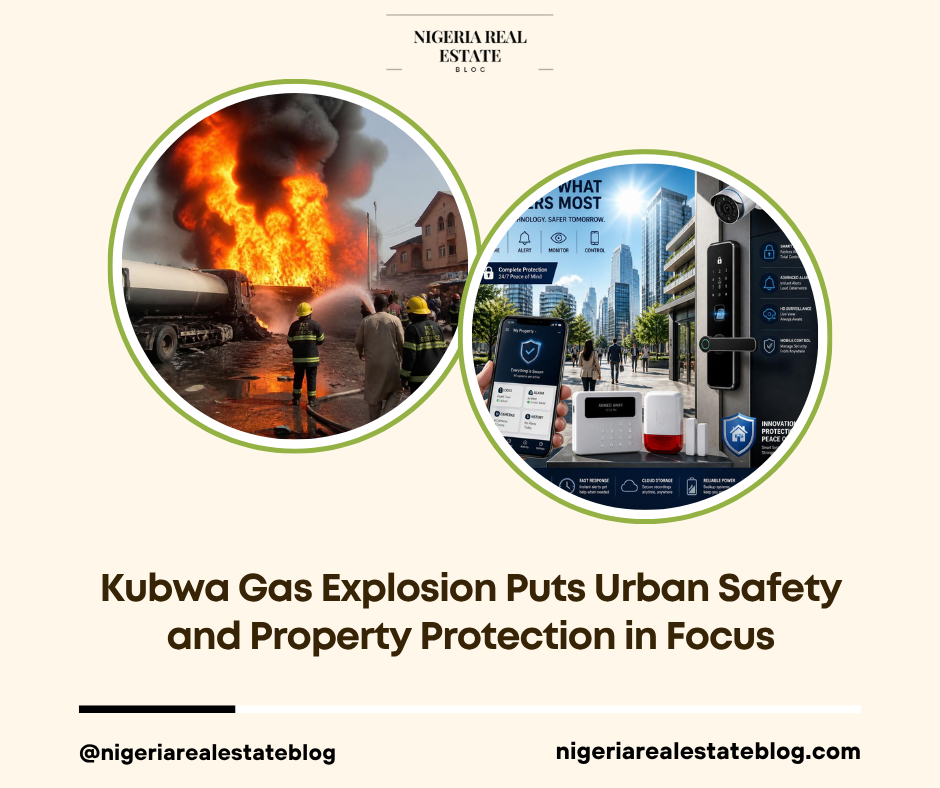
A gas explosion at a cooking gas facility near Liberty Junction in Kubwa, Abuja, on Sunday, 27 September 2026, has once again drawn attention to safety risks in densely used residential and commercial areas. The incident, triggered when a vehicle crashed into the gas plant, damaged several nearby shops and disrupted the surrounding area. Official reports indicated that the fire was contained and no fatalities were recorded.
While the immediate cause was a road crash, the event underlines broader issues of gas handling, location of bulk gas storage, emergency response readiness, and the need for stronger safety culture around homes, shops and estates.
What Happened
According to the FCT Police Command, the incident occurred in the early morning when a driver (reportedly travelling against traffic) lost control of an unregistered vehicle and crashed into a cooking gas plant. The impact triggered a fire that spread to adjoining shops and properties. Emergency responders, including the Federal Fire Service, FCT Fire Service and other agencies, contained the blaze. Police later stated that the driver’s identity had been established and a manhunt was underway. The full value of property destroyed was still being assessed.
Why This Matters for Property Owners and Residents
Gas-related incidents remain a recurring risk in Nigerian cities. Whether caused by vehicle impact, faulty cylinders, poor storage, leakage or human error, the consequences can include:
- Loss of lives and injuries
- Destruction of shops, homes and business assets
- Disruption of local commercial activity
- Insurance and compensation complications
- Reduced confidence in the safety of certain locations
For property owners, landlords, estate managers and tenants, the Kubwa incident is a reminder that safety is not only a regulatory issue but a practical responsibility that affects asset value and livability.
Practical Safety Steps for Homes, Shops and Estates
1. Location and Storage of Gas
- Avoid storing large quantities of cooking gas in densely packed residential or mixed-use buildings without proper safety clearances.
- Ensure gas cylinders and bulk installations are kept in well-ventilated, secure areas away from high-traffic vehicle paths where possible.
- Comply with any local planning or fire-safety requirements for gas retail outlets.
2. Cylinder and Installation Checks
- Regularly inspect cylinders, regulators, hoses and fittings for leaks, wear or damage.
- Use only certified cylinders and reputable suppliers.
- Ensure installations are done by competent technicians.
3. Estate and Building-Level Measures
- Estate managements should review the siting of gas retail points within or near residential areas.
- Maintain clear access routes for emergency vehicles.
- Consider basic fire-safety equipment (extinguishers, sand buckets, hose reels where appropriate) and train residents or staff in their use.
- Establish simple emergency contact protocols.
4. Insurance and Documentation
- Property and business owners should review whether their insurance covers fire and explosion risks adequately.
- Keep records of gas installations and maintenance where relevant.
5. Community Awareness
- Residents should know basic response steps: raise alarm, evacuate if necessary, call emergency services, and avoid actions that could worsen a gas-related fire.
- Report illegal or clearly unsafe gas storage and handling practices to the appropriate authorities.
Lessons for Urban Planning and Regulation
Incidents like the Kubwa explosion also raise questions about:
- The proximity of bulk gas storage to busy roads and commercial clusters
- Enforcement of traffic rules in areas with sensitive facilities
- Coordination between planning authorities, fire services and local businesses
- Public education on gas safety
Stronger routine compliance and better location standards can reduce the frequency and severity of such events.
Final Thoughts
The Kubwa gas explosion caused property damage and significant local disruption, even though loss of life was avoided. It serves as a timely reminder that urban safety and property protection depend on everyday practices as much as on emergency response.
Property owners, tenants, estate managers and gas retailers all have roles to play in reducing preventable risks. Simple, consistent safety measures around gas storage, installation quality, access routes and emergency preparedness can make a meaningful difference.
What safety measures does your estate or property currently have in place for gas and fire risks? Share your experience or suggestions in the comments.
Join Over 11,000 Real Estate Enthusiasts!
Stay ahead with our quick 5-minute roundup of Nigerian and global real estate updates, delivered to your inbox every weekday. Don’t miss out on insider tips, market trends, and exclusive insights!