
A widely shared opinion piece that originated on Nairaland (now cross-posted to X/Twitter with 12k+ likes/retweets and thousands of comments) has ignited fierce debate in Nigeria’s real estate community:
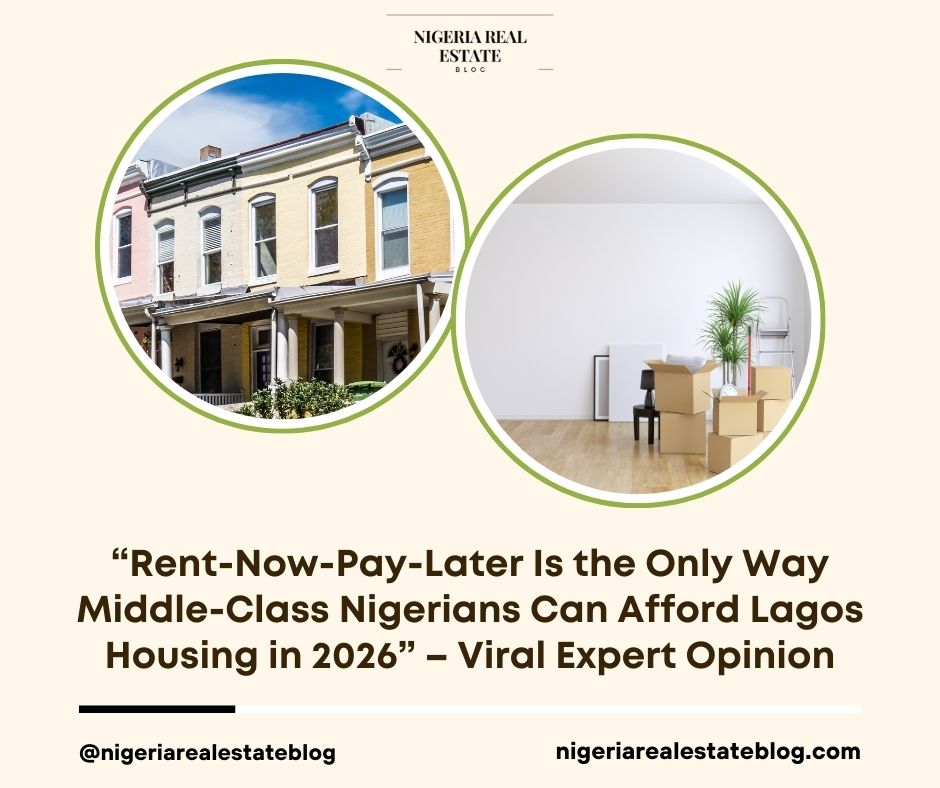
“Rent-Now-Pay-Later is the only way middle-class Nigerians can afford decent housing in Lagos in 2026.”
The author (a Lagos-based real estate consultant) argues that average annual rents in decent Lagos locations — ₦1.2M–₦3.8M for 1–3 bedroom flats — have become unattainable for salaried middle-class earners (₦200k–₦600k monthly take-home) given stagnant real wages, 34.8% peak inflation in Dec 2024 (NBS), and ongoing cost-of-living pressures.
The post claims RNPL platforms saw +320% uptake in Lagos/Abuja in 2025 and predicts they will cover 25–35% of new leases in 2026, becoming the default bridge for tenants who can’t pay 1–2 years upfront.
Key RNPL Platforms Active in Lagos 2026
- OnePipe / Carbon — Rent financing up to 12–24 months; fees 8–15% of rent value
- KiaKia — AI credit scoring + rent-now-pay-later; default rates ~4–6% in 2025
- Renmoney & FairMoney — Salary-deducted rent financing; growing landlord partnerships
- Spleet & Quicken — Hybrid short-let / RNPL models for mid-tier flats
Landlord Acceptance & Tenant Behavior (2025–2026 Trends)
- Landlord acceptance: Up from ~15% in 2024 to 35–45% in Lagos (per Estate Intel agent surveys)
- Many now accept RNPL payments directly into escrow
- Premium landlords in Lekki/Ikoyi still resist (prefer full advance)
- Default rates: Reported 4–8% across platforms (better than traditional rent arrears of 15–25%)
- Tenant profile: Mostly 25–40-year-old professionals (tech, banking, oil & gas) earning ₦300k–₦800k/month
Counter-Arguments from the Debate
- High fees erode savings: 8–15% platform charge can add ₦100k–₦500k per year — some argue it’s cheaper to negotiate landlord instalments
- Landlord risk: Potential for platform failure or tenant default disputes
- Not a long-term fix: Critics say RNPL treats the symptom (high upfront rent) not the cause (housing supply shortage)
- Credit score impact: Missed payments hurt future borrowing (CBN credit bureau linkage)
Final Thoughts
The viral opinion captures a harsh reality: for many middle-class Lagosians, RNPL has become less a choice and more a necessity in 2026.
While platforms have scaled rapidly (+320% uptake in 2025) and default rates remain manageable, the debate highlights deeper structural issues — stagnant wages, high inflation legacy, and a chronic supply shortage.
RNPL is buying time, but it’s not solving the housing crisis.
What do you think — is rent-now-pay-later the future of Lagos renting, or just a temporary patch? Share your view below!
Disclaimer: This information is for general purposes only and not legal advice. Consult a qualified real estate lawyer for guidance.
Join Over 11,000 Real Estate Enthusiasts! Stay ahead with our quick 5-minute roundup of Nigerian and global real estate updates, delivered to your inbox every weekday. Don’t miss out on insider tips, market trends, and exclusive listings!