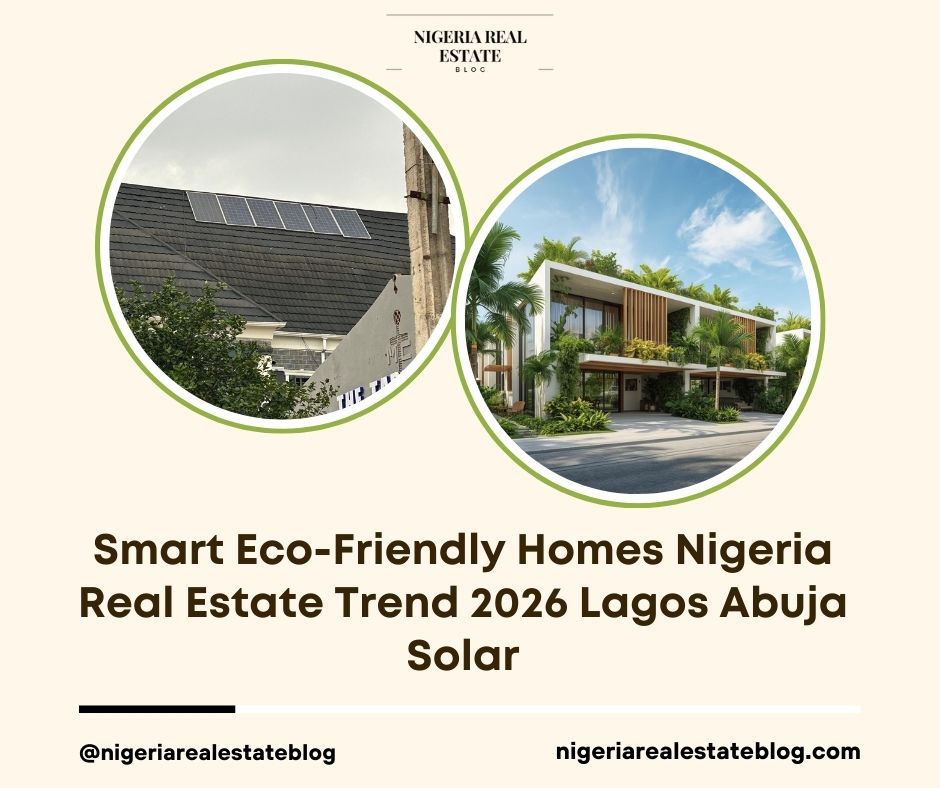

The rise of smart and eco-friendly homes has emerged as a core trend strengthening resilience in Nigeria’s real estate market in 2026, according to School of Estate’s 2024 review (updated with 2025–2026 transaction data).
Increased adoption of sustainable features — particularly solar systems, energy-efficient designs, smart lighting/HVAC controls, and water conservation — is driven by persistent electricity cost increases, frequent grid outages, and growing environmental awareness among middle- and upper-income buyers/renters.
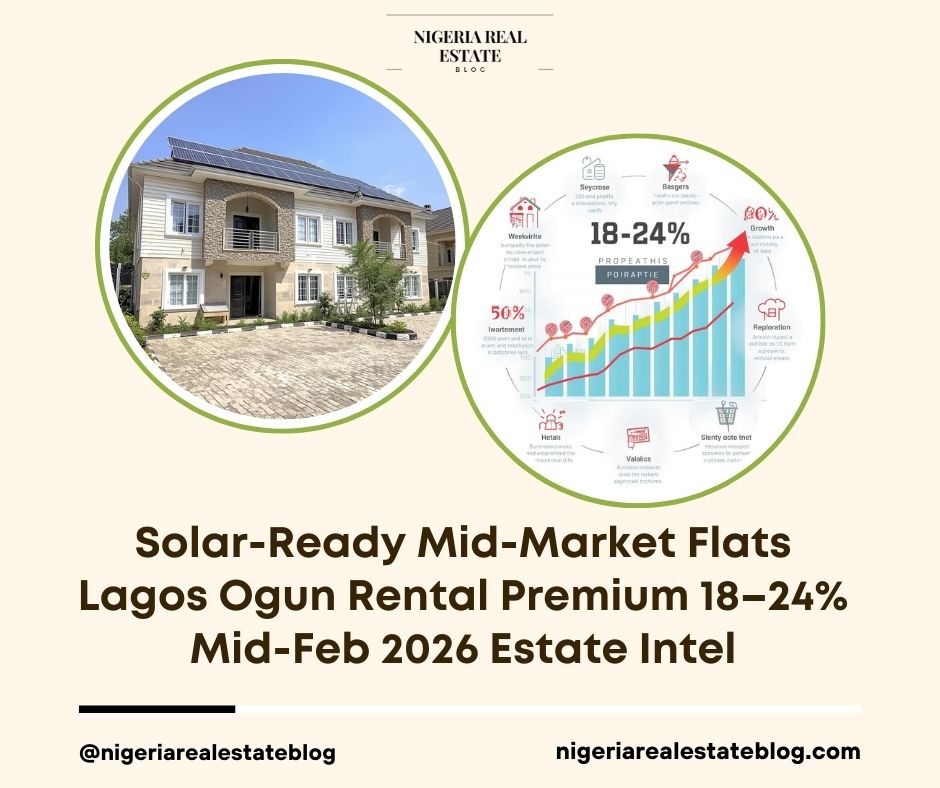
This trend is most pronounced in Lagos and Abuja, where eco-homes command 15–25% premium rents and sell 20–35% faster than conventional comparables (Estate Intel & PropertyPro.ng Q1 2026 data).
Popular Eco & Smart Features in 2026 Nigerian Homes
- Solar Hybrid Systems (most adopted)
- 3–8 kVA hybrid (solar + inverter + battery backup)
- Installation cost: ₦6M–₦15M (depending on unit size & battery capacity)
- Energy savings: 25–40% on bills (₦150k–₦400k monthly reduction)
- Energy-Efficient Designs
- LED lighting, low-E glazing, insulated walls/roofs, natural ventilation
- Cost uplift: 5–12% on construction budget
- Savings: 15–30% on AC usage
- Smart Home Controls
- App-controlled lighting, security cameras, smart thermostats (Google Home, Alexa integrations)
- Cost: ₦1.5M–₦4M per unit
- Benefit: Remote monitoring, energy optimization
- Water Conservation Features
- Rainwater harvesting, low-flow fixtures, greywater recycling
- Cost: ₦2M–₦6M
- Savings: 30–50% on water bills
- Green Roofs & Living Walls
- Accessible green terraces, vertical gardens
- Cost: ₦5M–₦12M
- Benefit: Cooling effect (reduce AC load 10–20%), air quality
Installation Cost Breakdown (Typical 120–150 sqm Mid-Market Flat)
| Feature | Cost Range (₦) | ROI Period (Rent Premium + Savings) | Rent Premium Contribution |
|---|---|---|---|
| Solar hybrid (5–8 kVA) | ₦9M–₦15M | 2.5–4 years | 18–25% |
| Energy-efficient glazing/insulation | ₦4M–₦8M | 3–5 years | 10–15% |
| Smart controls & lighting | ₦1.5M–₦4M | 2–4 years | 8–12% |
| Rainwater harvesting | ₦2M–₦6M | 4–6 years | 5–10% |
| Green roof/terrace | ₦5M–₦12M | 4–7 years | 10–18% |
Green Certification Influence on Developer Strategies
- NGBC Level 2+ certification now unlocks 50–100% LUC exemptions (first 5 years) + 10–20% faster sell-outs
- Developers in Lekki, Sangotedo, Mowe–Ofada increasingly bundle solar-ready as standard → 15–25% rent premium
- ROI math: ₦10M solar add-on → extra ₦300k–₦600k annual rent → payback in 2–4 years + higher resale value
Why Buyers & Tenants Pay the Premium in 2026
- Grid tariffs & outages unpredictable
- Generator fuel costs averaged ₦150k–₦350k/month in 2025–2026
- Wellness & status appeal (eco-conscious living)
- Resale/rental liquidity: eco-homes move 20–35% faster
Final Thoughts
Smart and eco-friendly homes are no longer a niche — they’re becoming a mainstream resilience factor in Nigeria’s real estate market in 2026.
Rising electricity costs and environmental awareness are pushing adoption, while green premiums deliver measurable ROI for developers and landlords.
For buyers/tenants: prioritize solar-ready & energy-efficient units — they save money long-term. For developers: integrate green features early — the market rewards them with faster sales and higher pricing.
Which eco-feature is most important to you in a home? Share below!
Disclaimer: This information is for general purposes only and not legal advice. Consult a qualified real estate lawyer for guidance.
Join Over 11,000 Real Estate Enthusiasts! Stay ahead with our quick 5-minute roundup of Nigerian and global real estate updates, delivered to your inbox every weekday. Don’t miss out on insider tips, market trends, and exclusive listings!