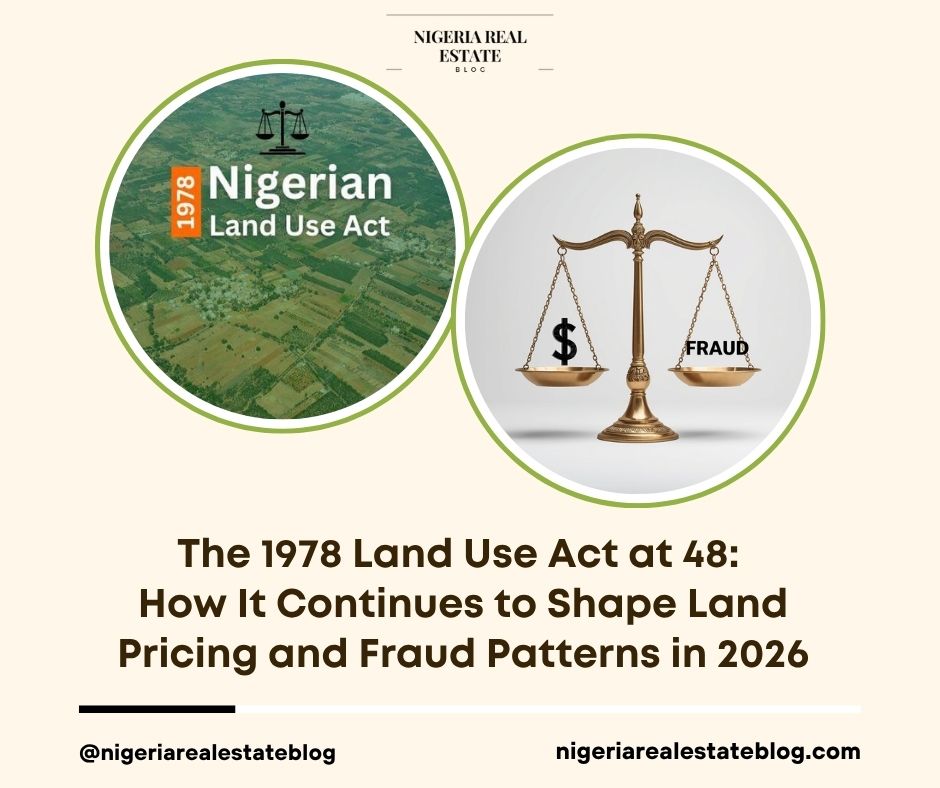
Forty-eight years after its enactment in 1978, the Land Use Act remains one of the most influential — and controversial — laws shaping Lagos real estate in 2026. It continues to directly affect land pricing, title security, development timelines, and investor confidence across the state.
Historical Context
The Land Use Act was promulgated by the military government in 1978 with the stated goal of making land more accessible and reducing speculation. It nationalised land by vesting ownership of all land in each state in the Governor, who holds it in trust for the people.
Key provisions include:
- All land is held by the Governor.
- No person or company can own land outright — only rights of occupancy.
- Transfer of interest in land requires the Governor’s Consent.
- Compensation for revoked rights is based on unexhausted improvements, not the land itself.
How It Still Shapes Lagos Real Estate in 2026
1. Title Security and Fraud Risk The Act’s structure has contributed to persistent title disputes, multiple sales, and “Omo Onile” issues. Even in 2026, many buyers still face challenges proving clean title, leading to higher legal costs and longer transaction times.
2. Development Timelines Obtaining Governor’s Consent remains a major bottleneck. Developers often wait months (sometimes years) for approvals, increasing holding costs and final property prices.
3. Land Pricing Distortions Because land itself cannot be freely owned, speculation on rights of occupancy drives up prices. This contributes to the high cost of mid-market housing and pushes development toward the luxury and ultra-affordable segments.
4. Investor Behaviour Many serious investors (especially diaspora and institutional) prefer estates with clear, pre-approved titles or Government Consent already in place, even if it means paying a premium. This further widens the gap between well-titled and poorly documented properties.
Why Meaningful Reform Remains Difficult
- Political sensitivity: Land is a major source of power and revenue for state governments.
- Entrenched interests: Many stakeholders benefit from the current opaque system.
- Fear of chaos: Critics argue radical reform could trigger massive litigation and social unrest.
- Constitutional protection: The Act is entrenched in the 1999 Constitution, making amendments complex.
Practical Implications for Buyers and Investors in 2026
- Always budget extra time and money for title perfection.
- Prefer properties where Governor’s Consent has already been obtained.
- Work with experienced lawyers for thorough due diligence.
- Consider estates with corporate titles or government-backed developments for better security.
Final Thoughts
The 1978 Land Use Act was designed with good intentions but has become one of the biggest structural challenges in Lagos real estate. In 2026, it continues to distort pricing, slow development, and create uncertainty — even as the market evolves around it.
Until meaningful reform occurs, savvy investors must treat title perfection and regulatory navigation as core competencies rather than afterthoughts. Understanding this historical law is not just academic — it is essential for making sound investment decisions in Lagos today.
Do you believe the Land Use Act needs urgent reform? Or has the market adapted well enough around it? Share your thoughts in the comments.
Join Over 11,000 Real Estate Enthusiasts! Stay ahead with our quick 5-minute roundup of Nigerian and global real estate updates, delivered to your inbox every weekday. Don’t miss out on insider tips, market trends, and exclusive insights!