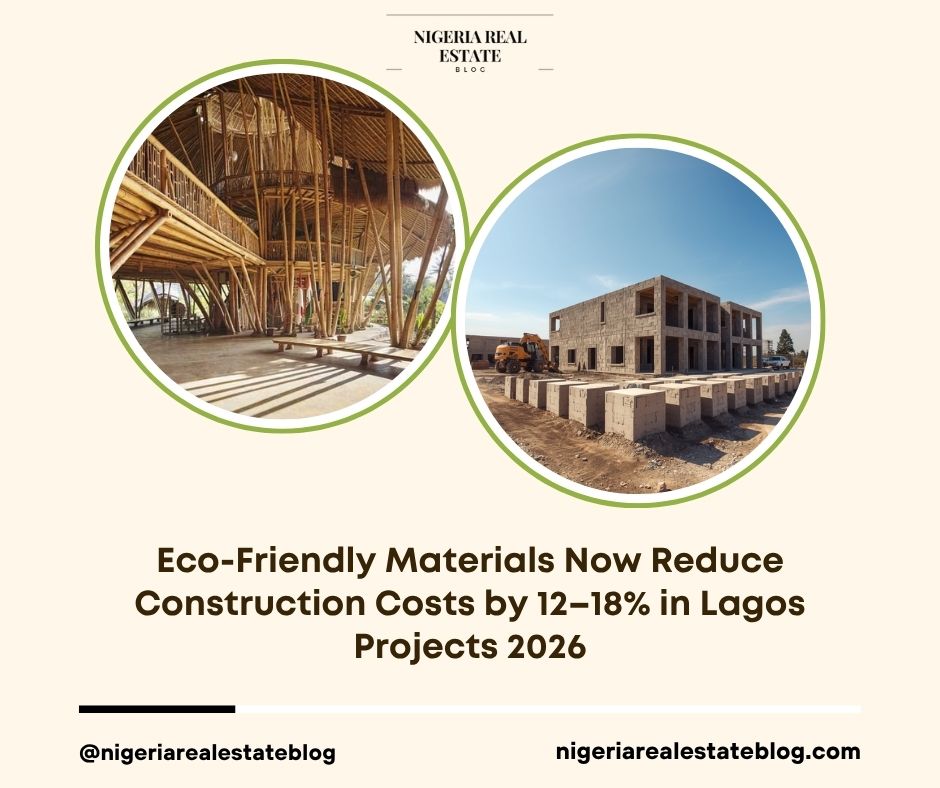
Developers in Lagos are increasingly turning to locally sourced and recycled eco-friendly materials in 2026, reporting 12–18% lower construction costs while also enjoying faster regulatory approvals and the ability to charge premium prices for green-certified properties.
This shift is driven by rising costs of imported materials, government incentives for sustainable building, and growing buyer demand for environmentally responsible homes.
Popular Eco-Friendly Materials Being Used in 2026
- Bamboo and Rattan: Used for flooring, wall panels, and ceilings. Fast-growing and locally available.
- Recycled Plastic Bricks and Tiles: Made from plastic waste, offering excellent insulation and durability.
- Compressed Earth Blocks (CEB): Produced from local soil, significantly cheaper than cement blocks.
- Fly Ash and Rice Husk Ash: Used as partial cement replacements to reduce carbon footprint and cost.
- Timber from Sustainable Plantations: Certified wood for roofing and finishing.
- Natural Stone and Laterite: For cladding and landscaping.
Cost Savings Breakdown
- Overall construction cost reduction: 12–18% on average for mid-sized projects.
- Specific savings:
- Walling materials: Up to 25–35% cheaper using CEB or recycled blocks.
- Roofing and finishes: 15–22% savings with bamboo and sustainable timber.
- Carbon credit and green incentives: Additional 5–8% effective cost reduction through faster approvals and rebates.
Additional Benefits Beyond Cost
- Faster Approvals: Projects using significant eco-friendly materials often receive quicker processing under Lagos Green Building guidelines.
- Higher Property Premiums: Green-certified buildings command 8–15% higher selling prices and better rental rates.
- Lower Long-Term Operating Costs: Better insulation leads to reduced energy and water bills for residents.
- Marketing Advantage: “Eco-friendly” branding attracts environmentally conscious buyers and tenants, especially diaspora and corporate clients.
Real Developer Examples (2026)
- A mid-market estate in Ibeju-Lekki using 60% locally sourced materials reported 16% lower total construction cost and sold out 4 months faster than comparable non-green projects.
- A Lekki developer using recycled plastic bricks and bamboo finishes achieved NGBC certification and sold units at a 12% premium.
Practical Advice for Developers in 2026
- Partner with local suppliers early to secure consistent quality and pricing.
- Engage certified green building consultants from the design stage.
- Document all sustainable practices for certification and marketing purposes.
- Educate buyers on long-term savings to justify any slight upfront premiums.
Final Thoughts
The adoption of eco-friendly materials in Lagos construction in 2026 proves that sustainability and profitability can go hand in hand. Developers who embrace locally sourced and recycled materials are not only reducing costs but also positioning their projects for faster approvals, higher premiums, and stronger market appeal.
As environmental awareness grows and regulatory incentives expand, green building practices are quickly moving from a niche choice to a competitive necessity.
For developers looking to improve margins and stand out in a consolidating market, integrating eco-friendly materials is becoming one of the smartest strategic moves available.
Are you a developer currently using eco-friendly materials in your projects? What savings or challenges have you experienced? Share your insights in the comments.
Join Over 11,000 Real Estate Enthusiasts! Stay ahead with our quick 5-minute roundup of Nigerian and global real estate updates, delivered to your inbox every weekday. Don’t miss out on insider tips, market trends, and exclusive insights!