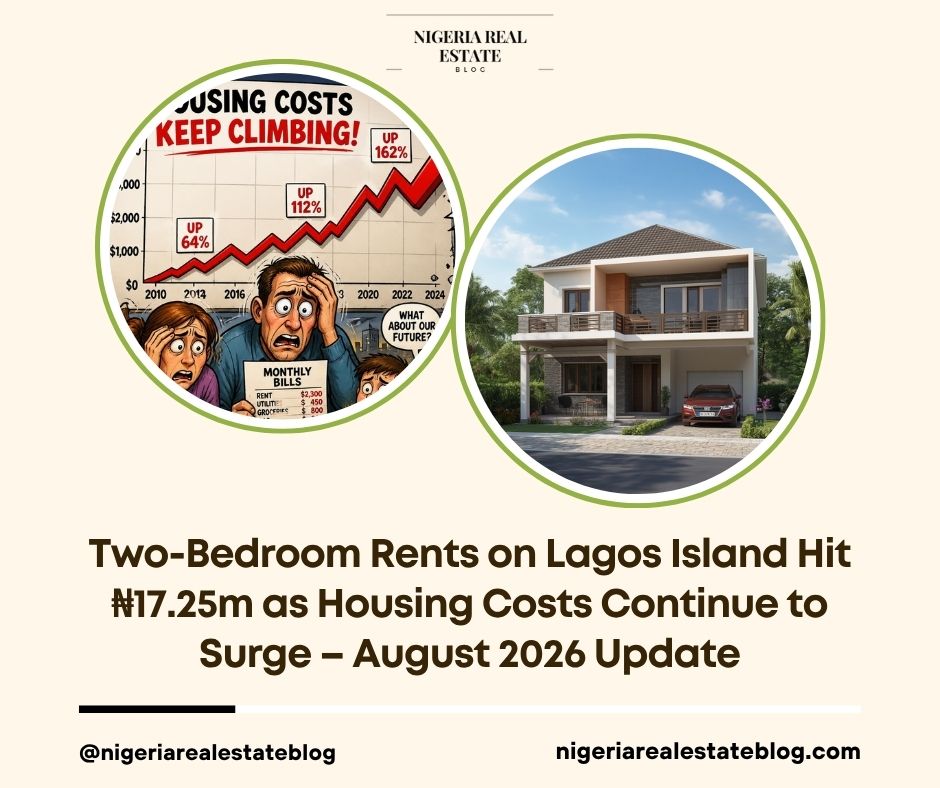
The cost of renting on Lagos Island continues to climb sharply in 2026. Recent market reports indicate that annual rents for two-bedroom apartments in prime Island locations have reached as high as ₦17.25 million, placing further pressure on both tenants and the wider housing market.
Current Rent Snapshot (August 2026)
| Location | Average Annual Rent (2-Bedroom) | Notes |
|---|---|---|
| Ikoyi | ₦12m – ₦17.25m+ | Highest end of the market |
| Victoria Island | ₦10m – ₦15m | Strong corporate demand |
| Lekki Phase 1 | ₦7m – ₦12m | Growing but still below core Island |
| Oniru / Banana Island | ₦14m – ₦20m+ | Ultra-premium segment |
These figures reflect asking rents for well-finished apartments in good estates. Actual negotiated rents can be 10–15% lower depending on the property condition, lease length, and tenant profile.
What’s Driving the Rent Surge?
Several factors are combining to push rents higher on Lagos Island:
- Limited supply of quality, well-maintained apartments
- Strong demand from corporate tenants, expatriates, and high-income professionals
- Rising maintenance and service charge costs
- Inflation and higher operating expenses for landlords
- Preference for Island locations due to proximity to business districts and lifestyle amenities
Impact on Different Stakeholders
Tenants Many middle- and upper-middle-income earners are being priced out of traditional Island locations and are either relocating to the Mainland, opting for smaller units, or exploring shared living arrangements.
Landlords Landlords with well-located, properly maintained properties are benefiting from higher rental income. However, higher service charges and maintenance costs are also eating into net yields.
Investors The rent surge is supporting strong yields in prime Island locations, but entry prices remain high. Investors are increasingly looking at value-for-money opportunities in emerging Island-adjacent or Mainland corridors.
What Tenants and Investors Should Consider
- Always verify the exact service charge and what it covers
- Negotiate rent and lease terms carefully, especially for longer tenancies
- Factor in total cost of occupancy (rent + service charge + utilities)
- Compare yields and capital appreciation potential between Island and high-growth Mainland or suburban locations
- Demand proper documentation and receipts for all payments
Final Thoughts
The continued rise in Lagos Island rents highlights the persistent imbalance between demand and quality supply in the city’s prime residential market. While landlords in the best locations are enjoying strong returns, the affordability challenge for tenants is becoming more acute.
For investors, the key is selectivity — focusing on properties with strong demand fundamentals, clear title, and realistic total occupancy costs. For tenants, careful budgeting and location flexibility remain essential in 2026.
Are you currently renting or investing on Lagos Island? How are the rising costs affecting your decisions? Share your experience in the comments.
Join Over 11,000 Real Estate Enthusiasts! Stay ahead with our quick 5-minute roundup of Nigerian and global real estate updates, delivered to your inbox every weekday. Don’t miss out on insider tips, market trends, and exclusive insights!