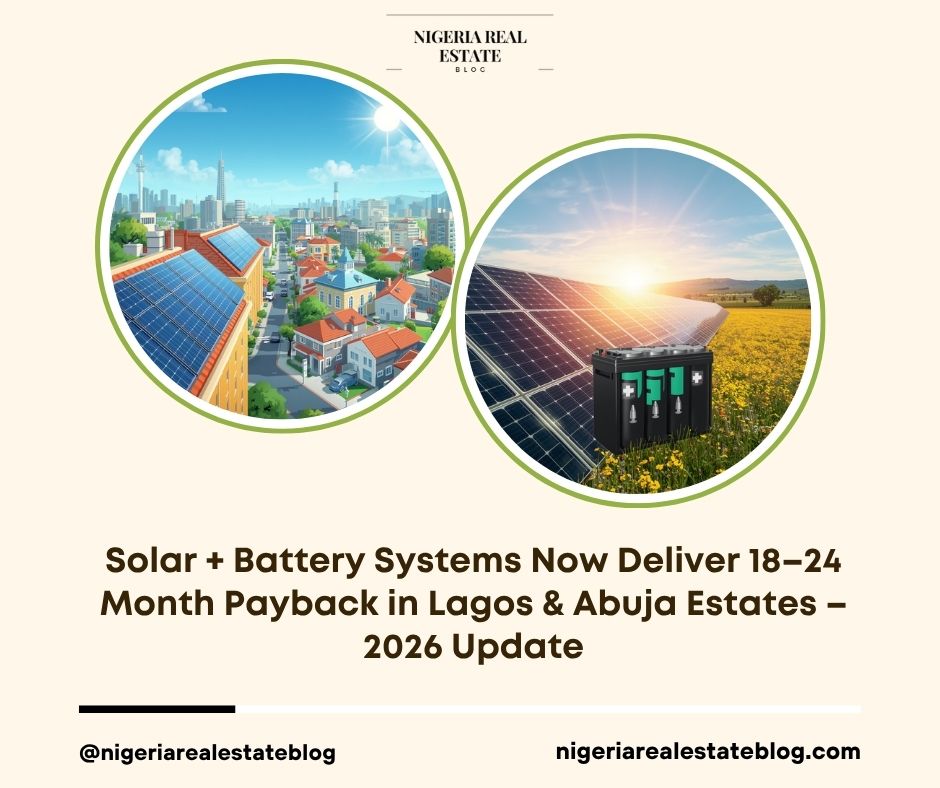
With electricity tariffs continuing to rise and generator fuel costs remaining high, solar hybrid systems with battery storage have become highly attractive in 2026. Many estates and individual homeowners in Lagos and Abuja are now achieving full payback periods of just 18 to 24 months, with reported reductions of 60–80% in monthly power expenses.
This marks a significant improvement from 2024–2025, thanks to falling costs of lithium batteries, higher efficiency panels, and improved installation expertise.
Current System Costs (May 2026)
| System Size | Typical Coverage | Installed Cost | Expected Payback |
|---|---|---|---|
| 10–15 kW Hybrid | 4–6 bedroom home / small block | ₦18M – ₦28M | 20–24 months |
| 25–40 kW Hybrid | Medium estate / 10–20 units | ₦45M – ₦75M | 18–22 months |
| 50–100 kW Hybrid | Large estate / 30+ units | ₦90M – ₦180M | 18–21 months |
Note: Prices include high-quality panels, lithium batteries (minimum 2–3 days autonomy), inverters, installation, and 5-year warranty.
Real Savings Data from 2026 Estates
- Average monthly savings: ₦1.2M – ₦4.8M per estate depending on size.
- Generator diesel reduction: 70–85%.
- NEPA/Grid bill reduction: 55–75%.
- ROI: Many systems now deliver 45–65% annual return on investment after payback.
Top Performing Corridors & Estates in 2026
- Lagos: Lekki Phase 1 & 2, Ajah-Badore, Sangotedo, Ibeju-Lekki, Epe Corridor
- Abuja: Gwarinpa, Maitama Extension, Lugbe, Kuje, Airport Road estates
- Estates with full solar + battery are commanding 15–25% higher rental/sale premiums and faster occupancy.
Why Payback Has Improved Dramatically
- Lithium battery prices dropped significantly in late 2025.
- Higher electricity tariffs (Band A & B) make solar savings larger.
- Better hybrid technology reduces waste and improves efficiency.
- Government incentives and NGBC green building points speed up approvals.
- More experienced installers delivering better system designs.
Practical Recommendations for 2026
- Choose Tier-1 lithium batteries (not gel or lead-acid).
- Insist on hybrid inverters with zero-export capability where needed.
- Get at least 2–3 days battery autonomy.
- Demand proper earthing, surge protection, and monitoring apps.
- Use reputable installers with verifiable case studies.
- Factor in maintenance (typically 3–5% of system cost annually).
Risks & Considerations
- Poor quality installations still fail within 2–3 years.
- Theft of panels remains an issue in some areas — use security measures.
- Initial capital outlay is high (financing options are improving).
Final Thoughts
In 2026, installing a properly designed solar + battery hybrid system is no longer just an environmental choice — it has become one of the smartest financial decisions for property owners and estate developers in Lagos and Abuja.
With payback periods now as short as 18 months in well-designed systems, solar is delivering exceptional returns while providing reliable power and increasing property values.
If you own or manage property in Lagos or Abuja, now is one of the best times to seriously evaluate solar + battery solutions.
Have you installed solar in your estate or home this year? What payback period are you seeing? Share your experience in the comments.
Join Over 11,000 Real Estate Enthusiasts! Stay ahead with our quick 5-minute roundup of Nigerian and global real estate updates, delivered to your inbox every weekday. Don’t miss out on insider tips, market trends, and exclusive insights!