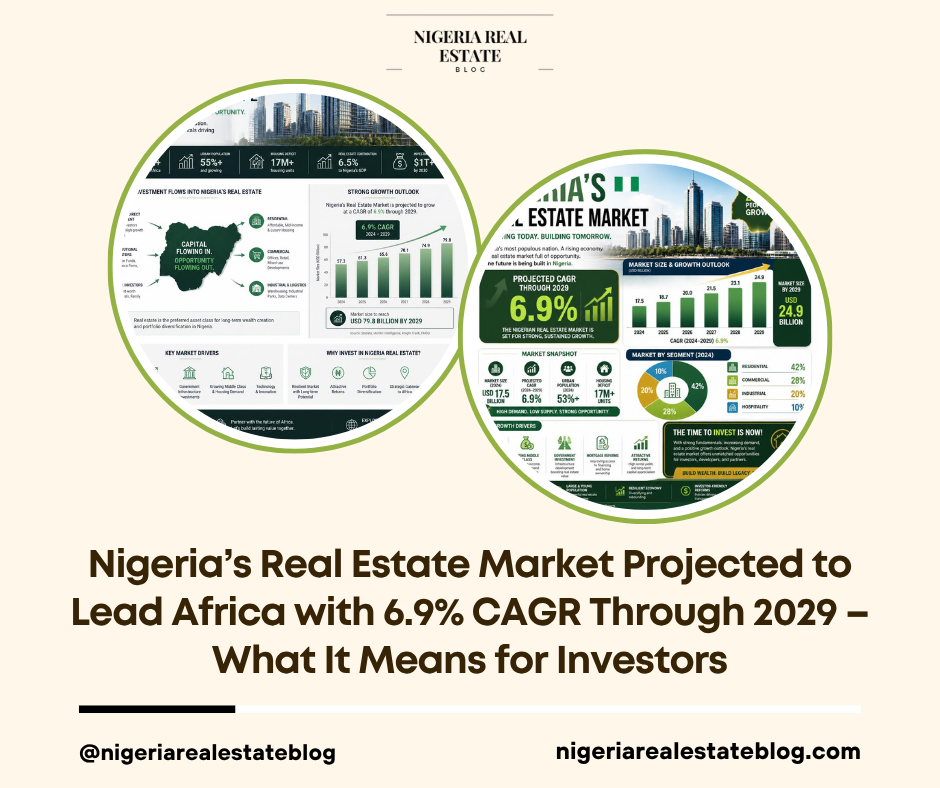
Nigeria’s real estate market is projected to record the fastest growth among major African economies between 2025 and 2029, with a compound annual growth rate (CAGR) of approximately 6.9%. The sector, already estimated at around $2.6 trillion, continues to stand out despite persistent macroeconomic challenges.
This outlook positions Nigeria ahead of other key markets such as Kenya, Rwanda, Ghana and South Africa in terms of expected growth speed over the next few years.
What Is Driving the Growth Projection?
Several structural factors underpin the positive forecast:
- Rapid urbanisation and continued population growth
- A large and persistent housing deficit
- Strong underlying demand for both residential and select commercial assets
- Relatively attractive rental yields compared with many African peers (estimated around 8% gross in recent assessments)
- Ongoing infrastructure development in key corridors
These fundamentals are expected to support expansion even in an environment of elevated interest rates, currency volatility and title-related frictions.
Key Segments Expected to Benefit
Not all parts of the market are projected to perform equally. Areas likely to see stronger activity include:
- Mid-market residential units in well-located suburban and emerging corridors
- Purpose-built student accommodation near major universities
- Logistics and light industrial spaces linked to trade and e-commerce
- Select infrastructure-driven locations benefiting from new roads, ports and industrial projects
Luxury and purely speculative segments are expected to remain more selective, with performance heavily dependent on location quality and buyer liquidity.
Risks That Still Matter
While the growth outlook is encouraging, important risks remain:
- High cost of capital and elevated commercial lending rates
- Persistent challenges with land title security and documentation
- Construction cost inflation
- Affordability constraints for a large portion of the population
- Macroeconomic uncertainties, including inflation and exchange rate movements
Investors who ignore these factors risk overpaying or entering projects with weak fundamentals.
What This Means for Investors in 2026
The projected leadership in African real estate growth does not mean every property or location will perform well. Instead, it reinforces the importance of selective, well-researched positioning.
Practical implications include:
- Prioritising locations with genuine demand drivers and improving infrastructure
- Favouring completed or near-completed assets over early-stage speculative projects where risk tolerance is low
- Paying close attention to title quality and developer track record
- Focusing on assets that can generate reasonable rental income while offering medium-term appreciation potential
- Maintaining realistic return expectations given current financing costs
Long-term investors with a clear understanding of local market dynamics remain better placed than those chasing broad growth narratives without due diligence.
Final Thoughts
Nigeria’s projected 6.9% CAGR and status as Africa’s fastest-growing major real estate market through 2029 highlight the scale of opportunity that still exists. At the same time, the market continues to reward discipline, local knowledge and careful risk management.
Growth at the national level does not eliminate the need for rigorous deal-level analysis. Investors who combine the positive structural outlook with strong due diligence and selective asset choice are likely to be best positioned over the coming years.
What segments or locations are you most focused on given this growth outlook? Share your thoughts in the comments.
Join Over 11,000 Real Estate Enthusiasts!
Stay ahead with our quick 5-minute roundup of Nigerian and global real estate updates, delivered to your inbox every weekday. Don’t miss out on insider tips, market trends, and exclusive insights!