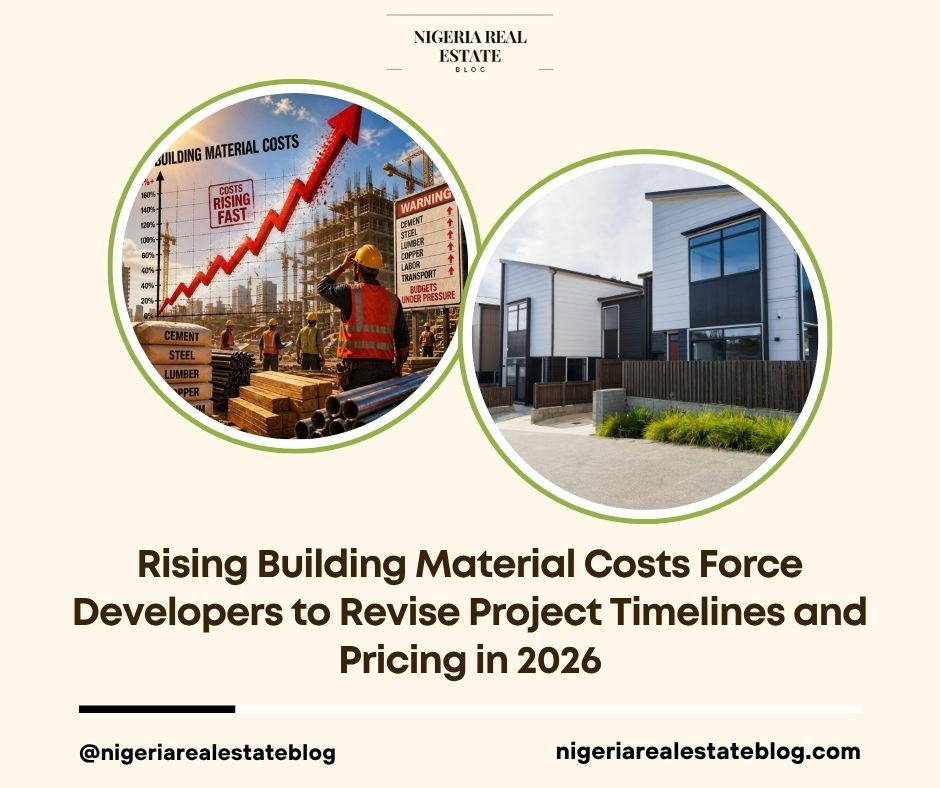
Persistent increases in the cost of key building materials continue to reshape project planning and pricing across Nigeria’s real estate sector in 2026. Cement, steel, aluminium, finishing materials and other essential inputs have remained elevated, compelling many developers to adjust delivery timelines, unit prices and overall project strategies.
This cost pressure is one of the most significant operational challenges facing the industry this year.
Current Cost Pressures
Developers report that the price of major construction inputs has stayed high for an extended period. The most affected materials include:
- Cement
- Reinforcement steel
- Roofing materials
- Electrical and plumbing components
- Finishing items such as tiles, doors and fittings
These increases have raised the overall cost of delivering both residential and commercial projects, particularly for developments that were priced and launched under earlier cost assumptions.
How Developers Are Responding
In response to the sustained cost environment, many developers are taking the following steps:
- Revising project timelines to manage cash flow and procurement
- Adjusting unit prices on new phases or unsold inventory
- Slowing the launch of new schemes until cost visibility improves
- Prioritising the completion of ongoing phases rather than starting large new ones
- Exploring alternative materials and construction methods where feasible
- Increasing reliance on off-plan sales to support construction funding
Well-capitalised developers with stronger balance sheets are generally better positioned to absorb or manage these pressures, while smaller developers face tighter constraints.
Impact on Project Delivery
The combination of high material costs and elevated financing expenses has led to:
- Longer delivery timelines on some projects
- Phased completion rather than full simultaneous delivery
- Greater caution in launching large-scale schemes
- Increased focus on mid-market and demand-driven product types
Buyers are increasingly asking more detailed questions about completion schedules and payment structures as a result.
What This Means for Buyers
Prospective buyers should take the current cost environment into account when making decisions:
- Off-plan purchases carry higher delivery risk when material prices are volatile
- Completed or near-completed units offer greater certainty
- Price revisions on new phases are becoming more common
- Stronger due diligence on the developer’s track record and financial capacity is essential
- Payment structures should be clearly tied to verifiable construction milestones
Buyers who prioritise certainty of delivery may find completed stock more attractive despite higher headline prices in some locations.
Broader Market Implications
The sustained rise in building material costs is contributing to:
- Upward pressure on property prices, especially for new developments
- Slower expansion of new housing supply in some segments
- Greater differentiation between strong and weak developers
- Increased interest in alternative construction approaches (including modular and cost-efficient methods)
Until material prices stabilise or decline meaningfully, these dynamics are likely to persist.
Final Thoughts
Rising building material costs remain a major constraint on housing delivery and project planning in 2026. Developers are adapting through revised timelines, selective pricing adjustments and more cautious project launches, while buyers face a market that rewards careful due diligence and a preference for delivery certainty.
Understanding these cost pressures is essential for anyone buying, investing or developing property in the current environment.
Have you noticed project delays or price revisions linked to material costs in your area? Share your observations in the comments.
Join Over 11,000 Real Estate Enthusiasts!
Stay ahead with our quick 5-minute roundup of Nigerian and global real estate updates, delivered to your inbox every weekday. Don’t miss out on insider tips, market trends, and exclusive insights!