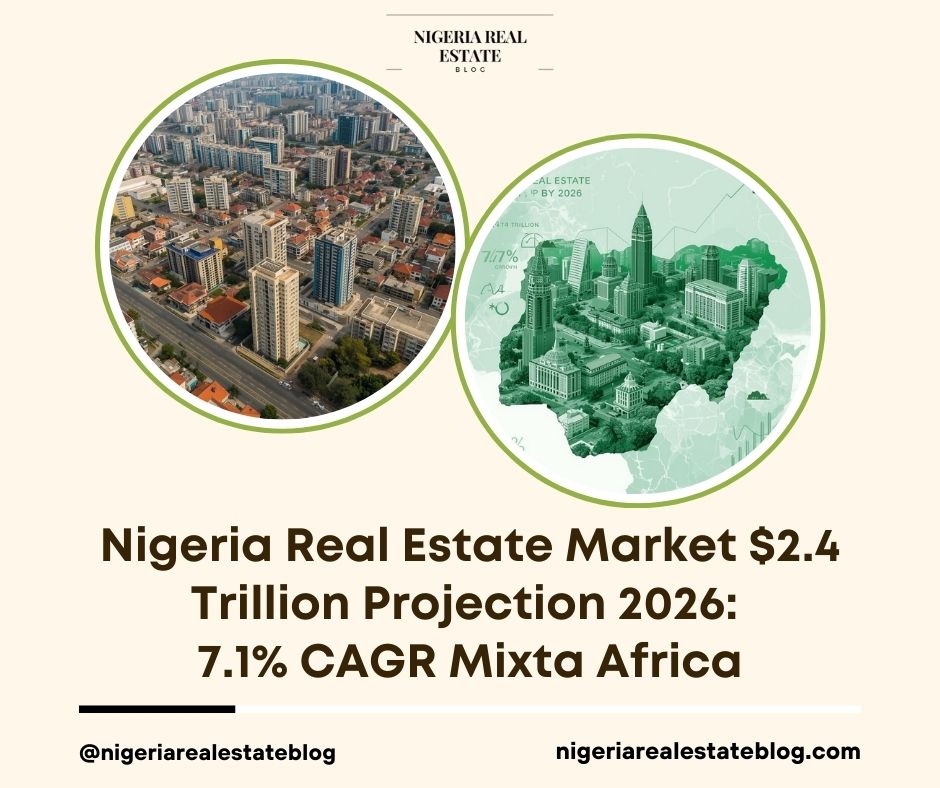
The Nigerian real estate market is on track to reach $2.4 trillion by the end of 2026, according to Mixta Africa’s 2024 Real Estate Outlook report and its subsequent updates through early 2026.
This projection builds on the sector’s estimated $2.14 trillion valuation at the end of 2024, reflecting a compound annual growth rate (CAGR) of 7.1% from 2024 to 2029. Residential real estate remains the dominant segment, accounting for approximately $1.77 trillion of the total market value, while the sector contributed 5.45% to Nigeria’s GDP in 2024 (NBS data) despite macroeconomic headwinds including high inflation and currency volatility.
Key Growth Drivers Fueling the 2026 Projection
- Rapid Urbanization & Population Growth
- Urban population share reached ~55% in 2025 (UN & NBS estimates), adding millions annually to cities like Lagos, Abuja, Port Harcourt and Ibadan.
- Lagos alone continues to absorb ~1.1 million new residents per year, sustaining demand for housing, offices, retail and logistics space.
- Diaspora Remittances & Foreign Investment
- Remittances hit ~$23–25 billion in 2025 (World Bank preliminary data), with 40–45% of high-end Lagos purchases (Ikoyi, Victoria Island, Banana Island) attributed to diaspora buyers paying in dollars.
- Increased interest from international funds and REITs in commercial & data-centre assets.
- Infrastructure Mega-Projects
- Ongoing delivery of Lagos-Calabar Coastal Highway (phase 2), Lekki Deep Seaport full operations, Abuja Light Rail extension, and new industrial parks in Ogun, Imo and Kogi.
- These projects have driven 15–40% land value uplift in adjacent corridors (Lekki-Epe, Ibeju-Lekki, Kuje-Gwagwalada).
- Proptech & Digital Transaction Growth
- Digital platforms now facilitate 15–20% of transactions (PropertyPro, Spleet, Fundall), reducing fraud and speeding deal cycles.
- Rent-now-pay-later uptake surged 300%+ in 2025, improving access for middle-class renters.
Segment Breakdown (2026 Estimates)
- Residential — $1.77T+ (largest segment)
- Affordable/mid-market: strongest volume growth
- Luxury: highest price appreciation (10–20% YoY in prime Lagos/Abuja)
- Commercial — Offices, retail, logistics warehouses
- Land & Development Sites — Highest volatility/appreciation in infrastructure corridors
Implications for 2026 Transactions & Investors
- Prime urban areas (Ikoyi, Victoria Island, Maitama): 5–10% price growth expected; yields 5–9% (higher for short-let)
- Emerging corridors (Lekki-Epe, Ibeju-Lekki, Kuje-Gwagwalada, Mowe-Ofada): 10–20% appreciation potential; yields 12–18%
- Secondary cities (Enugu, Port Harcourt, Ibadan, Owerri): 8–15% growth; yields 12–20%
- Financing edge: FMBN Renewed Hope (9.75%) + commercial top-up (18–21%) remains best hybrid for mid-market buyers
Final Thoughts
The projected $2.4 trillion market size by end-2026 underscores real estate’s growing role as Nigeria’s economic backbone — already contributing more to GDP than oil & gas in real terms (5.43% in Q1 2026 per NBS).
For investors, the message is clear: position in high-growth corridors, leverage diaspora & proptech trends, and focus on segments with structural demand (affordable/mid-market residential, logistics, data centres).
The market is not slowing — it’s accelerating.
Which segment or corridor are you most focused on in 2026? Drop your outlook below!
Disclaimer: This information is for general purposes only and not legal advice. Consult a qualified real estate lawyer for guidance.
Join Over 11,000 Real Estate Enthusiasts! Stay ahead with our quick 5-minute roundup of Nigerian and global real estate updates, delivered to your inbox every weekday. Don’t miss out on insider tips, market trends, and exclusive listings!