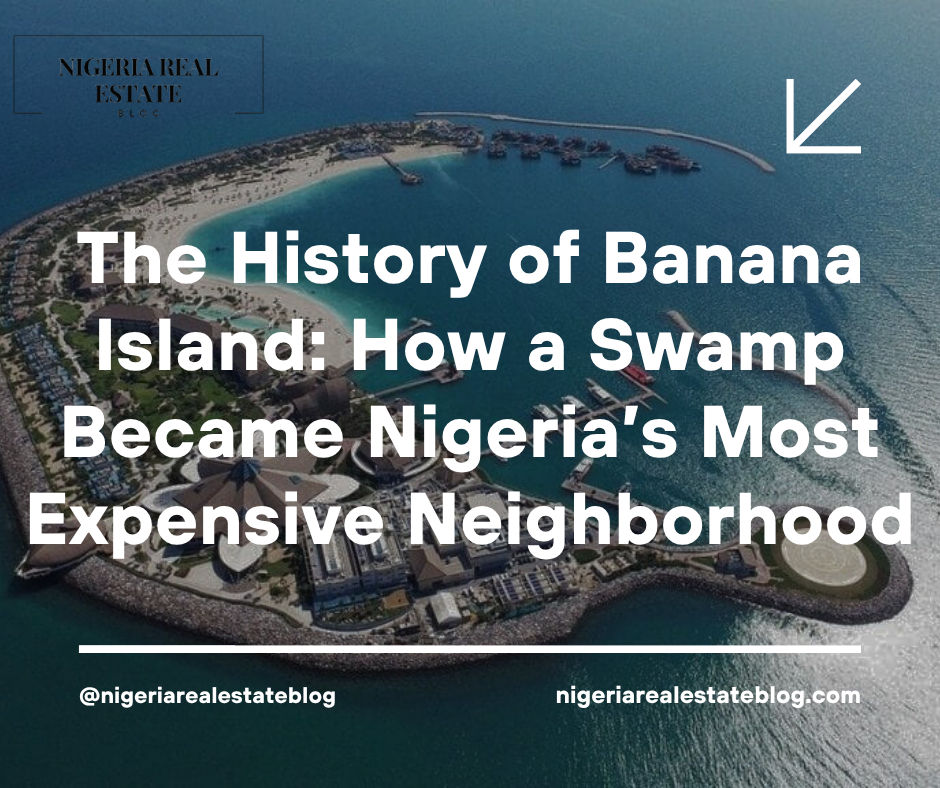
Banana Island is the address people use as shorthand for wealth in Lagos. It is also land that
did not exist before it was reclaimed from the water, which is the part of the story that explains
everything else about it.
This guide covers how the island came to be, why it became so expensive, and what buying there
actually involves.
Where it is and what it is
Banana Island sits in the Ikoyi area of Lagos, connected to the mainland by a single bridge
with controlled access. That single access point is not incidental — it is the physical basis of
the island’s defining characteristic, which is security.
It is a gated, masterplanned residential estate rather than an organic neighbourhood. Roads,
drainage, power and security were designed as part of the development, and the estate is managed
as a single controlled environment.
From swamp to land
The area was originally mangrove swamp and shallow water. Turning it into buildable land meant
reclaiming it — filling, raising and consolidating the ground so that foundations and roads could
be built on top.
That sequence explains two things about Banana Island that are easy to miss:
- Its layout is deliberate. Because the land was created and then divided,
the estate follows a plan rather than the accumulated randomness of an older district. - The engineering matters. Reclaimed land requires proper ground treatment and
drainage. The quality of that work, done or redone over time, is a genuine factor in what stands
on it.
The legal battles
Reclaiming land and establishing clear ownership of it attracted litigation. Disputes over
entitlement to the reclaimed area were a feature of the island’s development, and the outcome of
those cases shaped who could develop, sell and build there.
For a buyer today the practical lesson is straightforward: on land with a contested history,
the title chain matters more than usual. Whatever the current position, it should be verified
independently by your own lawyer, not accepted from a seller’s summary.
Why it became so expensive
Three things compound.
It is scarce
It is a finite, reclaimed island with a fixed number of plots. You cannot extend it, and you
cannot build outward. Supply is effectively fixed.
It is secure
Controlled access, estate management and a resident community that values privacy. In a city
where security is a primary consideration for high-net-worth buyers, that is a major part of the
premium.
It became the reference point
Once a critical mass of prominent residents and businesses settled there, the address itself
became the asset. Prime residential markets work this way: value concentrates where the
concentration already is.
Who buys and who lives there
The resident base is a mix of Nigerian business figures, senior professionals, international
executives and diaspora buyers. Many properties are second homes or investments rather than
principal residences.
That composition has a practical consequence for anyone buying to let: your likely tenant is
an expatriate executive, a returning professional or a company housing senior staff. The
specification expected — finishing, security, backup power, service standards — reflects that.
What buying there involves
Verify the title independently
Given the island’s history, engage your own solicitor and physically inspect the title
documents. Do not rely on a seller’s or agent’s assurance.
Understand what you are buying
Properties vary between detached houses, terraces, apartments and serviced developments. Each
carries different service charge structures and different rules on alteration and use.
Model the service charge properly
Estate management, security, common area maintenance and utilities are ongoing costs, and in an
estate of this standard they are material. Ask for the current charge and its recent history.
Check the ground
On reclaimed land, drainage and ground conditions are worth a specific question. Ask what has
been done, when, and whether there is any history of settlement or water ingress on the plot or in
the development.
Visit at different times of day
Security checkpoints, traffic onto and off the bridge, and how quiet the estate feels outside
working hours are all things you only learn by going.
Banana Island compared with other Lagos prime districts
| Banana Island | Ikoyi (mainland side) | Victoria Island | Eko Atlantic | |
|---|---|---|---|---|
| Access | Single controlled bridge | Open | Open, congested | Controlled |
| Housing type | Houses, terraces, apartments | Mixed, older stock | Apartments, offices | New towers |
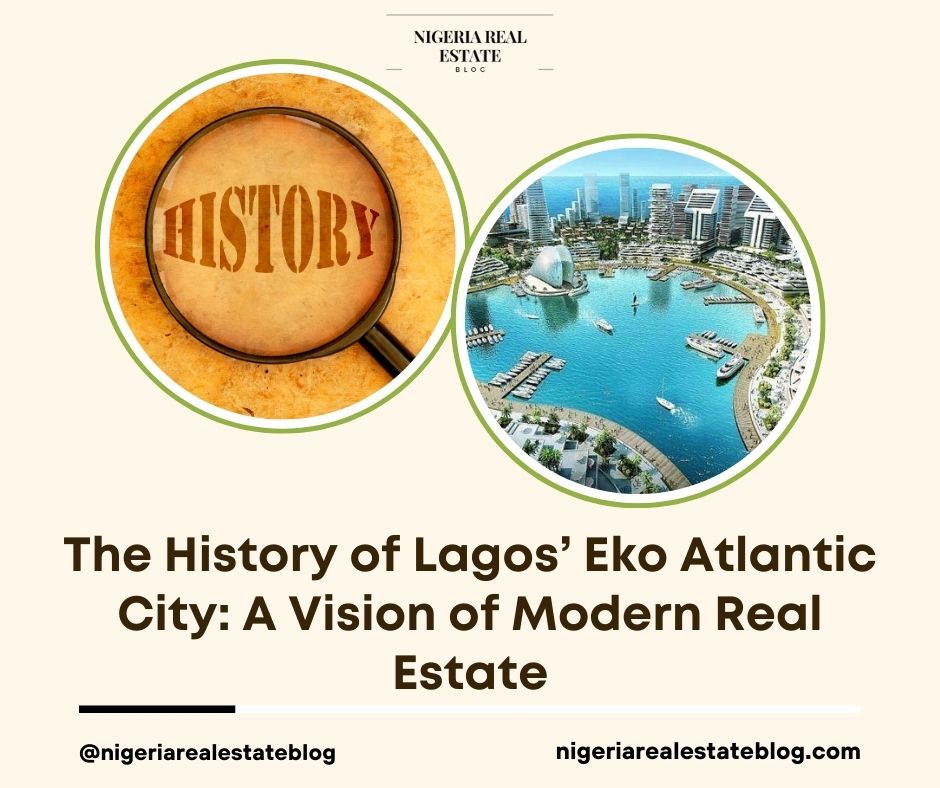
| Supply | Fixed | Constrained | Constrained | Still growing |
| Character | Quiet, gated | Established, mixed | Commercial | New, still filling |
| Best suited to | Privacy and security | Space and location | Business proximity | New build and infrastructure |
Frequently asked questions
Is Banana Island man-made?
Yes. The land was reclaimed from swamp and shallow water before the estate was developed.
Why is it called Banana Island?
The name predates the estate and relates to the area’s earlier vegetation and topography. It
was retained as the development took shape rather than being renamed.
Is it the most expensive area in Lagos?
It is consistently among the most expensive residential addresses in Lagos and in Africa, and
it is the one most often used as the benchmark. Specific values move with the market and with the
individual property — ask for current comparable sales rather than a headline figure.
Can anyone buy there?
There is no restriction on who may own property, but the entry price and the ongoing service
charges effectively define the buyer pool. Verification of title and financing are the practical
gates.
Is it a good investment?
It has historically held value because supply is fixed and demand is concentrated. That does
not make it immune to market cycles, and the carrying costs are high. Treat it as a prime
residential asset with a long hold, not a quick trade.
The short version
Banana Island is reclaimed land that became the benchmark prime address in Lagos. Its value
comes from fixed supply, controlled access and the concentration of wealth that followed. If you
are buying, the two things that matter most are independent verification of title — because the
land has a contested history — and an honest view of the service charges you will carry every
year afterwards.