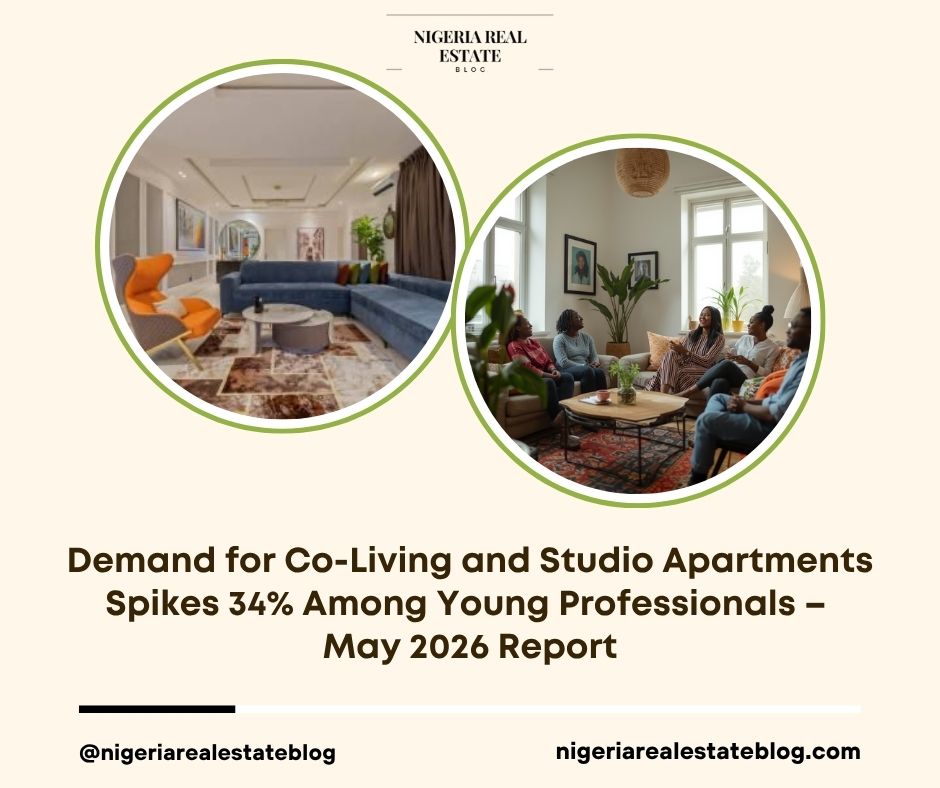
Demand for co-living and studio apartments has spiked 34% in May 2026, according to data from major listing platforms and estate managers. Young professionals, remote workers, and early-career individuals are the primary drivers, seeking affordable, flexible, and community-oriented housing.
This marks a continuing shift away from traditional 2–3 bedroom apartments toward smaller, well-managed, amenity-rich units in vibrant locations.
Top Locations Driving the Surge (May 2026)
| Location | Avg. Studio Rent (Monthly) | Avg. Co-Living Bed Space | Occupancy Rate | Demand Growth |
|---|---|---|---|---|
| Yaba & Surulere | ₦280k – ₦420k | ₦180k – ₦250k | 89–94% | +38% |
| Ikeja & Allen Avenue | ₦320k – ₦480k | ₦200k – ₦280k | 86–92% | +35% |
| Lekki Phase 1 & Ikate | ₦350k – ₦520k | ₦220k – ₦320k | 84–91% | +32% |
| Gwarinpa & Maitama Ext. | ₦260k – ₦390k | ₦170k – ₦240k | 88–93% | +31% |
| Ajah & Sangotedo | ₦240k – ₦360k | ₦150k – ₦220k | 87–92% | +29% |
Why Young Professionals Are Choosing Co-Living & Studios
- Affordability: Lower monthly commitment compared to full 2/3-bedroom apartments.
- Flexibility: Short-term leases (6–12 months) suit career mobility.
- Community & Amenities: Shared workspaces, gyms, fast Wi-Fi, and social events.
- Remote Work Support: Reliable power (solar hybrid) and high-speed internet.
- Location: Proximity to tech hubs, offices, and entertainment.
Investment Implications for 2026
- High Occupancy: Consistently above 85%, even during economic dips.
- Rental Yield: 12–18% net yields possible with good management.
- Faster ROI: Smaller unit sizes mean lower entry capital and quicker cash flow.
- Future Demand: Expected to remain strong as Nigeria’s youth population and remote work culture grow.
Best Strategy for Investors Focus on estates with strong security, reliable power, and shared amenities. Convert larger apartments into 2–4 studio/co-living units where permitted, or buy purpose-built co-living buildings in tech and commercial hubs.
Final Thoughts
The 34% surge in demand for co-living and studio apartments confirms a clear structural shift in Nigeria’s rental market. Young professionals are prioritizing flexibility, community, and affordability over large personal spaces.
For investors, this segment offers excellent cash flow, high occupancy, and relatively lower capital requirements. Well-managed co-living properties in Yaba, Ikeja, Lekki, and Gwarinpa are currently among the smartest residential plays in 2026.
The trend is strong and likely to continue as more young Nigerians enter the workforce and embrace flexible living.
Are you investing in or living in co-living/studio apartments? Which location is performing best for you? Share your experience in the comments.
Join Over 11,000 Real Estate Enthusiasts! Stay ahead with our quick 5-minute roundup of Nigerian and global real estate updates, delivered to your inbox every weekday. Don’t miss out on insider tips, market trends, and exclusive insights!