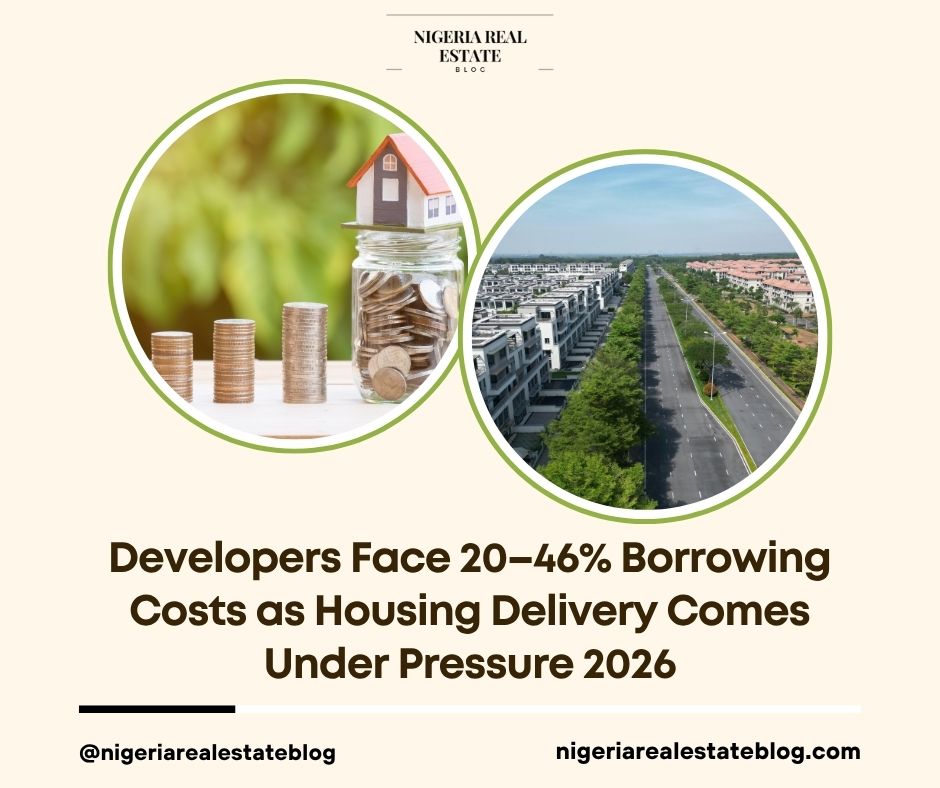
Developers Face 20–46% Borrowing Costs as Housing Delivery Comes Under Pressure
Many Nigerian real estate developers are currently accessing project finance at interest rates ranging from 20% to as high as 46%. These elevated borrowing costs, combined with persistent increases in the price of cement, steel, and other building materials, are placing significant pressure on housing delivery across the country.
The result is slower project timelines, higher final unit prices, and greater caution among developers when launching new schemes. For buyers and investors, this environment demands more careful evaluation of both projects and the financial strength of the developers behind them.
Why Borrowing Costs Are So High
Commercial lending rates for real estate projects remain elevated due to a combination of factors:
- High Monetary Policy Rate environment
- Perceived risk in the construction and real estate sector
- Limited long-term project finance options
- Currency and inflation-related uncertainties
Many developers, especially mid-sized ones, struggle to access affordable capital. Those who do often face short tenors and stringent collateral requirements, making large-scale or long-gestation projects more difficult to execute profitably.
Impact on Housing Delivery
High financing costs are producing several visible effects in the market:
- Slower project launches
Some developers are delaying new phases or scaling down the size of new estates to reduce capital exposure. - Higher unit prices
The cost of capital is ultimately passed on to buyers. Projects financed at 25–40% interest require significantly higher selling prices to remain viable. - Preference for equity and off-plan funding
More developers are relying on buyer deposits and equity partners rather than pure bank debt, increasing the importance of off-plan sales performance. - Greater risk of stalled projects
Developers with weak balance sheets or aggressive debt structures face higher chances of delays or incomplete delivery when cash flow tightens.
What This Means for Buyers
- Prioritise developers with strong track records and transparent financing structures
- Be cautious with early-stage off-plan projects that appear under-capitalised
- Factor in the possibility of price reviews or delayed delivery when budgeting
- Prefer completed or near-completed units where possible to reduce construction risk
What This Means for Investors
- Focus on well-capitalised developers who can weather high interest rates
- Examine the capital structure of any project before committing funds
- Consider the exit timeline carefully — high financing costs can erode returns if projects drag
- Look for opportunities in completed stock or projects with significant equity already injected
Practical Takeaways for the Market
The current high cost of capital is one of the biggest constraints on housing supply in 2026. Until borrowing rates ease meaningfully or more specialised long-term housing finance becomes widely available, delivery volumes are likely to remain constrained relative to demand.
This environment rewards discipline — both from developers who manage their balance sheets carefully and from buyers/investors who prioritise substance over aggressive marketing claims.
Final Thoughts
Developers facing 20–46% borrowing costs are operating in one of the toughest financing environments in recent years. The pressure is real, and it is already influencing the pace and pricing of new housing supply.
For anyone buying or investing in Nigerian real estate in late 2026, understanding a developer’s financing structure is no longer optional. It is a core part of due diligence. Projects backed by expensive short-term debt carry higher risk. Those supported by stronger equity and proven delivery capacity stand a better chance of completing on time and protecting investor capital.
Stay selective, verify financing claims, and prioritise delivery certainty over projected upside.
Join Over 11,000 Real Estate Enthusiasts!
Stay ahead with our quick 5-minute roundup of Nigerian and global real estate updates, delivered to your inbox every weekday. Don’t miss out on insider tips, market trends, and exclusive listings!