Lagos real estate has undergone one of the most dramatic transformations in Africa — from colonial trading posts and indigenous family compounds to a bustling megacity market worth hundreds of billions of dollars. Understanding this historical journey is essential for anyone buying, selling, or investing in Lagos property in 2026, as many of today’s challenges (title disputes, pricing distortions, and development bottlenecks) are deeply rooted in the past.
Key Historical Phases
Pre-Colonial Era (Before 1861) Land was largely owned communally by families, chieftaincies, and indigenous groups under customary law. Ownership was based on usage, inheritance, and community recognition rather than formal documents.
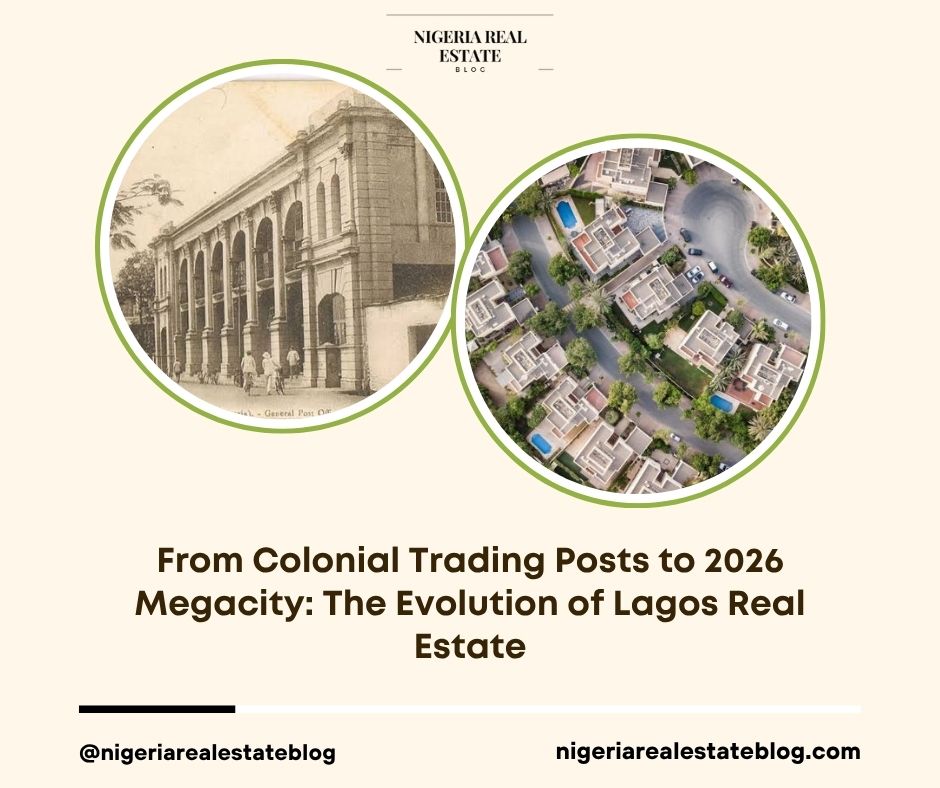
Colonial Period (1861–1960) After Lagos became a British colony in 1861, the colonial administration introduced formal land registration and the concept of Crown Land. The 1917 Land Proclamation Ordinance began centralising control, laying the foundation for future state ownership of land.
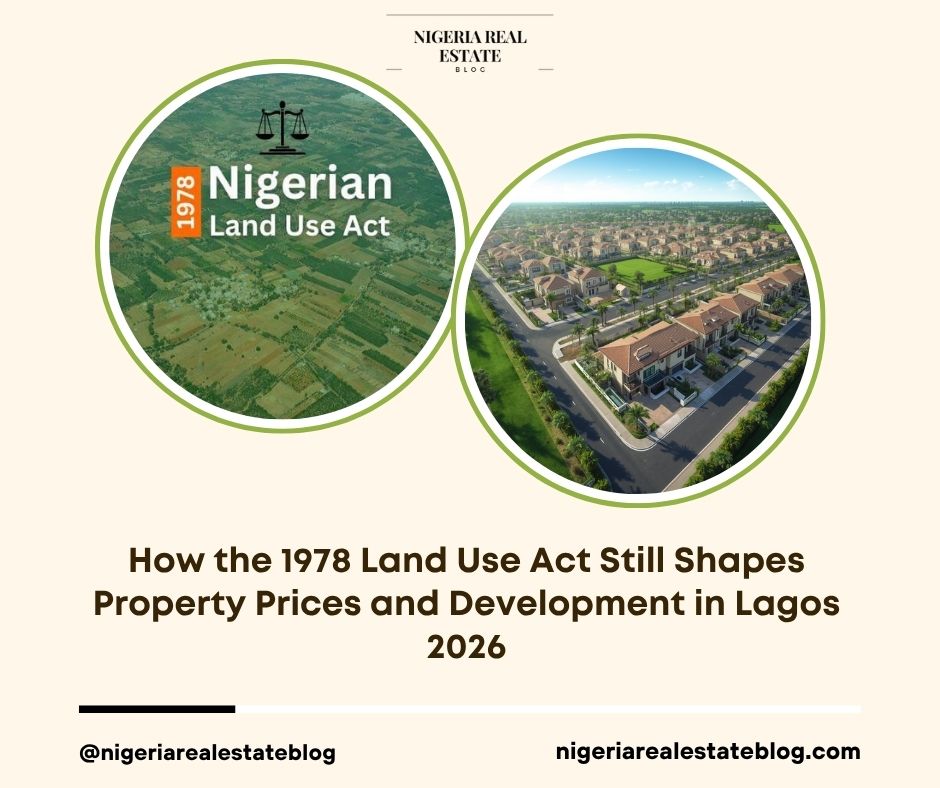
Post-Independence & Military Era (1960–1978) Rapid urbanisation and the oil boom increased pressure on land. The 1978 Land Use Act was enacted, vesting all land in each state in the Governor. This remains the single most influential law shaping Lagos real estate today.
1999–2015: Democratisation and Boom Years Return to civilian rule brought massive real estate growth, but weak implementation of the Land Use Act led to widespread title fraud, “Omo Onile” issues, and multiple sales.
2016–2026: Megacity Era Lagos has become Africa’s largest city with intense pressure on land. Blockchain initiatives, digital registries, and green building policies are now attempting to modernise the system, but the legacy of the 1978 Act continues to create friction.
How History Still Affects Lagos Real Estate in 2026
- Title Security: The Governor’s Consent requirement and customary land complexities continue to cause delays and disputes.
- Pricing Distortions: Artificial scarcity created by land tenure laws drives up prices, especially in desirable areas.
- Development Bottlenecks: Obtaining approvals and consents remains time-consuming, increasing project costs.
- Investor Caution: Diaspora and institutional investors often pay premiums for properties with clean, digitally verifiable titles.
Lessons for Investors in 2026
- Treat title perfection as the most important part of any deal.
- Prefer properties with Governor’s Consent already obtained.
- Budget extra time and money for legal due diligence.
- Focus on estates with corporate or government-backed titles when possible.
- Understand that historical complexities are why well-documented properties command higher prices and sell faster.
Final Thoughts
The evolution of Lagos real estate from colonial trading posts to a 2026 megacity explains why the market behaves the way it does today. Many current challenges are not new — they are the result of decades of layered laws, rapid urbanisation, and incomplete reforms.
For smart investors, understanding this history is not academic — it is a practical advantage. Those who navigate the complexities of title, consent, and regulation successfully are consistently rewarded with better deals and stronger long-term performance.
Lagos remains full of opportunity, but success belongs to those who respect and work within its historical realities.
What aspect of Lagos real estate history surprises you most? Or what challenges have you faced that trace back to these historical roots? Share your thoughts in the comments.
Join Over 11,000 Real Estate Enthusiasts! Stay ahead with our quick 5-minute roundup of Nigerian and global real estate updates, delivered to your inbox every weekday. Don’t miss out on insider tips, market trends, and exclusive insights!