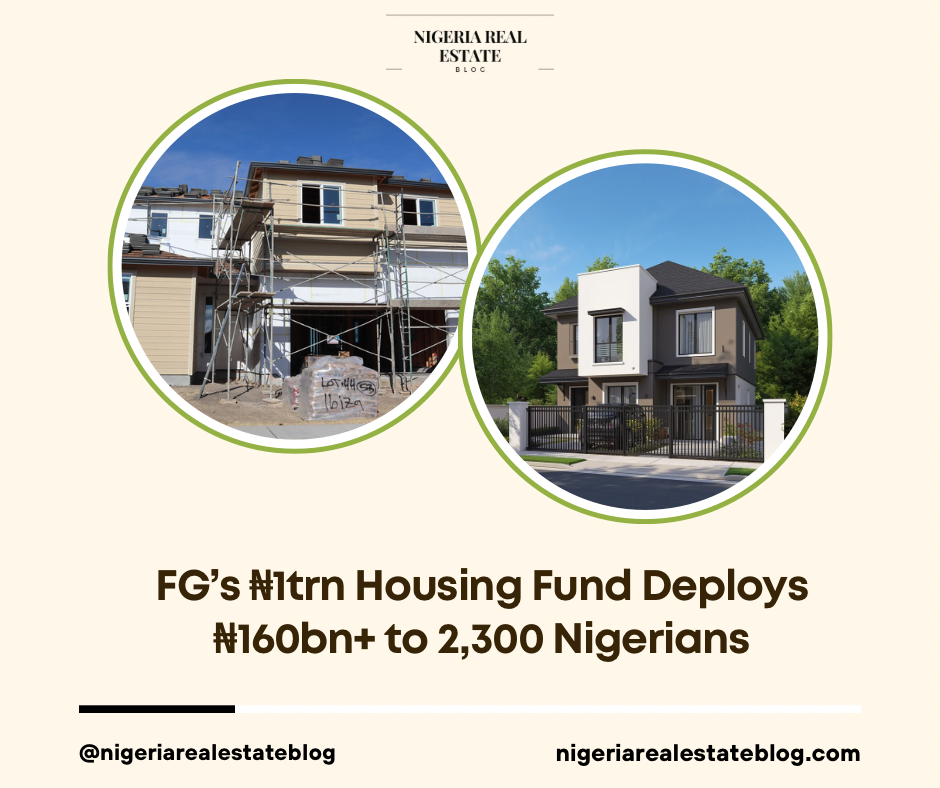
FG’s ₦1 Trillion Housing Fund Deploys Over ₦160 Billion to More Than 2,300 Nigerians
The Ministry of Finance Incorporated Real Estate Investment Fund (MREIF) has disbursed more than ₦160 billion in mortgage financing to over 2,300 beneficiaries across 27 states. The update, highlighted in recent statements by President Bola Tinubu and covered in industry reports, marks one of the more concrete progress figures from the federal government’s major housing finance intervention in 2026.
Key Scheme Details
| Feature | Details |
| Maximum loan amount | ₦100 million |
| Interest rate | 9.75% fixed |
| Equity contribution | Minimum 10% |
| Repayment period | Up to 20 years |
| Beneficiaries so far | Over 2,300 across 27 states |
| Amount disbursed | Over ₦160 billion |
| Fund structure | ₦1 trillion programme |
The fund was designed to provide longer-term, relatively lower-cost mortgage finance compared with commercial bank rates, which remain significantly higher for most borrowers.
Why the Numbers Matter
Nigeria’s housing deficit is officially estimated at around 14.9 million units (with some industry figures citing higher numbers when substandard stock is included). Against that scale, 2,300 mortgages represent a modest start. However, the single-digit interest rate and structured repayment terms make MREIF one of the more accessible formal options currently available to middle-income earners who can meet the equity and documentation requirements.
The fund’s performance is being closely watched because earlier housing finance initiatives have often struggled to convert capital allocations into actual completed homes and sustainable repayment.
Practical Implications for Prospective Homebuyers
• The 9.75% rate remains attractive relative to commercial mortgages, but monthly repayments on a ₦100 million loan are still substantial for many households.
• Eligibility typically requires NHF contribution history, formal employment or verifiable income, and clean title on the property being financed.
• Buyers should treat the 10% equity requirement as a minimum and factor in additional costs (legal fees, valuation, insurance, and stamp duties).
• Because the scheme is still relatively new in scale, processing times and documentation standards can vary by participating financial institution.
Broader Market Context
The deployment of over ₦160 billion shows that capital is moving through the system. The bigger test, as several analysts have noted, is whether this financing is translating into additional affordable housing supply rather than simply supporting purchases of already expensive existing stock.
For developers, consistent mortgage offtake can improve project bankability. For buyers, the scheme currently offers one of the clearer pathways to formal long-term financing, provided the property and the borrower’s income profile fit the criteria.
Final Thoughts
MREIF’s latest figures confirm that the fund is operational and reaching beneficiaries across a wide geographic spread. While the absolute numbers remain small relative to the national deficit, the combination of a single-digit fixed rate and structured terms continues to make it one of the more relevant federal interventions for middle-income homebuyers in 2026.
Prospective applicants should focus on eligibility readiness, realistic affordability calculations, and thorough property due diligence rather than treating the scheme as a guaranteed or automatic route to homeownership.
Join Over 11,000 Real Estate Enthusiasts!
Stay ahead with our quick 5-minute roundup of Nigerian and global real estate updates, delivered to your inbox every weekday. Don’t miss out on insider tips, market trends, and exclusive listings!