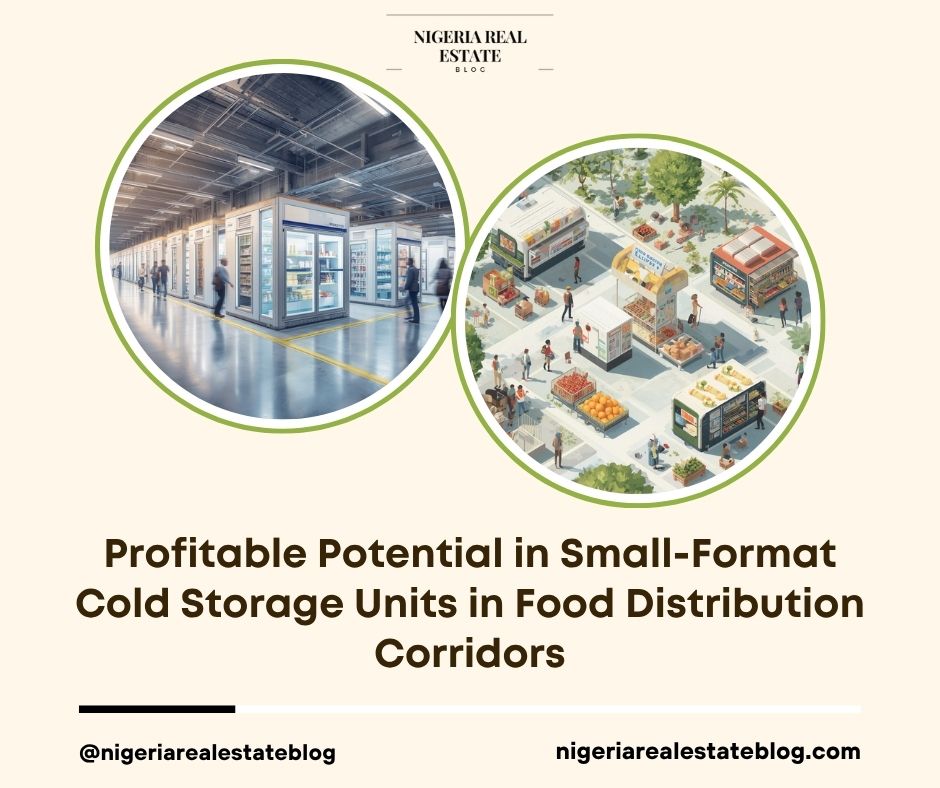
Small-format cold storage units (typically 50–300 sqm) in strategic food distribution corridors are gaining significant investor interest in 2026. With rising demand for preserved agricultural produce, frozen foods, and perishable goods due to urbanization and expanding retail chains, these facilities offer attractive yields and relatively stable income.
Why Small Cold Storage Units Are Attractive
- Growing need for reliable cold chain logistics in Nigeria’s food supply system.
- Shorter setup time and lower capital requirement compared to large industrial cold stores.
- Ability to serve local markets, supermarkets, and small distributors.
- Potential for long-term leasing to established food companies.
Best Locations in 2026
- Lagos–Ogun Food Corridors (Mowe, Ofada, Shimawa, Ikorodu)
- Ibadan & Oyo Agricultural Zones
- Abeokuta & Ogun Central
- Abuja–Nasarawa Food Distribution Routes
- Onitsha & Aba Markets (Southeast)
These areas benefit from proximity to farms, major markets, and good road access.
Typical Investment Profile
- Setup Cost: ₦85M – ₦250M (depending on size and technology)
- Monthly Revenue Potential: ₦4M – ₦12M+ (based on utilization)
- Net Yields: 18–28% for well-managed facilities
- Payback Period: 3.5 – 5.5 years in high-demand corridors
Key Operational Factors
- Power Reliability: Solar hybrid or reliable generator backup is essential.
- Temperature Control: Maintain proper cold chain standards for different products.
- Security: 24/7 surveillance and secure access.
- Management: Professional operation or leasing to experienced cold chain operators.
- Compliance: Meet NAFDAC and SON standards for food storage.
Success Tips for Investors
- Partner with experienced cold chain operators rather than managing directly.
- Locate near farms or major wholesale markets.
- Offer flexible storage packages (daily, weekly, monthly).
- Invest in energy-efficient refrigeration technology.
- Build strong relationships with supermarkets and distributors.
Risks to Manage
- High energy costs if power systems are unreliable.
- Product spoilage due to equipment failure.
- Regulatory compliance and licensing requirements.
Final Thoughts
Small-format cold storage units in food distribution corridors represent a promising and relatively defensive investment in 2026. As Nigeria’s food supply chain modernizes and demand for preserved goods increases, well-located and professionally managed facilities can deliver strong returns with long-term relevance.
For investors seeking diversification into the agro-logistics space, this segment offers good cash flow potential and inflation protection when executed with proper planning and technical expertise.
Are you currently exploring cold storage investments or considering this asset class? What challenges or opportunities have you observed? Share your thoughts in the comments.
Join Over 11,000 Real Estate Enthusiasts! Stay ahead with our quick 5-minute roundup of Nigerian and global real estate updates, delivered to your inbox every weekday. Don’t miss out on insider tips, market trends, and exclusive insights!