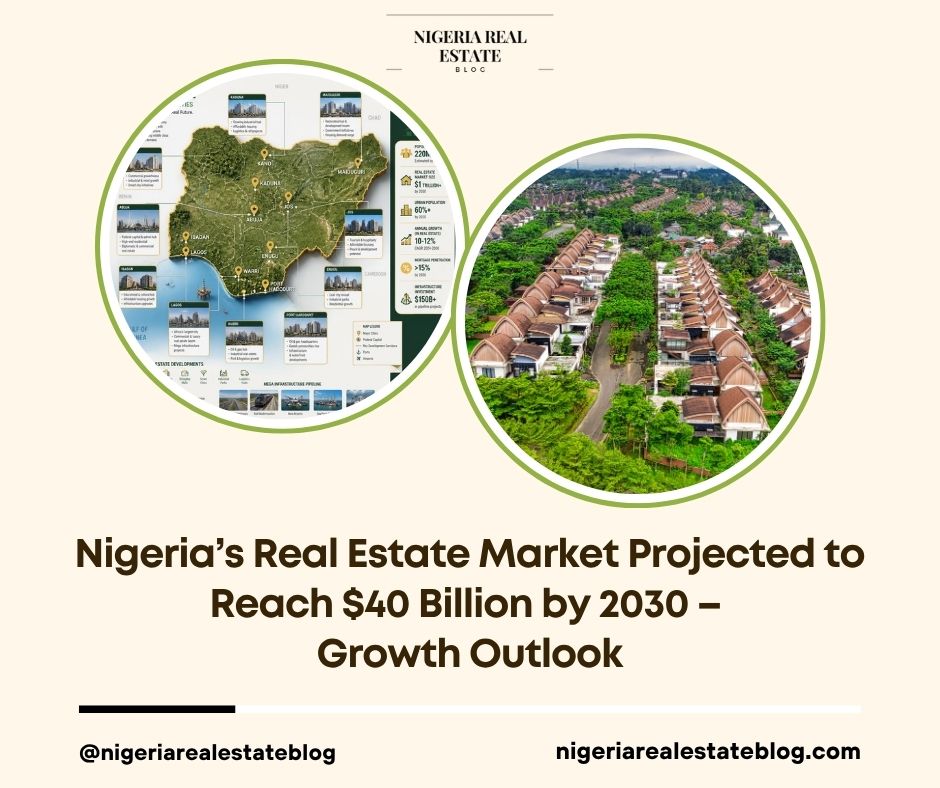
Industry projections published in August 2026 suggest that Nigeria’s real estate sector could expand to approximately $40 billion by 2030. This forecast builds on earlier estimates that placed the market size at around $29–32 billion in the mid-2020s and reflects expectations of continued urbanisation, infrastructure development, and rising demand for both residential and commercial space.
Key Growth Drivers
Several structural factors are expected to support expansion over the rest of the decade:
- Rapid urbanisation and population growth – Continued migration into major cities is sustaining demand for housing and commercial facilities.
- Infrastructure development – Road, rail, and urban renewal projects are improving accessibility and unlocking new corridors.
- Housing deficit – Even with the revised official deficit figure, the gap between supply and need remains substantial, particularly in the affordable and mid-market segments.
- Institutional and diaspora capital – Growing interest from pension funds, REITs, and Nigerians abroad is expected to support larger-scale developments.
- Digitalisation and regulation – Improvements in land administration, title processes, and professional regulation could reduce friction and attract more formal investment.
Segments Expected to Lead Growth
Residential (especially mid-market and suburban) Family homes and mid-market apartments in well-connected suburban and satellite locations are likely to remain core demand drivers.
Purpose-built commercial and mixed-use Office space tailored to corporate needs, small-format retail within residential catchments, and mixed-use schemes are expected to see steady interest.
Logistics and light industrial E-commerce growth and improving transport links continue to support demand for warehouses and distribution facilities in strategic corridors.
Income-producing assets and REITs Listed and private real estate investment vehicles may play a larger role in channelling capital into completed, income-generating properties.
Implications for Investors
Opportunities
- Long-term structural demand supports patient capital.
- Infrastructure-linked corridors may offer stronger capital appreciation potential.
- Income-focused strategies (rental residential, commercial, logistics) can provide more stable returns than pure speculation.
Risks and Considerations
- High construction costs and financing constraints remain significant hurdles.
- Execution risk on large projects is still elevated.
- Regulatory and title-related challenges persist in many locations.
- Market corrections are possible in overheated micro-markets or poorly conceived schemes.
Practical Positioning for 2026–2030
- Prioritise locations with clear infrastructure catalysts and genuine end-user demand.
- Favour developers and managers with proven delivery records.
- Consider a mix of direct property and listed/private real estate vehicles for diversification.
- Maintain strong due diligence standards, especially on title, funding structure, and realistic timelines.
- Monitor policy developments around housing finance, land administration, and professional regulation.
Final Thoughts
A projected market size of $40 billion by 2030 points to meaningful long-term opportunity in Nigerian real estate. However, growth will not be uniform across all segments or locations. Investors who combine a long-term view with rigorous selection, realistic return expectations, and careful risk management are better placed to benefit from the structural trends shaping the sector.
How are you currently positioning for the next phase of growth in Nigerian real estate? Share your perspective in the comments.
Join Over 11,000 Real Estate Enthusiasts! Stay ahead with our quick 5-minute roundup of Nigerian and global real estate updates, delivered to your inbox every weekday. Don’t miss out on insider tips, market trends, and exclusive insights!