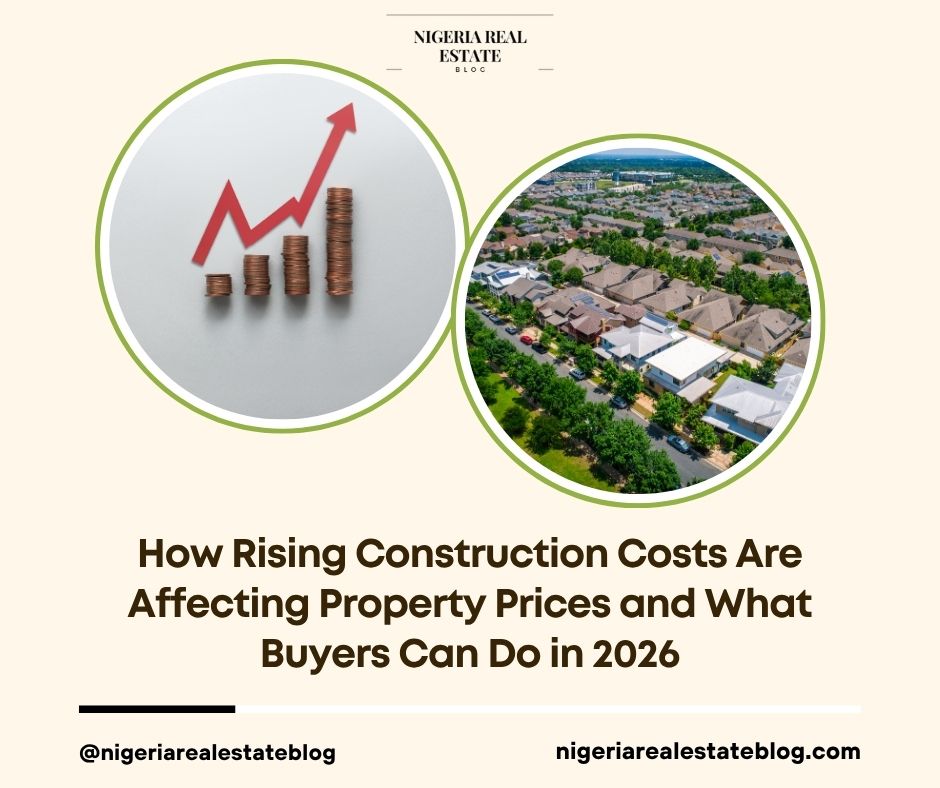
Rising construction costs, driven largely by increases in cement and other building materials, continue to put upward pressure on property prices and rents across Nigeria in 2026. Developers have warned that these cost pressures are being passed on to the market, making careful planning more important than ever for buyers.
Here is a practical guide on how the situation is affecting the market and what buyers can do.
How Rising Costs Are Affecting the Market
- Higher material prices increase the cost of delivering new homes, which developers often reflect in selling prices.
- Ongoing projects may face budget overruns, sometimes leading to delayed completion or revised payment terms.
- In the rental market, landlords and investors who face higher maintenance or development costs may seek higher rents to protect returns.
- Affordable and mid-market segments feel the pressure most, as margins are already tighter.
Practical Steps Buyers Can Take in 2026
1. Focus on Completed or Near-Completed Properties
Properties that are already finished or at advanced stages of construction carry less risk of further cost-driven price revisions. You can inspect the actual unit and negotiate from a position of certainty.
2. Scrutinise Payment Structures Carefully
For off-plan or under-construction purchases:
- Prefer milestone-based payments tied to verifiable progress.
- Avoid large upfront payments without strong contractual protections.
- Clarify what happens if costs rise further — who bears the additional burden?
3. Strengthen Your Budget Buffer
Build in a contingency (ideally 10–15% or more) above the stated purchase price to cover:
- Possible price adjustments
- Rising associated costs (legal fees, moving, finishing, etc.)
- Higher-than-expected service charges or maintenance after purchase
4. Compare Total Cost of Ownership, Not Just Purchase Price
A slightly higher purchase price in a well-located, completed property with lower running costs (reliable power, good infrastructure) may prove more affordable long-term than a cheaper unit that requires heavy generator use or frequent repairs.
5. Explore Alternative Financing and Support Options
- Check current government-backed or development-linked mortgage schemes that may offer more stable rates.
- Consider Rent-to-Own or staged ownership models where available.
- For those with access, evaluate whether employer-supported or cooperative housing schemes offer better value.
6. Prioritise Strong Developer Track Records
In a high-cost environment, developers with proven ability to complete projects on schedule and manage cost pressures are lower-risk. Review their past deliveries and current site progress before committing.
7. Negotiate from Data, Not Urgency
Use comparable recent transactions and current listing data to support your offer. Properties that have been on the market longer may offer more negotiation room, especially if the seller is motivated.
Additional Tips
- Monitor material price trends if you are planning a self-build or major renovation.
- Factor in the possibility of further cost increases when setting your maximum budget.
- Engage a qualified quantity surveyor or project manager for self-build or extensive renovation projects.
- Keep documentation of all cost-related communications with developers or contractors.
Final Thoughts
Rising construction costs are a structural challenge in the current market, and they are influencing both new supply pricing and rental expectations. Buyers who approach the market with realistic budgets, strong due diligence, and a preference for certainty (completed stock, clear payment terms, reputable counterparties) are better positioned to navigate the environment successfully.
The goal is not to avoid the market entirely, but to buy smartly — protecting your capital while still securing a property that meets your needs.
What strategies are you using to manage the impact of rising construction costs? Share your approach in the comments.
Join Over 11,000 Real Estate Enthusiasts! Stay ahead with our quick 5-minute roundup of Nigerian and global real estate updates, delivered to your inbox every weekday. Don’t miss out on insider tips, market trends, and exclusive insights!