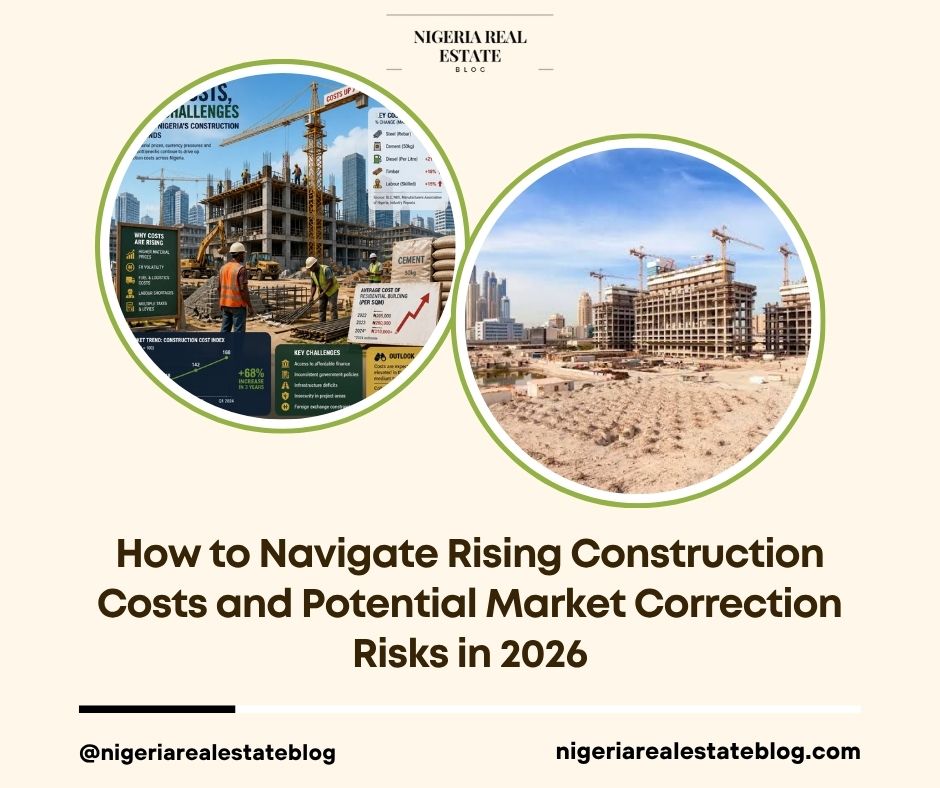
Construction costs remain elevated in 2026, and rents in many urban locations have risen sharply over the past few years. Against this backdrop, some market observers are pointing to the possibility of correction or slower price growth in certain segments. While structural demand for housing remains strong, careful positioning is more important than ever.
Here is a practical guide for buyers and investors on how to navigate the current environment.
1. Distinguish Between Structural Demand and Speculative Pricing
Not every price increase is sustainable. Focus on:
- Locations with genuine end-user demand (jobs, schools, infrastructure)
- Properties that offer clear utility (liveable, rentable, or usable)
- Realistic yield potential rather than pure capital appreciation stories
Avoid chasing momentum in micro-markets that have run far ahead of underlying fundamentals.
2. Prioritise Completed or Near-Completed Assets
In an environment of high construction costs and execution risk:
- Completed or substantially completed properties carry lower delivery risk
- You can assess actual quality, infrastructure, and service charge levels
- Exit options are generally clearer than with early-stage off-plan projects
Early-stage schemes require stronger conviction in the developer’s balance sheet and track record.
3. Stress-Test Your Assumptions
Before committing capital, run conservative scenarios:
- What happens if rents stagnate or soften for 12–24 months?
- What is your true all-in cost (including finance, holding costs, and possible voids)?
- How long can you hold if the market is slower than expected?
Build in buffers rather than assuming best-case outcomes.
4. Focus on Quality of Location and Product
In a potential correction or slowdown, higher-quality assets in stronger locations tend to hold value better. Prioritise:
- Good accessibility and infrastructure
- Strong estate management and community standards
- Flexible unit types that appeal to a broad tenant or buyer pool
5. Be Disciplined on Entry Price
Rising costs do not automatically justify every asking price.
- Use recent comparable transactions (not just asking prices)
- Negotiate firmly, especially on properties that have been listed for extended periods
- Walk away from deals that only work under optimistic assumptions
6. Manage Leverage Carefully
High financing costs amplify risk.
- Avoid over-leveraging on speculative positions
- Prefer projects or acquisitions that can service debt even under moderate stress
- Consider the impact of any further changes in interest rates or lending conditions
7. Diversify Exposure Where Possible
Concentration risk is higher when market conditions are uncertain.
- Spread capital across different locations or asset types if your portfolio size allows
- Balance growth-oriented positions with more stable income-producing assets
- Maintain liquidity for opportunities that may arise if prices soften in some segments
Practical Checklist Before Buying or Investing in 2026
- Is there clear end-user demand for this property type in this location?
- Is the price justified by recent comparable evidence?
- Can the investment withstand a period of flat or lower rents/prices?
- Is the developer or seller financially stable and transparent?
- Have I independently verified title, approvals, and physical condition?
- Do I have a clear exit or holding strategy?
Final Thoughts
Elevated construction costs and high rents create both challenges and selective opportunities. Structural housing needs remain significant, but not every project or price point will perform equally well.
Buyers and investors who stay disciplined on entry price, prioritise quality and completed stock, stress-test their assumptions, and avoid excessive leverage are better positioned to protect capital and benefit from the market’s longer-term growth trajectory.
How are you adjusting your approach to property purchases or investments in the current cost environment? Share your strategies in the comments.
Join Over 11,000 Real Estate Enthusiasts! Stay ahead with our quick 5-minute roundup of Nigerian and global real estate updates, delivered to your inbox every weekday. Don’t miss out on insider tips, market trends, and exclusive insights!