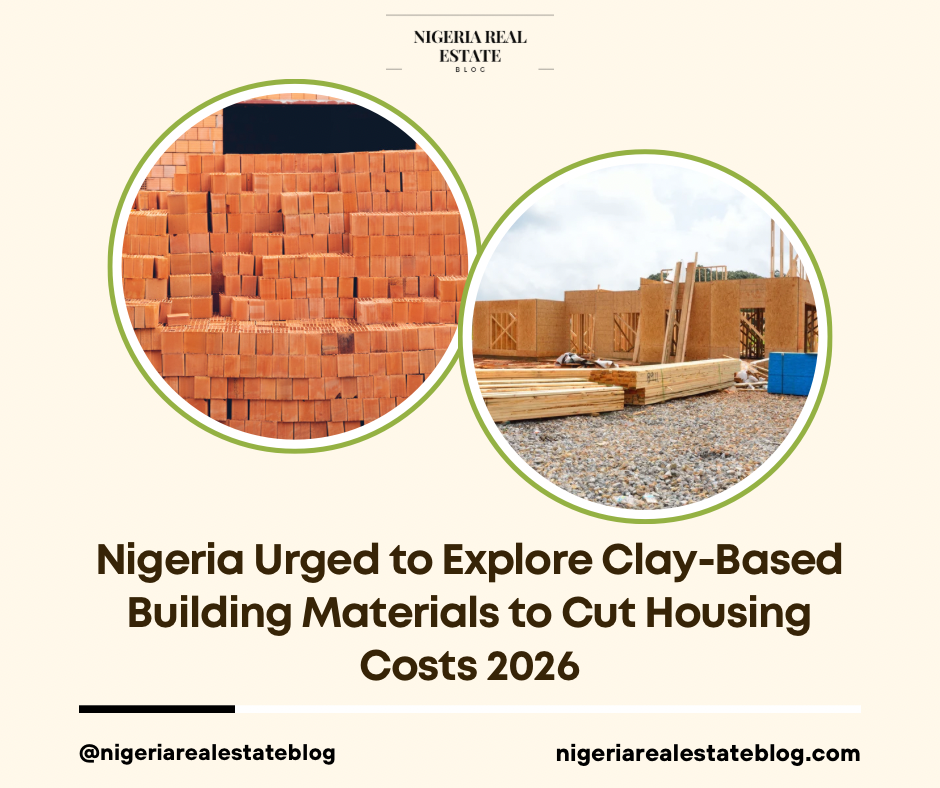
Real estate experts are once again urging Nigeria to take clay-based building materials more seriously as a way to reduce construction costs and improve housing affordability. With cement prices still hovering between ₦11,000 and ₦15,000 per 50kg bag in many locations and other conventional materials remaining expensive, the call for locally available alternatives has gained fresh attention in early November 2026.
Ayodeji Fasehun, a real estate expert, recently argued that Nigeria should invest more in research, production and standardisation of clay-based products and other indigenous materials. His position is clear: the country cannot continue to rely so heavily on conventional and imported inputs while housing remains out of reach for millions of citizens.
Why Clay-Based Materials Are Being Discussed Again
The pressure on construction budgets is real. Cement, steel, blocks, sand and finishing materials have all recorded significant price increases over the past two years. These rising costs are slowing project delivery, forcing developers to revise prices upward, and pushing many would-be homeowners further away from the market.
Clay and laterite are widely available across many parts of Nigeria. When properly processed and stabilised, they can be used to produce blocks, bricks and other building components. Proponents argue that greater use of these materials could:
• Reduce dependence on cement-intensive products
• Support local manufacturing and job creation
• Lower transportation costs in areas where the raw material is nearby
• Offer better thermal performance in Nigeria’s hot climate
Some studies have also shown that well-made laterite or clay blocks can perform competitively in strength and durability when the right mix designs and production standards are applied.
Important Caution from Experts
Fasehun and other professionals are careful to stress one critical point: clay is not automatically cheaper simply because it is local.
The total cost of using any material must include:
• Production or manufacturing expenses
• Transportation to site
• Labour and installation requirements
• Finishing needs
• Long-term durability and maintenance
• Compliance with building codes and safety standards
If a clay-based product fails any of these tests, the supposed cost advantage disappears. Substandard materials that lead to structural problems or faster deterioration ultimately cost more.
This caution is especially important given Nigeria’s history of building collapses and the use of poor-quality materials. Any push for alternative materials must be accompanied by proper testing, certification and enforcement.
What Needs to Happen for Clay Materials to Scale
For clay-based and other indigenous materials to make a meaningful difference in housing delivery, several steps are required:
1. Research and standardised testing – Universities, research institutes and standards organisations need to produce clear performance data on strength, durability, thermal behaviour and fire resistance.
2. Quality manufacturing capacity – Small and medium manufacturers need support to produce consistent, certified products at scale.
3. Clear building regulations – Codes and approval processes should explicitly recognise properly tested alternative materials.
4. Pilot projects – Successful demonstration projects help convince developers, financiers and homebuyers.
5. Skills training – Artisans and site supervisors need training on how to work correctly with these materials.
Without these foundations, the conversation risks remaining theoretical.
Implications for Developers and Buyers
Developers looking at cost-sensitive projects (especially affordable and mid-market housing) should evaluate clay-based options carefully. The potential savings exist, but only when the full cost and performance picture is clear.
Buyers should ask questions when a developer claims to be using alternative materials:
• Has the material been tested and certified?
• What is the track record of similar projects?
• How does the warranty and structural guarantee compare with conventional construction?
Final Thoughts
The renewed call for clay-based building materials reflects a deeper problem: Nigeria’s housing delivery system remains too dependent on expensive conventional inputs. Exploring locally available materials is a logical step, but it must be done with discipline. Cost reduction cannot come at the expense of safety or durability.
If research, manufacturing standards and proper regulation move forward together, clay and other indigenous materials could become a meaningful part of the solution to Nigeria’s housing affordability challenge. Until then, the industry must remain cautious and evidence-driven.
Join Over 11,000 Real Estate Enthusiasts!
Stay ahead with our quick 5-minute roundup of Nigerian and global real estate updates, delivered to your inbox every weekday. Don’t miss out on insider tips, market trends, and exclusive listings!