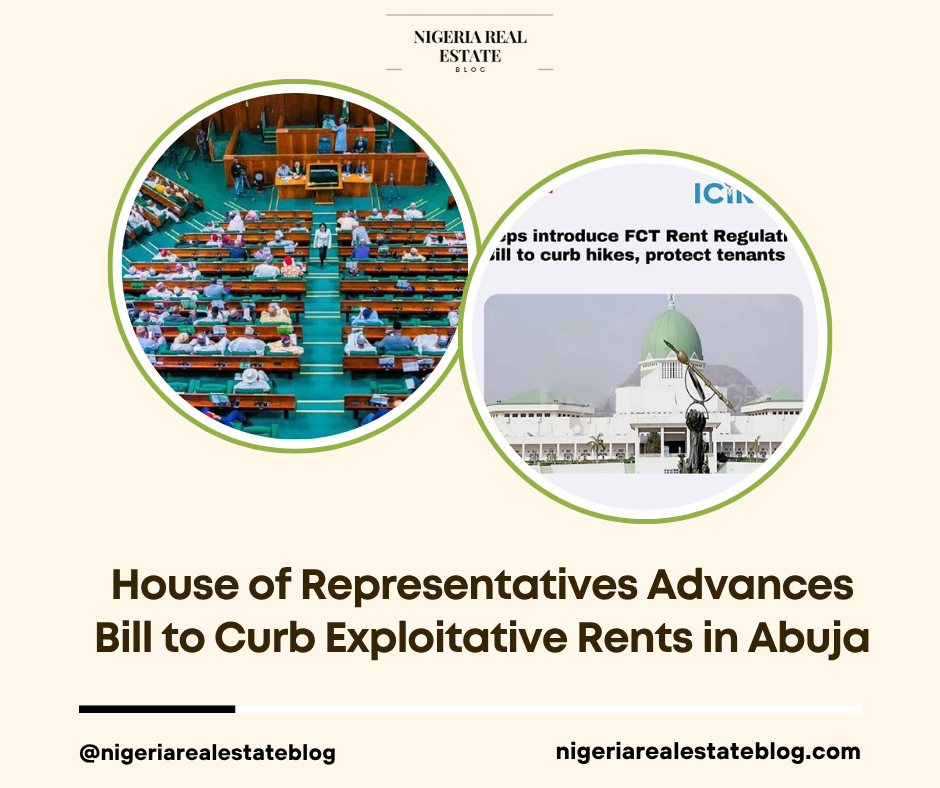
The House of Representatives has advanced a major tenant-protection bill for the Federal Capital Territory. On Wednesday, 4 November 2026, lawmakers passed for Second Reading a private member bill that seeks to prohibit compulsory multi-year rent demands and regulate other exploitative rental practices in Abuja.
Key Provisions of the Bill
Sponsored by Hon. Paul Nnamchi (APC, Enugu) and co-sponsored by Hon. Ahmed Doro (PDP, Katsina), the legislation is formally titled a Bill for an Act to Regulate Advance Rental Payments, Prohibit Compulsory Multiple-Year Rent Demands, Establish the Federal Capital Territory Rent Regulation and Tenants’ Protection Authority, Provide Remedies for Unlawful Rental Practices, and for Related Matters.
Its core proposals include:
- A ban on landlords, estate agents or property managers demanding more than 12 months’ rent in advance as a condition for granting or renewing a tenancy.
- Permission for tenants to voluntarily pay more than 12 months if they initiate the arrangement without coercion and the agreement is documented in writing.
- Measures to prevent landlords from bypassing the rule through compulsory service charges, separate agreements, artificial renewals or other devices.
- Regulation of agency fees and the creation of a unified digital register for housing agents operating in the FCT.
- Establishment of the Federal Capital Territory Rent Regulation and Tenants’ Protection Authority to investigate complaints, mediate disputes and enforce compliance.
- Penalties ranging from ₦500,000 to ₦5 million for individual offenders and ₦5 million to ₦20 million for corporate offenders.
The bill applies to both residential and commercial tenancies in the FCT.
Why the Bill Matters
Rising accommodation costs and the widespread practice of demanding two or more years’ rent upfront have placed heavy financial pressure on residents, small businesses and employment mobility in Abuja. Lawmakers supporting the bill argued that these practices reduce household savings and make it harder for people to move for work or start businesses.
Deputy Speaker Benjamin Kalu, who presided over the session, referenced Section 16 of the 1999 Constitution on the welfare of citizens and the provision of suitable shelter when the bill was put to a voice vote and passed.
Current Status and Next Steps
The bill had earlier passed First Reading on 22 October 2026. It has now been referred to the relevant committee for public hearing. Stakeholders, including landlords, agents, tenants and professional bodies, are expected to make submissions before any further legislative progress.
It is important to note that the bill is not yet law. It still requires committee consideration, Third Reading, concurrence by the Senate, and presidential assent before it can take effect.
Implications for Tenants, Landlords and Agents
For tenants
If passed in its current form, the legislation would significantly reduce the cash burden of securing or renewing accommodation in Abuja and provide a formal channel for complaints.
For landlords and agents
Compulsory multi-year demands would become illegal, and non-compliance could attract substantial fines. Voluntary longer-term payments initiated by tenants would remain allowed if properly documented.
For the wider market
Clearer rules could improve transparency and reduce disputes, but some property owners may adjust pricing or payment structures in response.
Final Thoughts
The advancement of the FCT Rent Regulation Bill marks a notable legislative step toward addressing long-standing complaints about exploitative rental practices in Abuja. Whether the final version retains the 12-month cap and the proposed enforcement authority will depend on the public hearing process and further parliamentary debate.
Tenants, landlords and agents in the FCT should monitor the bill’s progress closely, as its eventual passage (or amendment) will directly affect how tenancies are structured and enforced in the capital.
Do you support a 12-month advance rent limit in Abuja? Share your view in the comments.
Join Over 11,000 Real Estate Enthusiasts!
Stay ahead with our quick 5-minute roundup of Nigerian and global real estate updates, delivered to your inbox every weekday. Don’t miss out on insider tips, market trends, and exclusive insights!