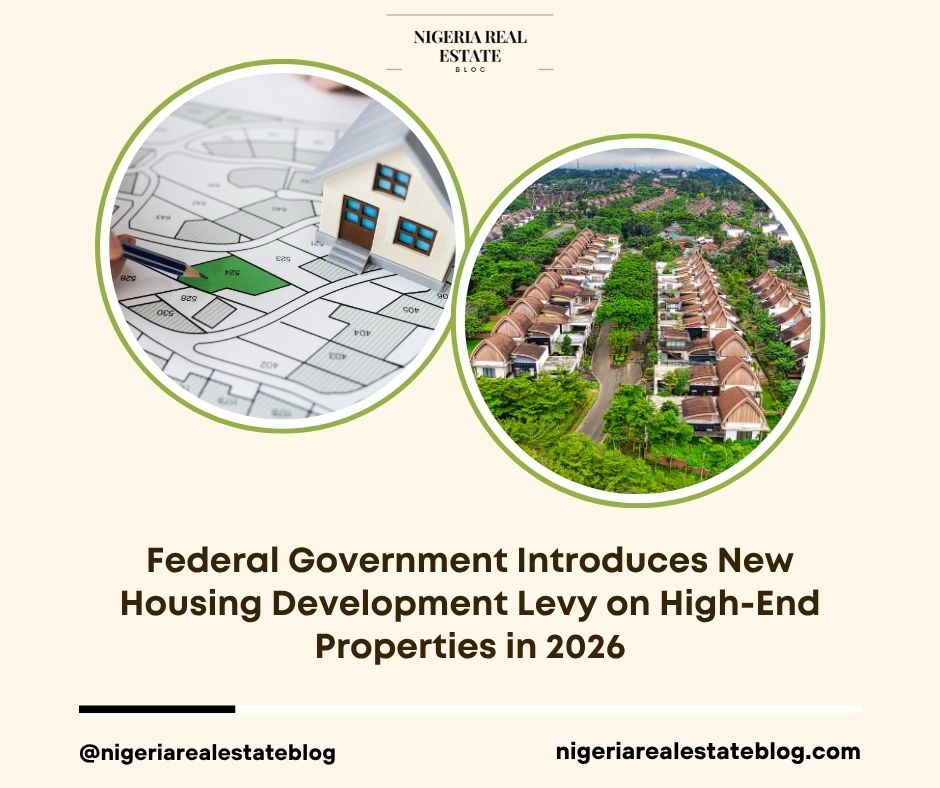
The Federal Government has introduced a new Housing Development Levy on luxury and high-end residential properties valued above ₦250 million, effective from May 2026. The levy is designed to generate additional revenue specifically directed toward affordable housing initiatives and infrastructure supporting mass housing delivery.
This policy reflects the government’s strategy of using proceeds from the premium segment to subsidise housing for lower and middle-income Nigerians.
Key Details of the New Levy
- Threshold: Applies to residential properties valued at ₦250 million and above.
- Rate: 2% of the assessed property value (payable by the buyer at point of purchase or by the developer on new builds).
- Purpose: Funds will be ring-fenced for affordable housing programmes, mortgage subsidies, and infrastructure in mass housing estates.
- Exemptions:
- Owner-occupied primary residences below the threshold.
- Government-approved social housing projects.
- Properties owned by charitable organisations and diplomatic missions.
Who Pays and When?
- Buyers of completed high-end properties pay at the point of title transfer.
- Developers of new luxury estates pay on completion and sale of units.
- Payment is integrated into the title registration and stamp duty process for easier compliance.
Impact on Developers and Buyers
For Developers:
- Increased cost on luxury projects may lead to higher selling prices or reduced margins.
- Some developers are already adjusting designs to stay below the ₦250 million threshold where possible.
- Positive side: Revenue from the levy could improve infrastructure in areas where they build mass housing.
For Buyers:
- Luxury home buyers will face an additional 2% cost on top of stamp duty and other fees.
- This may slow demand slightly at the very high end while pushing some buyers toward the upper-mid market.
- Long-term benefit: Increased funding for affordable housing could ease overall market pressure.
Practical Implications in 2026
- High-end developers are reviewing pricing strategies and exploring ways to incorporate more affordable units in mixed developments to offset the levy.
- Buyers of luxury properties should factor the 2% levy into their total budget.
- Investors may shift some capital toward mid-market or emerging corridors where the levy does not apply.
Final Thoughts
The new Housing Development Levy on high-end properties is a clear example of the government’s “luxury pays for affordability” approach in 2026. While it adds cost at the premium end, the intention is to channel resources toward solving the national housing deficit.
For developers and buyers in the luxury segment, this policy requires careful financial planning. For the broader market, it could eventually lead to improved infrastructure and more affordable housing options if the funds are transparently and effectively utilised.
What are your thoughts on this new levy? Do you think it will help solve Nigeria’s housing challenges or create new problems? Share your opinion in the comments.
Join Over 11,000 Real Estate Enthusiasts! Stay ahead with our quick 5-minute roundup of Nigerian and global real estate updates, delivered to your inbox every weekday. Don’t miss out on insider tips, market trends, and exclusive insights!