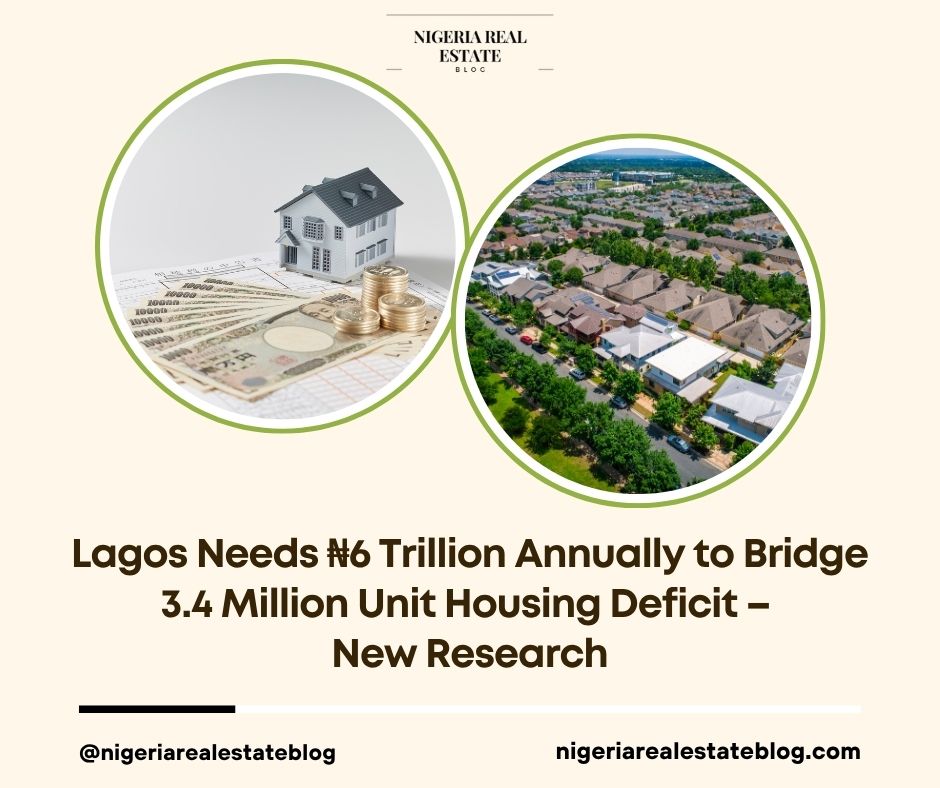
Lagos requires approximately ₦6 trillion in annual housing investment to bridge its estimated 3.4 million unit housing deficit, according to research presented by GTI Capital Research.
The findings, presented at a recent housing and capital forum, highlight the scale of the capital gap facing Nigeria’s largest city and commercial centre.
Key Findings from the Research
- Lagos housing deficit is estimated at 3.4 million units.
- The state needs about ₦6 trillion every year to close the housing capital gap.
- This figure is significantly larger than Lagos State’s entire annual capital budget.
- An estimated 227,576 additional homes are required each year simply to keep pace with population growth and rising demand.
Affordability Pressures
The research also underscores the widening gap between housing costs and incomes:
- Rents across Lagos increased by between 80% and 120% from 2024 to 2026.
- Median wages grew by only 7% to 9% over the same period.
- Lagos’ property price-to-income ratio stands at approximately 19.2 times, far above the 5.0-times threshold generally regarded as severely unaffordable.
Rental Cost Variations Across the City
Significant differences exist between locations:
- Ikoyi: Two-bedroom apartments range widely, with average field-survey figures reported around ₦30 million annually in some assessments.
- Victoria Island: Broad ranges, with averages notably lower than Ikoyi but still elevated.
- Mainland areas (Yaba, Surulere, Ikeja): Substantially more affordable relative to the Island, though still under upward pressure.
- Lekki Phase 1 and surrounding corridors: Intermediate pricing with strong demand.
Implications for the Market
For Policymakers
- The scale of required annual investment highlights the need for innovative financing models, public-private partnerships, and sustained policy focus on affordable and mid-market housing delivery.
- The structural deficit supports long-term demand, particularly in the affordable and mid-market segments.
- However, high construction costs, land prices and financing constraints remain significant barriers to scaling supply at the required volume.
For Households
- The data confirms why many residents continue to face severe affordability challenges and why the transition from renting to homeownership remains difficult for a large share of the population.
Final Thoughts
The GTI Capital Research findings put a clear quantitative figure on the scale of Lagos’ housing challenge. Closing a 3.4 million unit deficit while accommodating ongoing population growth will require sustained, large-scale capital mobilisation far beyond current public sector budgets.
For the real estate sector, the numbers reinforce both the depth of underlying demand and the magnitude of the supply-side constraints that must be addressed if meaningful progress is to be made on affordability and housing delivery.
What are your thoughts on the scale of investment required and the most realistic pathways to close the gap? Share your views in the comments.
Join Over 11,000 Real Estate Enthusiasts! Stay ahead with our quick 5-minute roundup of Nigerian and global real estate updates, delivered to your inbox every weekday. Don’t miss out on insider tips, market trends, and exclusive insights!