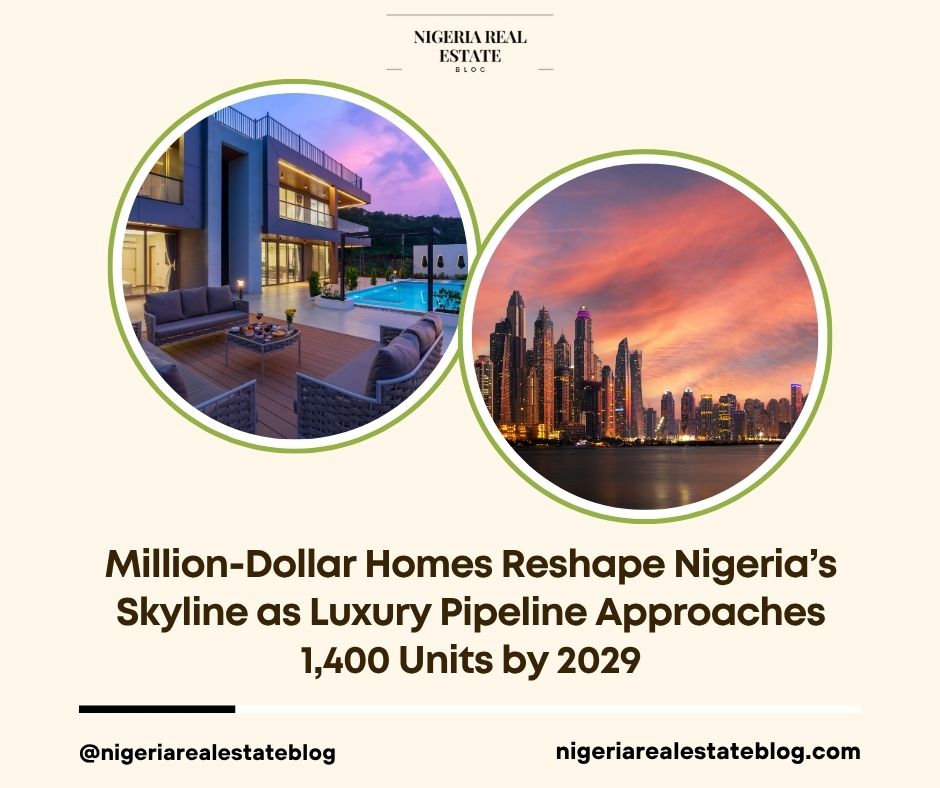
Nigeria’s luxury residential market is expanding at a notable pace. According to data from property intelligence firm Estate Intel, approximately 135 homes across the country are currently priced above $1 million, with nearly 1,400 additional units expected to enter this segment by 2029.
The surge in high-end homes is reshaping skylines in Lagos and Abuja while highlighting the growing divergence between the luxury end of the market and the broader housing needs of the population.
The Scale of the Luxury Pipeline
Estate Intel’s figures indicate that the number of million-dollar homes is set to increase substantially over the next few years. Developers are actively responding to demand from two main groups:
- Nigerians in the diaspora taking advantage of the weaker naira
- Local high-net-worth individuals seeking to preserve and grow wealth in tangible assets
This dual demand has encouraged the development of ultra-luxury residences, often accompanied by supporting high-end amenities such as premium hotels, restaurants, shopping centres and international schools.
Pricing in the Ultra-Luxury Segment
Current pricing underscores the exclusive nature of this market:
- In Lagos, ultra-luxury homes typically range from approximately ₦2.2 billion (around $1.5 million) to ₦9 billion.
- In Abuja, comparable properties are reported around the ₦5 billion mark.
These price points place the segment well beyond the reach of the vast majority of Nigerian households and reinforce the bifurcated nature of the country’s real estate market.
Rental Yields and Investment Profile
According to Estate Intel senior analyst Dapo Runsewe, rental yields in the luxury segment currently range between 4% and 7%. These figures are broadly comparable to yields seen in established global luxury markets such as Los Angeles, New York and Dubai.
While capital appreciation potential remains a key attraction for many buyers, the relatively modest rental yields mean that pure income-focused investors may find stronger opportunities in mid-market or growth-corridor assets.
The Broader Context: Housing Deficit and Inequality
The growth of the million-dollar segment stands in sharp contrast to Nigeria’s large housing deficit, estimated by various sources at over 20 million units. At the same time, nearly a third of the population lives below the international poverty line.
This divergence has prompted discussion about the role of luxury development in the overall housing ecosystem. While high-end projects generate economic activity, create skilled jobs and attract foreign exchange through diaspora purchases, they do little to address the acute shortage of affordable and mid-market housing.
What It Means for Different Market Participants
For Luxury Developers
Strong pipeline demand supports continued activity in the ultra-prime segment, particularly in well-located waterfront and exclusive neighbourhoods in Lagos and select districts in Abuja.
For Investors
Million-dollar homes offer prestige, potential capital appreciation and a hedge against currency volatility. However, liquidity can be lower than in mid-market segments, and buyers should conduct rigorous due diligence on developer delivery capacity and title integrity.
For Policymakers
The luxury boom highlights the need for balanced housing policy that continues to incentivise mid-market and affordable delivery alongside high-end development.
For the Wider Market
The expansion of the luxury segment further entrenches the two-speed nature of Nigerian real estate — elevated values and tight supply at the top end, and persistent affordability challenges for the majority of households.
Final Thoughts
As of October 2026, Nigeria’s luxury residential market is firmly in growth mode, with the number of million-dollar homes projected to rise significantly by 2029. Driven by diaspora capital and local wealth preservation, this segment is reshaping parts of Lagos and Abuja’s skylines.
While it represents a vibrant and economically active part of the property sector, it also underscores the ongoing challenge of delivering housing that meets the needs of a much broader population.
How do you view the rapid growth of Nigeria’s luxury housing segment? Share your thoughts in the comments.
Join Over 11,000 Real Estate Enthusiasts!
Stay ahead with our quick 5-minute roundup of Nigerian and global real estate updates, delivered to your inbox every weekday. Don’t miss out on insider tips, market trends, and exclusive insights!