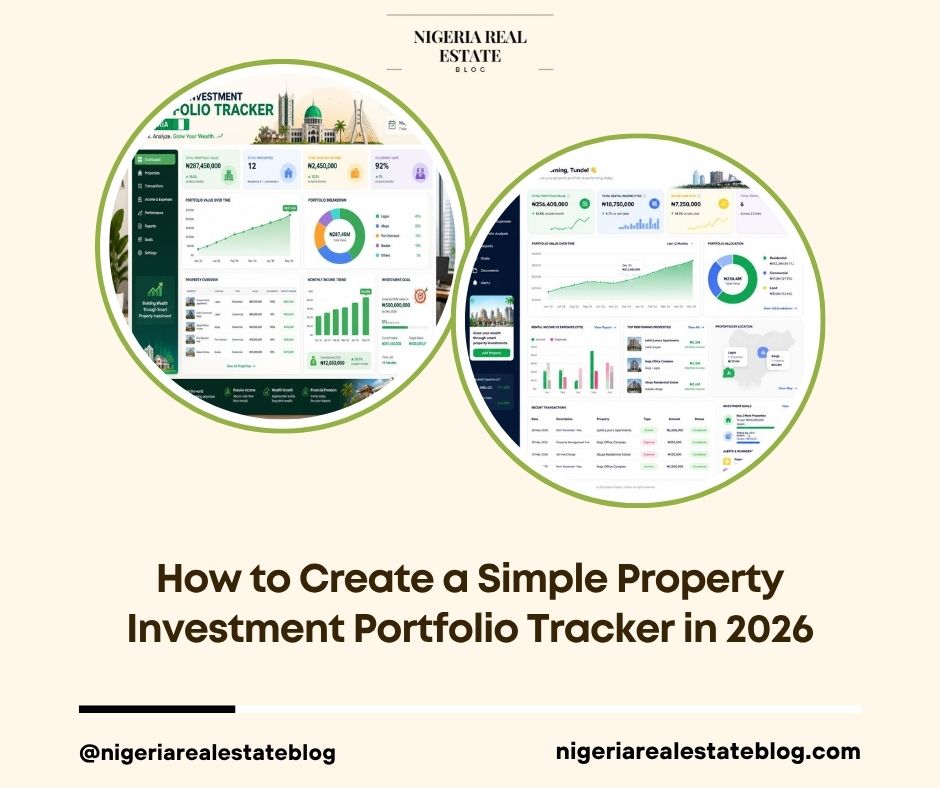
Many Nigerian real estate investors own more than one property but still rely on scattered receipts, bank alerts, and mental calculations to track performance. In 2026, a simple, consistent portfolio tracker can give you clear visibility on income, expenses, yields, and overall returns — without needing complex software.
Here is a practical framework you can set up in less than an hour using Google Sheets, Excel, or even a notebook.
Why You Need a Portfolio Tracker
- See which properties are actually profitable
- Spot rising costs early
- Calculate true net yields (not just gross rent)
- Make better decisions about refinancing, selling, or buying more
- Prepare accurate records for tax and future investors/partners
Simple Portfolio Tracker Structure
Create one main sheet with the following columns:
| Property Name / Address | Purchase Price | Current Estimated Value | Monthly Rent | Annual Rent | Annual Expenses | Net Annual Income | Gross Yield | Net Yield | Notes |
|---|
Additional useful sheets:
- Monthly Income & Expense Log
- Maintenance & Capex Tracker
- Tenant & Lease Summary
Key Metrics to Track
1. Gross Rental Yield (Annual Rent ÷ Property Value) × 100
2. Net Rental Yield ((Annual Rent – Annual Expenses) ÷ Property Value) × 100
3. Cash Flow Monthly Rent – Monthly Expenses (including service charge, management fees, minor repairs, etc.)
4. Total Portfolio Performance Sum of all net income ÷ Total portfolio value
Recommended Expense Categories to Monitor
- Service charge / estate dues
- Repairs and maintenance
- Property management or agency fees
- Insurance
- Land Use Charge / ground rent
- Security and generator/solar costs
- Vacancy losses
- Professional fees (legal, valuation, etc.)
How to Keep It Simple in 2026
- Update the tracker once a month (set a recurring reminder)
- Use bank statements and receipts as your source of truth
- Separate personal and rental finances where possible
- Review the full portfolio every quarter
- Adjust estimated property values once or twice a year based on comparable sales or professional advice
Free & Low-Cost Tools You Can Use
- Google Sheets (free and accessible on phone)
- Microsoft Excel
- Notion or Airtable (for more visual tracking)
- Simple accounting apps if your portfolio grows larger
Final Thoughts
You don’t need expensive software to manage your real estate portfolio effectively. A clear, consistently updated tracker will give you better control, reduce surprises, and help you make smarter investment decisions in 2026.
Start simple. The most important step is beginning — you can refine the system as your portfolio grows.
Do you currently track your properties in a structured way? What method works best for you? Share in the comments.
Join Over 11,000 Real Estate Enthusiasts! Stay ahead with our quick 5-minute roundup of Nigerian and global real estate updates, delivered to your inbox every weekday. Don’t miss out on insider tips, market trends, and exclusive insights!