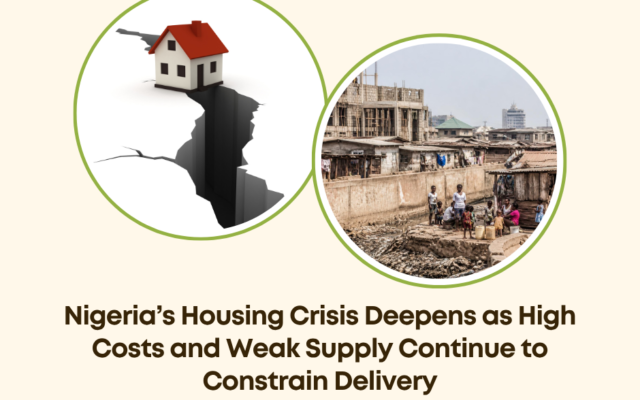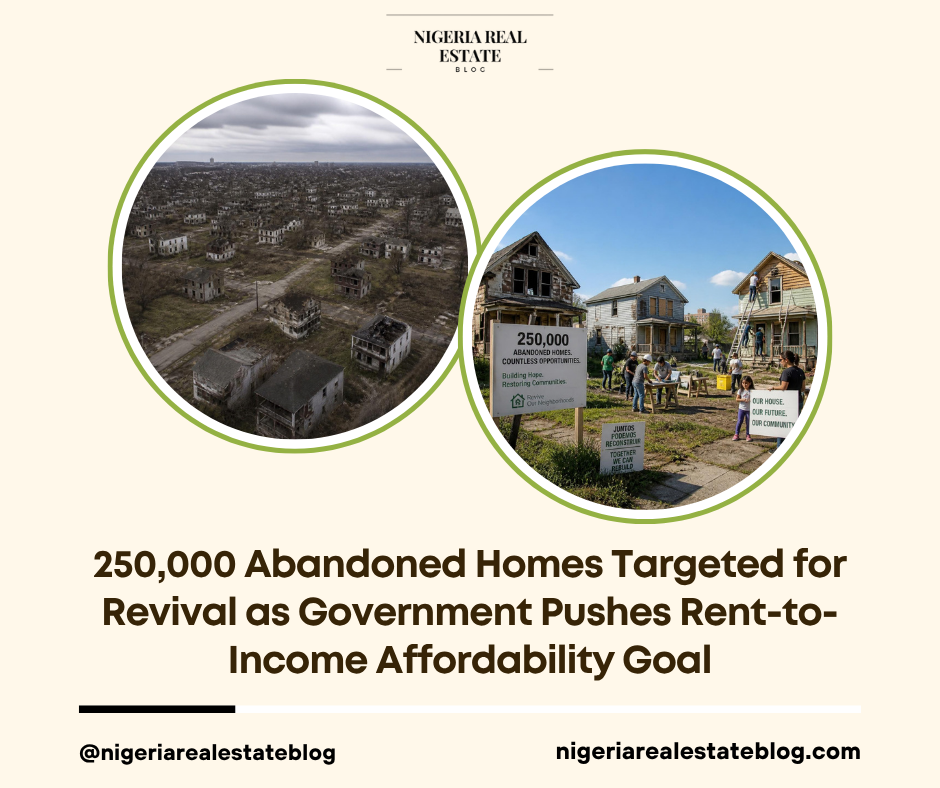
The Federal Government has identified close to 250,000 abandoned housing units nationwide and is taking steps to assess, rehabilitate and complete viable projects. This push forms part of broader efforts to increase housing supply and support the goal of reducing the share of income that Nigerian workers spend on rent.
The Minister of Housing and Urban Development has confirmed that a nationwide review of abandoned Federal Government housing projects is underway, with the objective of upgrading and delivering units that can still be made productive under the Renewed Hope Housing Agenda.
The Scale of Abandoned Housing Assets
According to recent statements, many of these projects date back several years and include schemes initiated under earlier administrations. Public funds have already been committed to many of them, yet the units remain incomplete, unoccupied or in a state of deterioration.
Reviving viable projects is seen as a way to unlock existing investments faster than starting entirely new developments from scratch, depending on the condition of each site, outstanding contractual issues, infrastructure needs and funding requirements.
Link to the Rent-to-Income Affordability Goal
The timing of the revival effort coincides with the government’s expressed intention to ensure workers do not spend 40 to 60 per cent of their income on rent. Increasing the stock of completed, affordable or mid-market housing is one of the practical ways to ease pressure on the rental market over time.
By bringing previously abandoned units into use, the government aims to expand the pool of available homes that can be allocated or sold under existing housing programmes, including rent-to-own and mortgage-backed options.
Opportunities and Challenges
Potential upsides include:
- Faster addition of housing units compared with new greenfield projects
- Better utilisation of public funds already spent
- Possible improvement in local housing supply in areas where projects are located
- Support for broader affordability and homeownership objectives
Key challenges remain:
- Determining which projects are still structurally and commercially viable
- Resolving outstanding contractor claims, title issues or legal complications
- Securing the additional funding required for completion and upgrading
- Ensuring transparent allocation processes once units are ready
- Addressing infrastructure deficits (power, water, access roads) around some sites
What This Could Mean for Investors and the Market
For private investors and developers, the revival programme may create opportunities in areas such as:
- Joint-venture or completion partnerships on selected projects
- Supply of finishing materials, infrastructure works or property management services
- Increased activity in locations where abandoned estates are brought back online
At the same time, the success of the initiative will depend on execution quality, realistic cost assessments and clear rules for private-sector participation where applicable.
What to Watch Next
Key developments to monitor include:
- Publication of a clearer inventory of viable abandoned projects
- Specific timelines and funding mechanisms for priority sites
- Engagement with state governments on projects located outside the FCT
- Allocation frameworks for completed units
- Any private-sector partnership models that emerge
Final Thoughts
The identification of close to 250,000 abandoned housing units and the decision to prioritise their revival represent a pragmatic recognition that Nigeria cannot afford to leave existing public investments idle while the housing deficit remains large.
If executed with transparency, proper due diligence and realistic planning, the programme could make a meaningful contribution to housing supply and support the broader goal of improving affordability. Delivery, however, will be the ultimate test.
What are your thoughts on prioritising the completion of abandoned housing projects? Share your perspective in the comments.
Join Over 11,000 Real Estate Enthusiasts!
Stay ahead with our quick 5-minute roundup of Nigerian and global real estate updates, delivered to your inbox every weekday. Don’t miss out on insider tips, market trends, and exclusive insights!