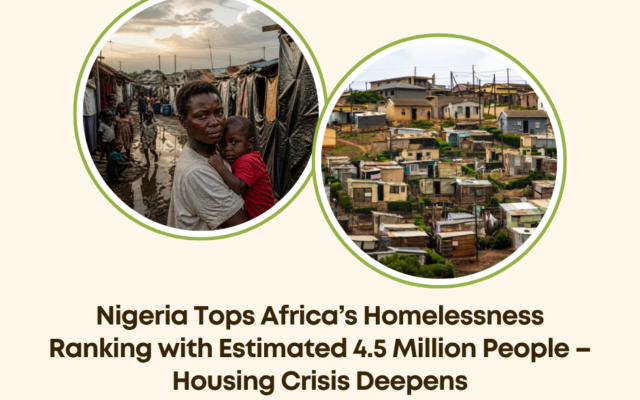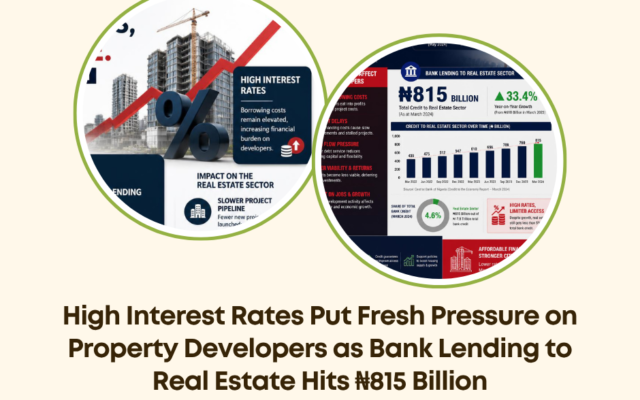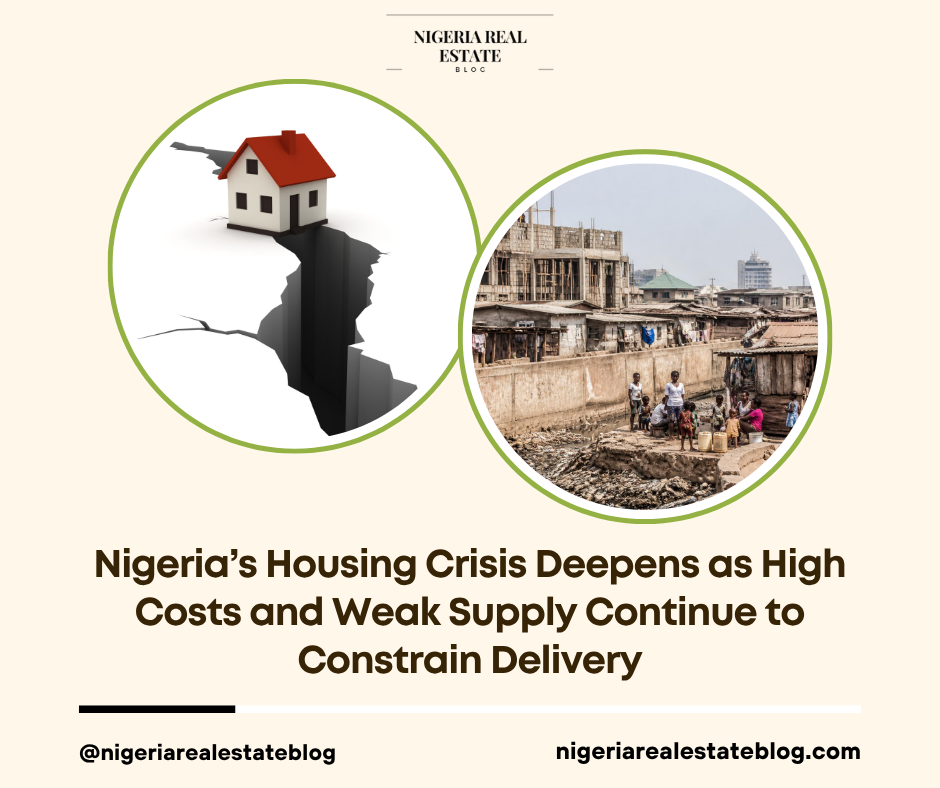
Fresh assessments of Nigeria’s housing sector in 2026 show that the combination of persistently high construction costs and weak new supply is further deepening the country’s housing challenges. Despite ongoing policy attention and private sector activity, the gap between housing need and actual delivery remains wide.
The result is continued pressure on prices, limited options for many households, and slower progress toward closing the national housing deficit.
The Twin Constraints: Cost and Supply
Two structural issues continue to limit progress:
1. Elevated Construction Costs
The cost of key building materials, labour, logistics and finance remains high. Cement, steel, finishing materials and energy costs have kept overall project budgets elevated. These costs are frequently passed on to buyers, pushing many formal housing units beyond the reach of average households.
2. Weak New Supply
Annual delivery of new formal housing units continues to fall short of the volume required to meet population growth and urban demand. Many announced projects face delays, scaling back, or slower take-up due to financing and cost pressures.
Together, these factors reinforce a cycle in which limited supply supports higher prices, while higher prices further restrict effective demand.
Impact on the Market
The deepening constraints are visible in several ways:
- Mid-market and affordable segments remain undersupplied relative to need
- Many households continue to rely on informal or inadequate housing
- Developers are more selective about launching new projects
- Buyers face longer search times for suitable, well-located options within budget
- Rental markets in major cities remain firm due to limited alternatives
Implications for Home Seekers
For individuals and families looking to buy or rent:
- Realistic budgeting and location flexibility have become more important
- Completed or near-completed units generally carry lower risk than early-stage off-plan projects
- Thorough due diligence on title, quality and total cost of ownership remains essential
- Longer-term planning and savings strategies are increasingly necessary
Implications for Developers and Investors
Developers operating in the current environment are focusing on:
- Cost control and efficient construction methods
- Phased delivery and stronger pre-sales where possible
- Targeting segments with clearer effective demand
- Exploring alternative funding structures beyond expensive bank debt
Investors are placing greater emphasis on location quality, rental demand fundamentals, and developer track records.
What Needs to Improve
Progress will depend on coordinated action across several areas:
- Reducing the cost of construction inputs and logistics
- Improving access to longer-term, more affordable housing finance
- Streamlining land administration and approval processes
- Supporting scalable delivery models for mid-market and affordable housing
- Encouraging greater use of cost-effective local materials and methods where appropriate
Without meaningful movement on these fronts, the gap between need and delivery is likely to persist.
Final Thoughts
Nigeria’s housing crisis is being reinforced in 2026 by the twin pressures of high costs and weak new supply. While demand for decent housing remains strong, the ability of the formal market to respond at scale and at accessible price points continues to be constrained.
Closing the gap will require sustained focus on cost reduction, financing innovation, and efficient delivery — not just new project announcements.
What do you see as the most effective way to improve housing delivery under current cost conditions? Share your thoughts in the comments.
Join Over 11,000 Real Estate Enthusiasts!
Stay ahead with our quick 5-minute roundup of Nigerian and global real estate updates, delivered to your inbox every weekday. Don’t miss out on insider tips, market trends, and exclusive insights!