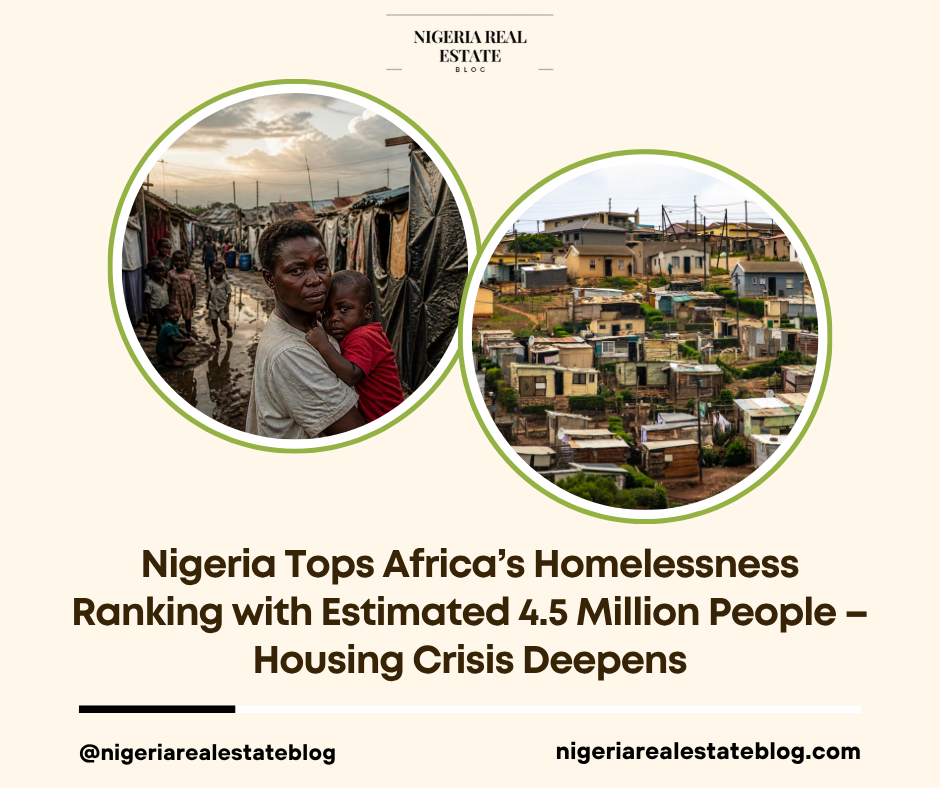
Fresh data has placed Nigeria at the top of Africa’s homelessness ranking, with an estimated 4.5 million people affected. The figures highlight the depth of the country’s housing challenge and have renewed conversations about the urgent need for accelerated housing delivery, better-targeted policies, and more effective collaboration between the public and private sectors.
While homelessness figures can vary depending on methodology and definition, the latest ranking underscores a long-standing structural problem that continues to affect urban and peri-urban communities across the country.
The Scale of the Challenge
Nigeria has for years grappled with a significant housing deficit, with estimates ranging widely depending on the source. The latest homelessness data adds a human dimension to the supply shortfall, showing that millions of people lack access to adequate, secure shelter.
Key contributing factors frequently cited include:
- Rapid urbanisation and population growth
- High cost of formal housing relative to average incomes
- Limited access to affordable mortgage finance
- Slow pace of new housing delivery compared with demand
- Challenges around land access, title security and infrastructure
These pressures are most visible in major cities such as Lagos and Abuja, but they also affect secondary urban centres.
Implications for the Real Estate Sector
The ranking carries several implications for developers, investors, policymakers and housing advocates:
- Strong underlying demand for affordable and mid-market housing remains unmet
- Greater scrutiny is likely on the effectiveness of existing housing programmes
- Opportunities exist for well-structured public-private partnerships focused on lower-cost delivery models
- Developers who can produce quality housing at more accessible price points may find sustained demand
- Policy attention may increasingly focus on reducing the cost of land, materials and finance for mass housing
At the same time, the data serves as a reminder that market-driven development alone has not been sufficient to close the gap for lower-income households.
What Needs to Change
Stakeholders have repeatedly pointed to several priority areas:
- Scaling up delivery of genuinely affordable housing units
- Improving access to long-term, low-cost housing finance
- Streamlining land administration and reducing title-related bottlenecks
- Encouraging the use of cost-effective local materials and construction methods
- Strengthening coordination between federal, state and private sector players
Progress in these areas will determine whether future rankings show improvement.
Outlook for 2026 and Beyond
While the homelessness ranking is a sobering indicator, it also reinforces the scale of the opportunity within Nigeria’s housing sector. Demand for decent housing remains structurally strong. The challenge lies in aligning delivery models, financing structures and policy support to reach a much larger share of the population.
Investors and developers who focus on realistic price points, efficient construction methods and locations with genuine need are likely to remain relevant as the market continues to evolve.
Final Thoughts
Nigeria topping Africa’s homelessness ranking with an estimated 4.5 million people affected is a clear signal that the housing deficit is not just a statistical issue — it is a lived reality for millions. Closing the gap will require sustained effort, innovative delivery models and stronger collaboration across the housing ecosystem.
For the real estate sector, the data is both a warning and a call to action.
What solutions do you believe would have the greatest impact on reducing homelessness and the housing deficit? Share your thoughts in the comments.
Join Over 11,000 Real Estate Enthusiasts!
Stay ahead with our quick 5-minute roundup of Nigerian and global real estate updates, delivered to your inbox every weekday. Don’t miss out on insider tips, market trends, and exclusive insights!