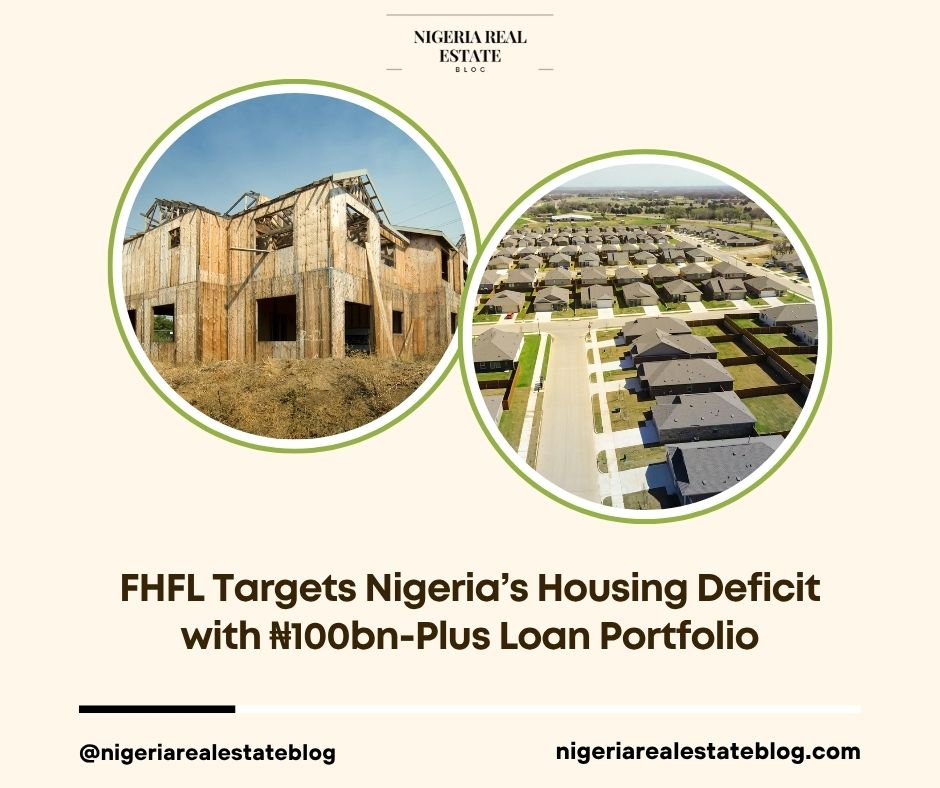
First Home Finance Limited (FHFL) is scaling up its housing finance activities with a loan portfolio that has surpassed the ₦100 billion mark. The expanded facility is positioned as a direct response to Nigeria’s persistent housing shortfall, currently estimated by official sources at around 15 million units.
The move comes at a time when access to affordable, long-term credit remains one of the biggest barriers to homeownership for many Nigerian households and a constraint on developers seeking to increase supply.
Scale and Focus of the Portfolio
FHFL’s growing loan book is aimed at supporting both individual homebuyers and developers. By increasing the volume of available financing, the institution seeks to:
- Help more Nigerians bridge the gap between income and property prices
- Provide developers with working capital or construction finance that can accelerate project delivery
- Contribute incremental units toward closing the national housing deficit
While exact product details, interest rates and eligibility criteria vary by scheme, the overall direction is clear: expand the pool of formal housing credit beyond the traditional mortgage channels dominated by a few large players.
Context of Nigeria’s Housing Finance Gap
Nigeria’s housing deficit — whether measured at the official figure of approximately 15 million units or higher when structurally deficient stock is included — is driven by a combination of rapid urbanisation, high construction costs, limited mortgage penetration and constrained developer finance.
Government-backed schemes such as the National Housing Fund (via FMBN) and the MOFI Real Estate Investment Fund (MREIF) have made important contributions, but the absolute volume of formal housing credit remains small relative to demand. Private and specialised lenders such as FHFL play a complementary role by targeting segments that may not fully fit into existing public programmes.
Implications for Buyers and Developers
For prospective homebuyers
An expanded FHFL portfolio increases the number of potential financing options. Buyers should still conduct thorough due diligence on interest rates, repayment terms, equity requirements, and the track record of any specific product before committing.
For developers
Greater availability of construction or end-user finance can improve project bankability and absorption rates, particularly for mid-market and affordable schemes that struggle to attract purely commercial bank lending.
For the broader market
Every additional naira of properly structured housing finance helps, but scale remains critical. ₦100 billion-plus is a meaningful figure for a single specialised lender, yet it is still modest when set against the total capital required to make a significant dent in the national deficit.
What to Watch Going Forward
Key indicators of success will include:
- Actual disbursement rates (not just approvals)
- Geographic spread of financed units
- Default and repayment performance
- Ability to mobilise additional wholesale funding or partnerships to grow the portfolio further
Observers will also monitor how FHFL’s products interact with existing schemes from FMBN, MREIF and commercial banks, and whether the combined effort begins to move the needle on formal homeownership rates.
Final Thoughts
FHFL’s expansion of its loan portfolio beyond ₦100 billion is a positive development in Nigeria’s still-underdeveloped housing finance landscape. It demonstrates that specialised lenders continue to see opportunity in supporting both demand and supply sides of the market.
However, closing a multi-million-unit deficit will require sustained growth in housing credit from multiple sources, alongside reductions in construction costs, improved land administration, and stronger policy coordination. The current portfolio increase is a step in the right direction — the challenge is to turn it into consistent, scaled delivery of completed and occupied homes.
Are you considering housing finance options in the current market? What challenges have you encountered? Share your experience in the comments.
Join Over 11,000 Real Estate Enthusiasts!
Stay ahead with our quick 5-minute roundup of Nigerian and global real estate updates, delivered to your inbox every weekday. Don’t miss out on insider tips, market trends, and exclusive insights!